


The Trial Season 2 review: Kajol powers through, yet the series sometimes loses its case
The Trial Season 2 sees Kajol embrace Noyonika with nuance, strong supporting roles shine, and courtroom drama blends personal stakes with political intrigue, though some subplots falter.

Last Updated: 10.07 AM, Sep 19, 2025
The Trial Season 2 story:
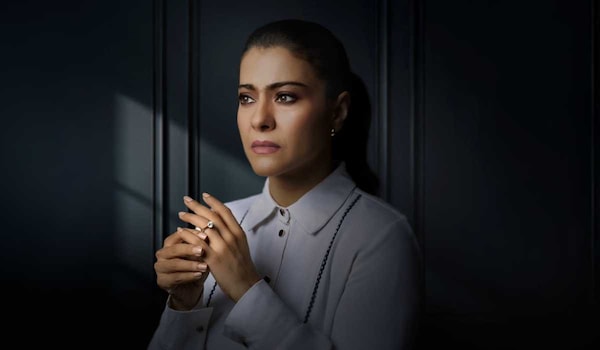
After gaining confidence in her legal career, Noyonika Sengupta (Kajol) finds herself entangled in a web of personal and professional problems when her husband Rajiv (Jissu Sengupta), who was involved in a corruption and sex scandal, is jailed and attempts to reawaken his political aspirations. This sends Noyonika reeling, requiring her to navigate a complex web of law, love, and power. At the same time that Noyonika faces betrayals, courtroom showdowns, and the ethical ambiguities of power politics while fighting to keep her law firm afloat and preserve her reputation, she transforms into a fierce protector at home when her daughter is caught in the crossfire of her father's enemies, compelling her to balance her roles as a lawyer, a mother, and a woman seeking justice.
The Trial Season 2 review:
While watching The Trial and writing the review, I have consistently noted that Kajol's loud performance is overwhelming for a character who is meant to embody silent rebellion. I was eagerly anticipating the possibility of witnessing the same scene two years later. Fortunately, the actor has redirected her efforts and exhibited the anticipated nuance in her full-fledged web series debut. I can confidently say that the episode is a positive start for The Trial Season 2.

This time, Noyonika Sengupta is grappling with the fact that her husband, taking advantage of his situation amid a sex scandal, gets ready to join politics. He is seeking her support to gain public sympathy, which she does not agree with. On the other hand, Noyonika aspires to advance in her law firm, having successfully handled cases that have proven beneficial to the company. However, a new partner, Param Munjal (Karanvir Sharma), joins the firm, and he criticises her for being too emotional while handling cases, which makes him less inclined to support her promotion and raise her salary.
This time, more women-based cases are presented to them, starting with a luxury masseuse who accuses a high-profile philanthropist known for preaching women's empowerment of sexual misconduct. The episode does show a balance of doubt and sensitivity, as the first doubts are always on the person who accuses rather than the perpetrator. It seemed like an exciting case, which you can expect to have an intriguing trial. However, the episode's ambiguous ending may leave you wondering if it served a different purpose.
In this season, Noyonika's personal life often takes a backseat, and it finally feels like Kajol has embraced the character, which was completely lacking in the first season. The sophomore season showcased her finally settling into her character, significantly elevating the show. Furthermore, other female characters get to shine and not just have lives revolving around men.
This time, the reins were taken over by Umesh Bist, who earlier directed Pagglait, and he did put effort into making even Sheeba Chaddha and Kubbra Sait have scenes where they could be the showstoppers. Umesh Bist achieves this not only by providing them with captivating lines but also by crafting subplots that seamlessly integrate with the main plot.
The main antagonist to the storyline is also Narayani Bhole (Sonali Kulkarni), who is contesting elections against Rajiv. Here we encounter a strong female opponent whose character embodies the issues that people are currently facing. First, her character refers to non-Marathi people as "outsiders" and incites hatred among the locals, causing these so-called "outsiders" to leave the area. Conversely, we encounter a queer-based plot that feels forced and appears to have been created solely to fit a political narrative. This scenario is precisely what occurs when LGBTQ is labelled as a Western concept that undermines Indian culture. I've been hearing it in popular culture for so long that conceptualising it this way is outdated, even though it's still a relevant subject.
The show even has a case of influencers fighting in court over being drunk and attacking each other. To be honest, the situation is humorous, as the judge becomes irritated by the Gen-Z lingo, leaving the influencer confused.
Meanwhile, Kajol, who is portraying Noyonika, gets so involved in these cases that the six-episode season stretches one or two storylines into the next episode, leading viewers to realise that many elements from the original series, The Good Wife, have likely been filtered out, resulting in a lack of fresh ideas. Khushboo Raj and Amit Raj have written the screenplay for The Trial Season 2, and this time they bring a positive balance to the show. However, the translation to screen initially excels but quickly begins to falter, leaving no opportunity for recovery.




This time, the love triangle doesn't steer the plot; instead, it alternates between playing a pivotal role and taking a secondary role. However, I would still consider it more engaging to watch than the first season, primarily due to the lower expectations set at the start of the series.
Anyway... In terms of performances, Kajol has recently excelled in portraying a strong-headed mother. However, in this performance, the dialogues primarily revolve around "maa ki ladai," which expresses them more through words than through action. She doesn't imbue her character with a "saviour complex" in her personal life, yet she fully commits to her profession for evident reasons. The actor often fails to convey the main character energy, which only comes out when she is the loudest person in the room.
On the other hand, Kulkarni was rather a show-stealer for portraying a politician with grey shades; she doesn't let anyone take away attention from her when she is in the frame. The actor has showdown scenes with both Sengupta and Kajol, and she manages to hold her ground, delivering the lines in the best way possible and also blending into the existing narrative.
This season brings justice to the characters portrayed by Chaddha and Sait. Sheeba Chaddha, as a senior advocate, continues to fight for her rights within her own company. Conversely, Kubbra Sait portrays Sana, a character haunted by the ghosts of her past, and she effectively brings a serious tone to this role.
In this season, justice isn’t just about winning cases; it’s about finding strength in the chaos. It nearly succeeds, but despite numerous attempts, the goal appears to have eluded the viewers.
The Trial Season 2 verdict:
The Trial Season 2 proves that justice isn’t always blind—it sometimes comes loud, layered, and Kajol-powered. Noyonika navigates scandals, politics, and courtroom chaos with more finesse than in Season 1, even if some subplots overstay their subpoenas. With strong support from Sonali Kulkarni, Sheeba Chaddha, and Kubbra Sait, the series strikes a balance between drama and deliberation.
FAQs:
Q: Who is the lead actor in The Trial Season 2?
A: Kajol stars as Noyonika Sengupta, the central character navigating courtroom battles and personal challenges in The Trial Season 2.
Q: Who plays the antagonist in The Trial Season 2?
A: Sonali Kulkarni plays Narayani Bhole, a politician with grey shades who becomes Noyonika’s main adversary in the series.
Q: How many episodes are in The Trial Season 2?
A: The Trial Season 2 consists of six episodes, each focusing on complex legal cases and personal conflicts.
Subscribe to our newsletter for top content, delivered fast.
