

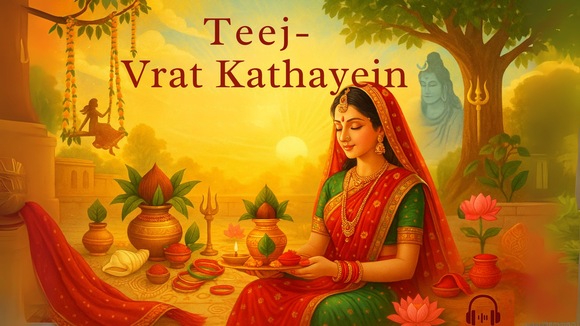
Teej Vrat Kathayen
Teej is a sacred festival dedicated to the eternal love and devotion between Goddess Parvati and Lord Shiva. Celebrated primarily by women across India, it includes three main forms — Hariyali Teej, Kajari Teej, and Hartalika Teej — each rooted in deep mythology, seasonal beauty, and feminine strength. According to ancient scriptures, Goddess Parvati took multiple births and performed severe penance to attain Lord Shiva as her husband. In one life, she meditated in the forests during the month of Shravan and was finally accepted by Shiva as his divine consort on the third day — this day became known as Hariyali Teej, a celebration of their sacred union, marked by greenery, swings, songs, and prayers for marital bliss. In another story, Kajari Teej emerged from the devotion of a poor woman who, despite having nothing, worshipped the goddess with complete surrender and pure heart. Her faith brought divine blessings. This Teej honors love in longing, simple devotion, and the strength of emotional connection with the Divine, even amid hardship. Hartalika Teej reflects Parvati's strong will and feminine determination. When her father tried to arrange her marriage to someone else, her friends took her to the forest. There, she crafted a Shiva Lingam from sand and prayed with complete devotion. Pleased by her faith and independence, Lord Shiva agreed to marry her. This story teaches that true love is earned by devotion, not demand, and also celebrates the sacred right of a woman to choose her path. Together, these three Teej Kathas reveal the power of devotion, sacrifice, longing, and feminine faith, offering a spiritual guide to love, determination, and divine union.
- Watchlist
- Like
- Dislike
- Share
- Share
Share on Facebook
Share on Twitter
Share on Whatsapp
Share on Telegram
- Watchlist
- Like
- Dislike
- Share
- Share
Share on Facebook
Share on Twitter
Share on Whatsapp
Share on Telegram
Season & Episodes
- Search Episode
- Oldest