


T20 World Cup 2026: Does India need an anchor like Virat Kohli? Or do they need something else?
The absence of Virat Kohli, known for his crucial innings, is sorely felt as players like Suryakumar Yadav and Tilak Varma fail to anchor innings effectively. But do they need an anchor now?
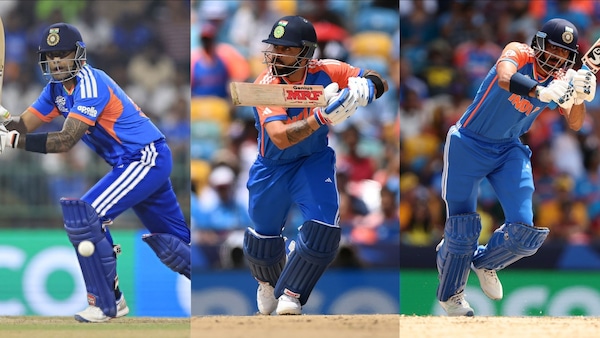
While Tilak Varma and Suryakumar Yadav has failed to play the anchor role like Virat Kohli, Axar Patel can be the perfect floater anchor for India in the Super 8s.
Last Updated: 04.35 PM, Feb 25, 2026
After their crushing 76-run defeat to South Africa in Ahmedabad and a not-so-perfect campaign so far in the ICC Men's T20 World Cup 2026, the structural flaw in India’s T20 blueprint has been exposed. While the "fearless" approach was the cornerstone of India's success in the 2024 T20 World Cup, the current campaign suggests that without a tactical spine, fearlessness quickly devolves into recklessness.
In the previous editions, Virat Kohli, who has the record for the second most runs for India in T20Is, used to play those sensible knocks to bail India out. Now, with the batting lineup failing, does India need someone like Kohli to rescue India? This would be the main point when India takes on Zimbabwe and the West Indies in their coming Super 8 games.
Kohli's masterclass innings bailed India out enormous times
The absence of Virat Kohli has never been more palpable. India has struggled to reach 160+ totals, a territory Virat Kohli famously owned during his career in the shortest format of the game. To understand what India is currently missing at the moment, we need to take a look at one of the legendary anchor masterclasses from a former India captain.
Melbourne 2022 (vs PAK): This is one of the gold standard knocks of Virat Kohli. In the 2022 T20 World Cup in Melbourne against the arch-rivals Pakistan, India were struggling at 31/4. Kohli anchored the innings and absorbed ten overs of pressure and only exploded in the final three overs to take India to a famous win, where he played one of the most incredible innings in T20 World Cup history against Haris Rauf.
Bridgetown 2024 (vs SA): now this knock came during the mega final of the 2024 edition where only 76 of 59 deliveries helped India get to a formidable first-inning score of 176/7, that eventually helped them win the title. India were 34 for 3 and along with Axar Patel, Kohli first steadied the ship and rotated the strike and then launched an attack during the latter part of the games.
In all four occasions, Kohli did not just hit. He soaked in the pressure, took his time, and then took advantage of the situation and played sensible knocks to take India home.
Read also: T20 World Cup 2026: How can India qualify for the semis? Full scenario explained with stats and numbers.
The failed auditions of Surya and Tilak
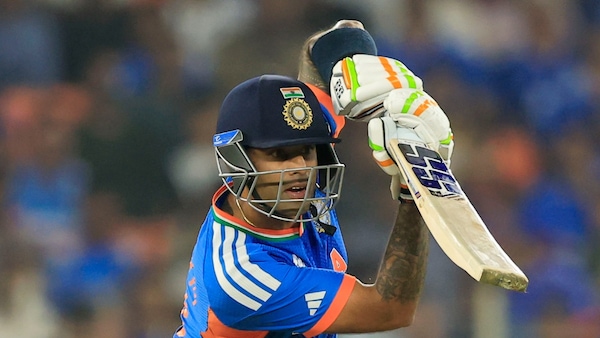
Now, it would be very harsh on the Indian team management to say that they have not tried to play according to the situation. Both Surya Kumar Yadav and Tilak Varma have tried to anchor their innings throughout the entire T20 World Cup 2026. Even Surya succeeded while doing that against the USA in the opening game of their campaign.
India has lost their opening pair more often than not throughout this campaign, and this has made Tilak Varma and Suryakumar Yadav come to the crease inside the power play. Both Surya and Tilak have tried to take time, but what they failed to do was to take that innings deep, except for one game against the USA.
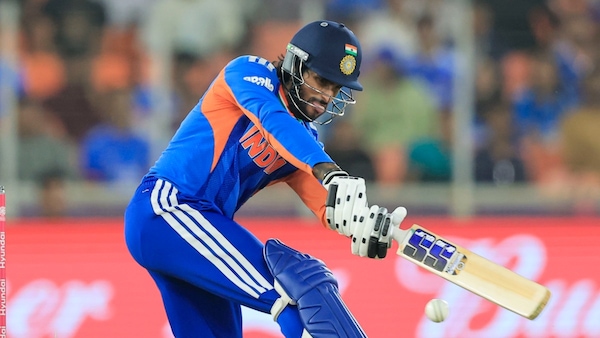
The problem for Tilak has been that he has not been able to rotate the strike against the spinners and always tried to hit it out of misery and got out during the catch moment.
The same thing happened to Surya as well. Although he looked better than Tilak, he has not done enough to take India to greater scores during that middle period.
During his time, what Kohli used to do, even during the tough situation, was to work hard on running between the wickets, change the strike as much as possible, and even during the tougher period strike at around a 120 strike rate, even without hitting boundaries. Kohli used to multiply that by striking at more than 200 to balance it out at the end.
But both Tilak and Surya have been unable to do that. Neither have they been able to rotate the strike, nor have they been able to take the innings deeper to take advantage in the death overs.
Fearless vs. functional: What does India need at the moment?
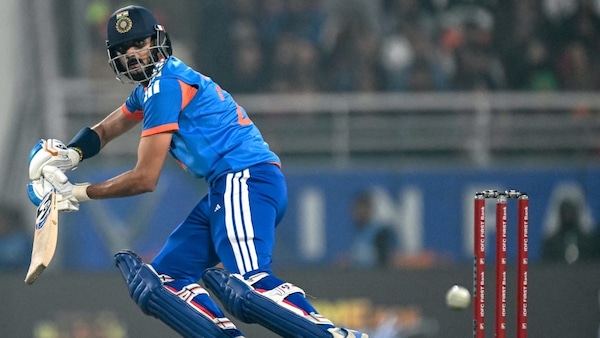
The fearless approach of the Indian cricket team works for every batter on flatter wickets and in high-scoring games. However, on the grippy and trotters' tracks we have seen during this T20 World Cup, the lack of a stabiliser or an anchor has led to a tournament-high 11 ducks for India.
So, what can be the solution for India as they look to balance between the fearless and the functional approach during their important clashes against Zimbabwe and the West Indies?
To be fair, modern T20 does not need a slow anchor. It needs a floating stabiliser who can take two or three overs to anchor the innings, while rotating the strikes and going at least 7-8 runs per over, and then take the charge on whenever there is an option.
Moreover, earlier the batters used to get a window of 5-6 overs to stabilise the innings, but in modern T20, the window might be very narrow, only 2-3 overs.
So the plan would be to maintain a strike rate of 125-130 through strike rotation and optional boundaries, and eliminate dot balls during the middle period. Then try to be the set batter at the 18th over mark and then allow batters like Hardik Pandya and Sibam Duves to take the innings to a higher score with their boundary-hitting abilities.
How to watch the India vs Zimbabwe, T20 World Cup 2026 match?
Cricket fans in India can watch the India vs Zimbabwe, T20 World Cup 2026 match on JioHotstar, accessible via OTTplay Premium.