


Why did Mitchell Starc retire from T20 internationals?
Mitchell Starc’s T20I retirement is a strategic move, prioritizing Tests and ODIs over overload, opening doors for new pacers while ensuring his longevity in world cricket.
Last Updated: 06.13 PM, Sep 02, 2025
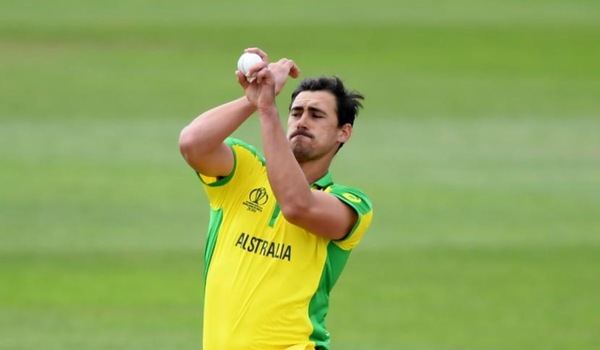
Mitchell Starc’s retirement from T20 Internationals has been met with mixed feelings around the cricketing world. While on the one hand, one can view this as an upset to Australia’s short-format plans, this also signifies the growth of a cricketer who knows his body, who he is, and where he wants to leave his mark. At the age of 35, Starc has decided to ease out of the shortest international variation, but this is not a step down; it is a step smarter.
The left-arm quick has always been more than just raw pace; he was always Australia’s strike dynamic at both ends of a T20 innings: a frightening opening bowler, at 145km/h with late swing, and an equally frightening death bowler punching out 146km/h yorkers with a furious combination of stealth and mass.
To lose in T20Is is to lose one of those unique bowlers that could command the game in these high-volume high-scoring terms. But Starc’s decision to retire is based mainly in realism rather than weariness. He has not shied away from declaring a clear priority, Test cricket is number one, and ODIs are not too far behind. Starc's 2027 ODI World Cup and next Ashes series have seen far greater levels of endurance and physical resilience, as compared to the fleeting bursts in T20 context.
The loss of Starc is not what’s important here; what is important is what Australia stands to gain. Starc’s retirement opens up significant opportunity for the new breed of quicks, with Nathan Ellis, Sean Abbott, Ben Dwarshuis and Xavier Bartlett all now having to establish themselves after years of Starc’s unwavering presence in the XI, which posed an impossible challenge for selectors.
Instead of pinning their hopes on a player of the peripheral skills of Starc, selectors now have a great opportunity to blood new players in international series, with the longer view of building towards the 2026 T20 World Cup. Starc has sacrificed his place, perhaps for the sake of the next iteration of fast bowlers, without the pressure of potentially unseating a modern great.
But his absence will weigh heavily. In the words of George Bailey, the chief selector for Australia: "You don't get many fast bowlers swinging it at 145 km/h." That extraordinary combination of speed, swing, and clutch temperament will not be easy to emulate. Starc’s T20I career may be shorter than his Test and ODI careers, but it was certainly impactful, the defining element of knockout games, able to choke death overs of opposition and set the tone of an international T20 event like World Cups.
Ultimately, Starc’s T20I retirement is not a retreat but a recalibration. He is choosing longevity over overload, substance over spectacle. If this decision allows him to prolong his dominance in Tests and ODIs, it may well prove to be his smartest spell yet, not with the ball, but with his career.