


50 Years of Superstar Rajinikanth: The Humility Behind the Hype
The core of the Superstar's longevity lies not merely in those star-studded, larger-than-life outings, but in an interior world shaped by humility, an unusual lack of ego, and self-awareness.
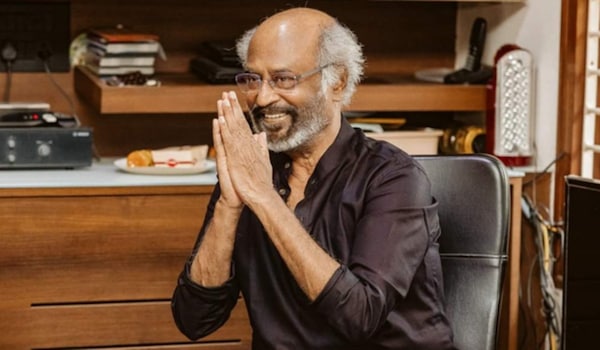
Here's why Rajinikanth remains not just a superstar, but an enduring cultural force.
Last Updated: 05.42 PM, Nov 19, 2025
Editor's Note: As part of OTTplay’s tribute to Rajinikanth’s 50 years in cinema, we wanted to look beyond the familiar image — the swagger, the style, the myths that have become cultural shorthand — and turn instead to the man who has quietly shaped that mythology from within.
In this beautifully observed piece, Neelima Menon gathers three moments from public life that reveal the Rajinikanth few discuss and fewer truly notice: the one marked by candour, emotional intelligence, irreverent humour and an instinctive generosity that has defined his long reign.
It is a reminder that what sustains a superstar across five decades isn’t just aura — it’s character.
***
How does one define the Rajinikanth phenomenon? It refuses easy summarisation. For some, it is his elemental swagger — the flick of a cigarette, the whirl of sunglasses, the unmistakable gait that became cinematic folklore. For others, it is the aura: that indescribable charge he brings to the screen, a presence that has outlived generations and trends. But what often slips through the cracks is the man behind that smokescreen. The Rajinikanth who walks into public events with balding hair streaked with grey, and ordinary clothes. The man who refuses to romanticise this appearance as “simplicity,” once telling a television anchor, with characteristic candour, that he still drives a BMW, flies first-class, stays in luxury hotels, and lives in an expensive bungalow — so what exactly is simple about any of that? And yet, this is precisely where the core of his longevity lies: not merely in those star-studded, larger-than-life outings, but in an interior world shaped by humility, an unusual lack of ego, and a self-awareness that few superstars are willing to reveal. Rajinikanth knows the limits of image, the fragility of fame, and the power of acknowledging one’s own contradictions.
It remains one of the most-watched reels on social media to this day. During a promotional event for Enthiran, Rajinikanth, flanked by Amitabh Bachchan, Aishwarya Rai and Resul Pookutty, takes the microphone and slips effortlessly into a story from his past. He recalls a visit to his hometown in Bangalore, where he met his brother’s neighbour (and friend) from Rajasthan, someone blissfully unaware of the scale of Rajini’s stardom.
Rajinikanth begins (in his endearing, slightly broken English) by sharing how this friend casually remarked on his receding hairline — an observation the superstar receives with an easy, unguarded smile. The friend then asks about his upcoming film, and Rajini mentions Enthiran. When he adds that Aishwarya Rai plays the heroine, the friend nods and immediately asks the obvious question: But who is the hero?

Rajinikanth reenacts this moment with impeccable comic timing — he pauses, widens his eyes, rolls them in exaggerated disbelief, scratches his bald head, and lets the silence stretch just enough to draw laughter from the audience. When he finally reveals that he is the hero, he says his friend was stunned into silence, staring at him for the rest of the evening as if trying to reconcile the Rajini he knew with the global icon seated before him. Later, Rajinikanth overheard the friend lamenting, half joking, half bewildered, about the Bachchan family allowing Aishwarya Rai to act opposite Rajinikanth. And Rajini ends the anecdote by turning toward Aishwarya and thanking her with sincere graciousness for being part of the film.
No matter from which angle you approach this story, it becomes impossible not to marvel at the superstar’s disarming humility. What could have been a bruising jab at his vanity is instead narrated with such warmth, self-awareness, and wit that the auditorium erupts not just in laughter, but in a renewed admiration for the man — one who can poke fun at himself while commanding the adoration of millions.
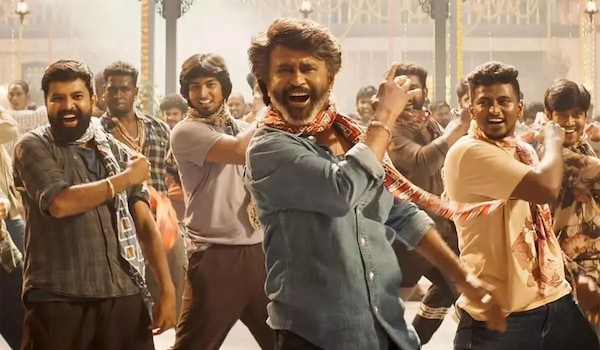
At the audio launch of Lokesh Kanagaraj’s Coolie, Rajinikanth narrated a delightful little exchange that says so much about him, and about the generational shift in stardom. He recalled asking the young filmmaker if he had something in mind for him. Lokesh, still overwhelmed at standing before a legend, apparently blurted out that he was, in fact, a Kamal Haasan fan. Rajini, with perfect comic timing, told the hysterical crowd that he didn’t quite understand why that “information” was required at that juncture. And then, in classic Rajini style, he spun that stray remark into a punchline, conceding that perhaps it was Lokesh’s way of hinting that for this film he expected not the usual Superstar swagger but “intelligent” acting. Beyond the laughter, though, the moment carried an unmistakable grace. It showed an actor utterly at ease with himself, unthreatened by the adoration his rival commands. And in that playful acknowledgment of Kamal Haasan’s brilliance, Rajini once again revealed the generosity and self-awareness that have quietly shaped his long reign.
The third instance came at the star-studded audio launch of Mani Ratnam’s Ponniyin Selvan. Rajinikanth began his speech by announcing that he had “a few things” to share. Then, in a gesture as tender as it was unexpected, he turned to Kamal Haasan — standing beside him — and asked if he’d like to take a seat since he might go on for a while. Kamal, momentarily taken aback, broke into a warm, familiar smile before giving his long-time rival a gentle pat on the shoulder. It was a fleeting exchange, yet it carried decades of shared history and quiet affection.
Rajini then launched into his Thalapathi memories. He spoke of heading straight to the makeup man the moment he landed on set and asking for extra foundation. “I had to share screen space with Mammootty,” he said. “His complexion is like an apple. Without makeup, we would look like Poornima and Amavasya.” This was a superstar whose image is built on swagger, glitter, and effortless magnetism, cheerfully undercutting himself in full public view. Such self-deprecation can only come from someone profoundly secure.
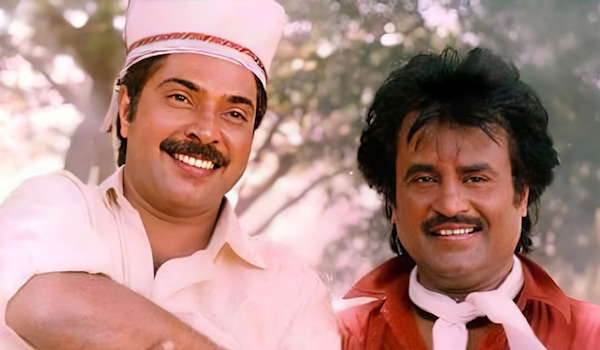
He went on to recall being restless about his loose-fitting costumes and plain footwear, secretly urging the costumer to adjust them to suit his star persona, only for Mani Ratnam to firmly insist that he stick to the original, earthy look. Then came a teasing recollection involving Shobana, who playfully asked him whether he was afraid Mani might replace him with Kamal Haasan — a joke that stung just enough to be memorable, because it was rooted in truth: Kamal’s reputation as the performance powerhouse loomed large over everyone.
The most disarming confession, though, arrived when Rajini recounted Mani’s firm stance against his “stock expressions.” Mani wanted emotions not to be performed but felt. “I didn’t quite know what he was talking about,” Rajini said with the candidness of someone who has long surpassed the need to pretend mastery.
And so, he did something astonishingly human; he called Kamal Haasan for help. Kamal, on hearing the dilemma, burst into laughter: “I knew it! He gave me such a tough time during Nayakan.” It was both camaraderie and an inside joke, two veterans sharing the war stories of being shaped by the same uncompromising director.
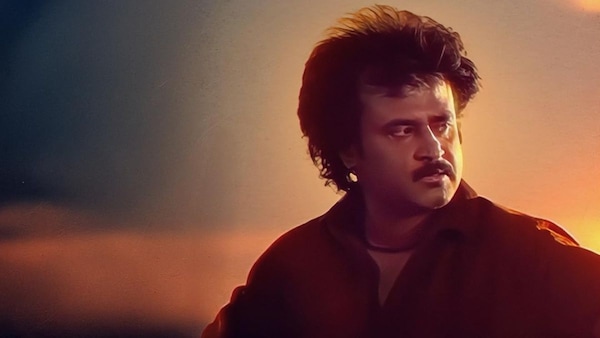
Kamal’s advice was simple but transformative: ask Mani to enact the scenes. Let Mani’s performance become the key. Rajini took that advice, and it worked — unlocking layers of the role that had previously eluded him.
What emerges through all these anecdotes is far more than film trivia. It is a portrait of Rajinikanth stripped of myth, revealing the man beneath: vulnerable, curious, self-aware, endlessly learning. A superstar who doesn’t perform humility but inhabits it. Someone with no ego about being guided, corrected, or even overshadowed by those he deeply admires. In a room full of fans who would cheer his every breath, Rajini chose instead to bare his uncertainties, spotlight others’ brilliance, and laugh at his own limitations. This is not just charm — it is emotional intelligence of a rare kind, a humility that feels lived rather than displayed. Moments like these show why, despite the transformations of Tamil cinema, Rajini’s aura endures untouched: it is built not merely on style, but on a humanity that continues to deepen with age.