


Aankhon Ki Gustaakhiyan: Ruskin Bond Will Not Be Pleased
Just as many films use metaphors, Santosh Singh’s Aankhon Ki Gustaakhiyan is a metaphor for the collective blindness of the Hindi film industry to quality, resulting in a film like itself.
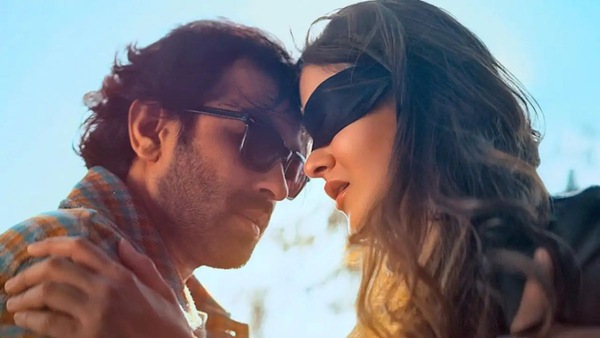
Still from Aankhon Ki Gustaakhiyan.
Last Updated: 05.27 PM, Jul 11, 2025
MOST FILMS USE METAPHORS. Santosh Singh’s Aankhon Ki Gustaakhiyan is a metaphor. It is a metaphor for a privileged person, born with cultural capital, going an extra mile to convince themself of having earned the privilege. It is a metaphor for a nepo baby making her debut and holding the hand of a gifted outsider in the journey. And finally, it is a metaphor for the collective blindness of the Hindi film industry to quality, resulting in a film like Aankhon Ki Gustaakhiyan. Before one calls me out for ridiculing blindness, let me just put it out there: it is the film which is insensitive.
Written by Mansi Bagla (also the writer of the 2022 film, Forensic— a forewarning), Aankhon Ki Gustaakhiyan is supposedly an adaptation of Ruskin Bond’s short story, The Eyes Have It. I exercise caution because what we have here is a butchered version of Bond’s three-page stirring short story that, characteristically, marries emotional nuance with light-heartedness. On the contrary, Singh's film is anchored by delusion and bogged down by incompetence. It is designed as a sweeping love story (characters talk like they are play-acting Laila Majnu in real life), scored like a magnum opus lite (Vishal Mishra is the composer and singer) and unfolds like multiple disconnected reels. Actors speak in the same pitch for different emotions, as if each scene exists in isolation. Maybe they do, maybe they don’t. It is difficult to tell with Aankhon Ki Gustaakhiyan.
Honestly, a lot is. For instance, it is unclear to me how (and why) someone would read Bond’s short story, about the accidental meeting of two strangers in a train, each unaware that the other is blind till the end, and then proceed to make a film where blindness is treated as a kink almost. As an upshot, the blindfold becomes a sexual tool. Or, why would Massey act like he has forgotten the art form? Or, why would creative forces back a project where the emotional heft drowns everyone, including — and mainly — the actors. Or, why would they shoot at Azerbaijan and not mention the place, making others (read me) work overtime to find it. Granted, I got carried away at the end, but I stand by the other queries.
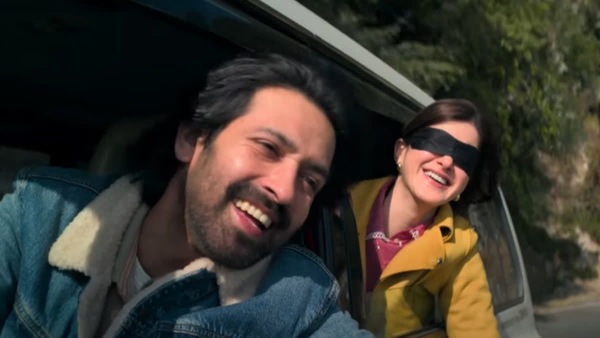
In the retelling of The Eyes Have It, we have Saaba (Shanaya Kapoor making her debut), daughter of a theatre veteran, travelling to Dehradun by train. Primed to make her screen debut and wanting to prepare for the role of a blind girl, she has her eyes covered with a blindfold. So committed is she to the process that she refuses to take it off even when her manager ditches at the last moment, and Saaba finds herself with a stranger in the same compartment (Jeremy Strong, method actor, who?)
Jahaan (Massey), her fellow passenger in the journey, struggles less. He gets her tea at the station and helps her call her manager. Post the initial bickering, they warm up to each other. But here’s the thing: he is blind. Given the strangeness of the situation, he refuses to share. As a result, when Saaba asks him about the outside scenery, he tells her to feel the surroundings. It is difficult not to read this in more literal terms: Kapoor, the debutante, learning the ropes of acting from Massey while periodically calling her father (Sanjay Kapoor) to feed updates.
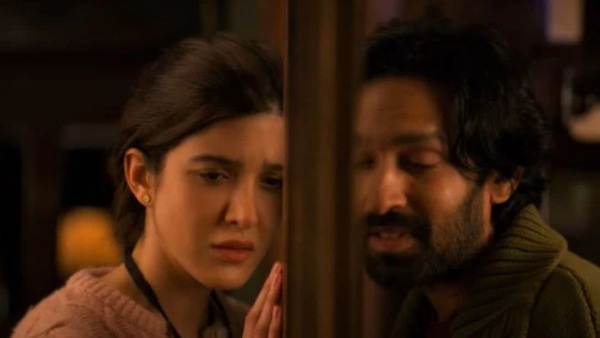
Things get wilder. Saaba and Jahaan start living together (the filmmaker treats her forced blindness as her regard for reality). Creases are plenty. She keeps wearing the blindfold, and although she messes up by keeping the gas on at once, she moves about life with few issues. Jahaan, on the other hand, is a musician and finds inspiration in her. They sing songs together, kiss under the rain, and soon fall in love. It is only when he takes a step back (“you can’t see me properly”) that she decides to take off the blindfold. Both talk standing on either side of a door. Saaba tells him blind people want dignity and not sympathy (the film offers them none). Jahaan, who really is blind, sighs with elevated pride like Massey is pleased with Kapoor for finally having learnt her lines. She wants to see him, she says, and opens the door. The music heightens, prepping for the revelation and then Saaba, with her eyes still closed, makes Jahaan wear it, and they have sex. I could imagine the scene going in multiple directions, but none included using blindness as a means for stimulation.
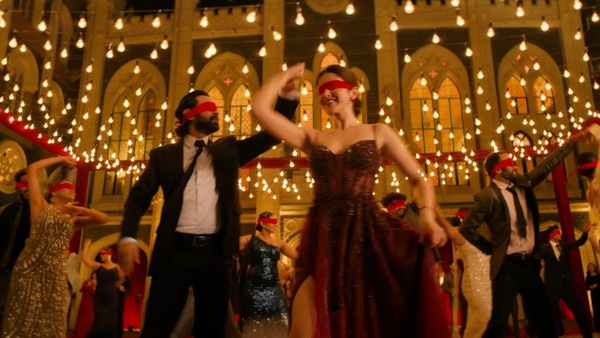
It is difficult to keep taking the film seriously from here, but Aankhon Ki Gustaakhiyan continues with the misplaced confidence of a child. Prolonged teasing with the blindfold follows (will she take it off or won’t she?), and she decides to see him on Valentine’s Day. They dance with masks, and when Saaba opens her eyes, Jahaan is gone. A short outburst follows (“Jahaan mujhe gussa aa raha hain”— reminiscent of Sara Ali Khan’s “Tum mujhe tang karne lage ho”), and then they accidentally meet three years later, "somewhere in Europe”.
If the film was allergic to logic before, it completely abandons it in the second half. Everything happens either by chance (imagine two Indians, one blind and another not, meeting in Azerbaijan, which is flooded with Indians) or vibes. Saaba is now a theatre artist, and her green flag boyfriend is Abhinav (Zain Khan Durrani), the director. When both realise that the blind musician in their group is Jahaan, Saaba is encouraged to talk and seek closure. The dialogues get loftier, the scenes get murkier (Singh puts together one of the worst drugged scenes in the history), and somehow Aankhon Ki Gustaakhiyan forgets who is blind and who is not. Abhinav kisses Saaba to make Jahaan jealous, but who will tell him? Saaba chugs spiked alcohol with blind faith, but who will tell her?
Singh’s film goes on for what feels like an eternity. The pace is no less agonising than the trite leads. After many delays, Kapoor has started her Hindi film career with this film. She talks like Ananya Panday and approaches scenes with performative labour like each is a fresh audition. Despite the horrid adaptation, the journey of Aankhon Ki Gustaakhiyan from the text to the screen could inspire another Bond story. Here’s the premise: a writer revamps a story about two blind people; the revelation, dear readers, is this: she is creatively blind.