


Hridayapoorvam & The Vanishing Tenderness Of Sathyan Anthikad’s World
Hridayapoorvam arrives with all the hallmarks of a Sathyan Anthikad film — family dynamics, gentle humour, and moral warmth. Yet, the narrative rarely achieves the poignancy that its premise promises.

Last Updated: 12.06 PM, Nov 05, 2025
IN AN EARLY SCENE of Hridayapoorvam, when Haritha (Malavika Mohanan) meets Sandeep Balakrishnan (Mohanlal), her father’s heart recipient, the expectation is one of poignancy — as cinematic convention would dictate. And given it is Sathyan Anthikad, who has long mastered the art of mixing warmth with a touch of humour, one might even anticipate a moment laced with gentle mirth. Instead, the film takes a deliberate detour: the encounter unfolds casually, with nostalgic asides and a sprinkle of social-media-style aesthetics. But then the result is a scene that hovers in a curious in-between space — not serious enough to stir, not playful enough to charm. And this tonal imbalance becomes symbolic of the film’s broader narrative strategy: pleasant on the surface, accessible in its design, yet strangely devoid of the emotional gravitas one associates with both the premise and Anthikad’s best works.
Take the characterisation of Sandeep. Beyond the detail of his profession as a caterer, there is little to distinguish him from several roles Mohanlal has essayed in Sathyan Anthikad’s films since the early 2000s. Premachandran in Rasathanthram, Gopakumar in Innathe Chinthavishayam, Ajayan in Snehaveedu, or Vineeth N. Pillai in Ennum Eppozhum — all of them, despite their different occupations and settings, are variations of the same persona: the affable, large-hearted, morally upright do-gooder. Sandeep, too, falls neatly into this mould.
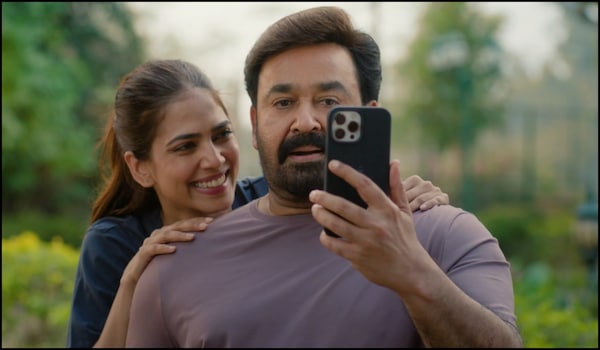
The question then arises: what draws us specifically to Sandeep, beyond the presence of Mohanlal himself? The character is written as an ordinary man, with no particular contradictions or complexities to hold our attention. And yet, to service the aura of Mohanlal’s stardom, the film inserts contrived embellishments — a gratuitous fight sequence that feels out of place, and a half-formed romantic track that is mercifully abandoned before it takes root. These additions do little to enrich the character; instead, they highlight the film’s uncertainty about whether it wishes to present Sandeep as a relatable everyman or as a star vehicle cloaked in the guise of simplicity.
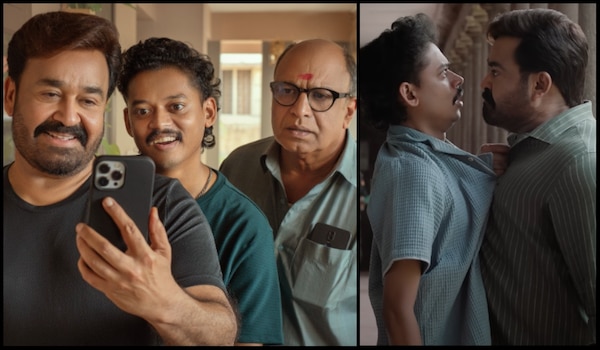
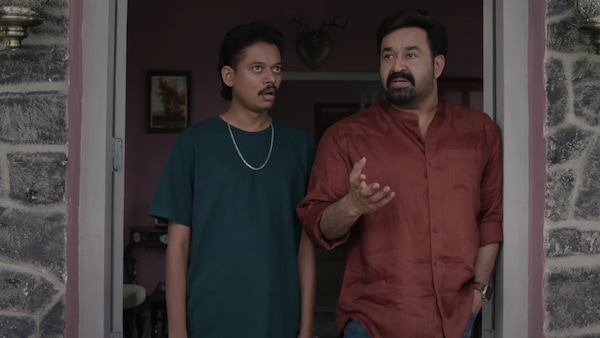
For a filmmaker long celebrated for breathing life into even the most fleeting of side characters, Hridayapoorvam feels unusually barren. Anthikad, once the master of detail and nuance, struggles here to make his supporting cast either memorable or meaningful. Sandeep Prathap’s Jerry, the nurse who shadows Sandeep, feels less like a fresh creation and more like a hand-me-down — a diluted echo of his Amal Davis from Premalu. His camaraderie with Sandeep brings fleeting warmth, hinting at the textured subplots Anthikad once excelled at. But even this thread fizzles out prematurely, abandoned before it can gather emotional heft.
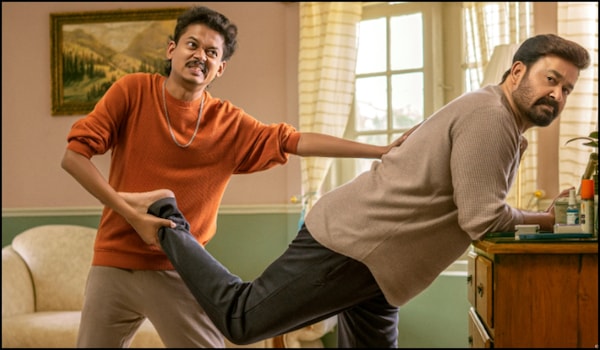
The same rule applies to Siddique as Sandeep’s brother-in-law, Omanakuttan. His comic beats feel painfully forced, delivered with a stagey rhythm that undermines their effect. The quirks assigned to him — his fetish for tea, his greed, his casual irreverence — remain little more than lazy shorthand. Rather than evolving into a living, breathing presence, he lingers as a filler, a bundle of tics written to occupy narrative space.
Elsewhere, too, the film indulges in narrative padding. There are stretches devoted to video conversations between Sandeep and his ex-fiancée that add nothing to the plot nor illuminate his character. The same can be said of Pune Jacob (Lalu Alex), Haritha’s family friend, whose every appearance grates rather than enriches.
Such characters exemplify how far Anthikad has drifted from the textured, humane ensembles that once defined his cinema. Where his films earlier pulsed with life in the margins, here the margins are hollow, and the centre all the weaker for it.
Then there are the two women who, at least on paper, ought to provide the film with its emotional spine — Haritha and her mother, Devika (Sangita). Their dynamic carries the seeds of something genuinely compelling: a wife who felt abandoned by her partner and a daughter who cherished her father with unwavering loyalty. It is a fault line that could have lent the narrative a raw, emotional complexity. Sandeep is positioned awkwardly at the centre of this rift, becoming both anchor and mediator, the vessel through whom these two women attempt to make themselves heard.
In one of the film’s more telling moments, when Devika, on the verge of tears, realises that Sandeep sides with her over Haritha, it becomes a small, almost bittersweet triumph over the husband who once neglected her, whose very heart now beats within Sandeep. The moment contains immense psychological depth, encapsulating the quiet grief, lingering resentment, and yearning for recognition that defined Devika’s life. Yet, the film’s treatment of this revelation is superficial. The narrative glosses over her anguish, underplays the stakes, and robs the scene of the gravitas it deserves. What could have been a raw, emotionally resonant exploration of intergenerational grief, attachment, and unresolved marital tensions becomes, instead, a fleeting beat — indicative of a broader pattern in the film
In another scene, Sandeep develops a tentative attraction to Haritha, only to abruptly withdraw when she recounts her deep attachment to her late father. The scene is strikingly unlike anything one would expect from Sathyan Anthikad, whose touch usually imbues moments of intimacy or revelation with warmth and subtlety. When Haritha invites him to listen to the voice notes in which her father sings, the sequence falls flat. Rather than evoking poignancy or quiet tenderness, it resonates with an odd emptiness, to the point where it borders on second-hand embarrassment for the audience. It is perhaps the clearest instance in the film where Anthikad appears to struggle with a cinematic grammar alien to him — a style and emotional cadence outside his customary repertoire — leaving a scene that should have carried emotional weight feeling dull and awkward.
Even Mohanlal cannot salvage the finale monologue, which epitomises the film’s central flaw: a narrative that gestures at emotional depth but rarely lets it land. Characters remain underdeveloped, and the story’s pivotal moments feel hollow, leaving a sense of promise unfulfilled and emotional resonance frustratingly shallow.