


Kaantha: Selvamani Selvaraj Film Is A Gorgeous, Ferocious Duel Between Artist & Ego
As a sophomore effort, Kaantha is the most gorgeous-looking Tamil film of the year. Films about films can be tricky, and by focusing on the personal, Selvaraj delivers a memorable if uneven film.
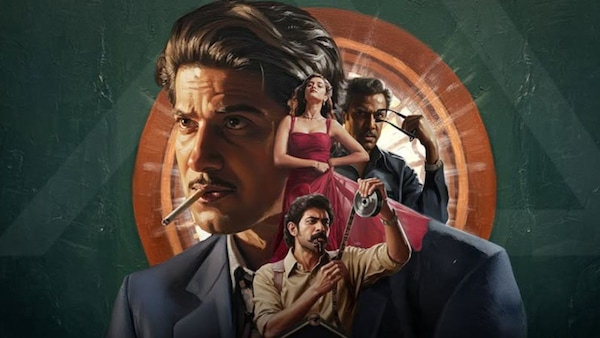
Promo poster for Kaantha.
Last Updated: 02.43 PM, Nov 15, 2025
THE OPENING CREDITS of Selvamani Selvaraj’s Kaantha play over behind-the-scenes photographs of classic South Indian cinema from an era when films were mostly made in Madras and a handful of studios produced all movies. These were Modern Theatres (based in Salem), AVM, Gemini Studios, Vijaya Vauhini and Prasad, and the artists and producers tied to these studios made films across Tamil, Telugu and even Hindi. Kaantha creates the fictitious Modern Studios headed by a young second-generation producer, Martin Prabhakaran (Ravindra Vijay), and borrows the “Thiruchengodu” from the real-life Modern Theatres founder TR Sundaram and gives it to its protagonist TK Mahadevan, played by Dulquer Salmaan. We enter Kaantha in media res, the dramatic stakes already high at the epicentre of the conflict. Ayya (Samuthirakani), a modest filmmaker, is still waiting to make his shelved magnum opus 'Shaantha' — a horror film based on his mother — and the current sensation (and Ayya’s apprentice turned nemesis) TK Mahadevan’s willingness is all it takes to get it back on the floors. After a quick conversation in Martin’s office with Ayya, Kaantha starts off on day one of the shoot with Ayya and Mahadevan’s hostility fresh and glistening.
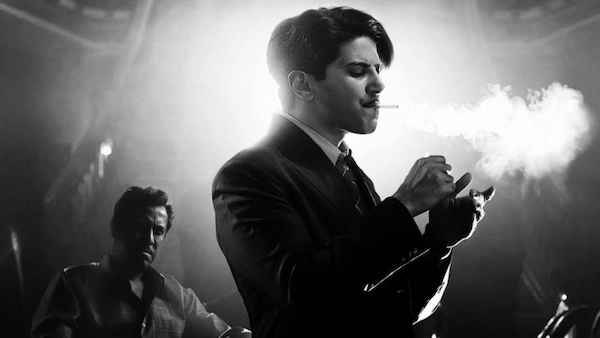
Mahadevan renames the film before his first shot — to 'Kaantha' — and directs himself on sets with the ghostly frame of Ayya reduced to an onlooker. But Ayya’s trump card is Kumari (Bhagyashri Borse), his new apprentice, a Burma extraction (TR Sundaram made Burma Rani with KLV Vasantha in 1945), who is the heroine and, according to the writer, the titular lead. He draws a promise out of her that she will do full justice to the script, her role and his vision, but Mahadaven’s freakish control over the film sends that dream awry. In addition to that, Mahadevan turns on his charms at Kumari and gradually draws her away from Ayya’s shadow and into his starlit galaxy.
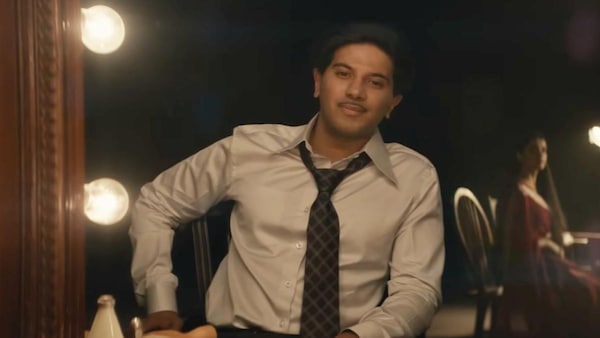
The rush in Kaantha is heady and intoxicating. Its haste is its virtue, especially in the first half, when it rips into the clash between two narcissistic artists, once master and apprentice, now locking horns despite the shared ambition to make this film. Selvaraj, who has also written the film, instils the first half with a propulsive force that switches gingerly between flashbacks — in black and white — during Ayya’s first attempt at making this film and the present day in colour. The rushes of the current shoot also slip in (edited by Anthony), the camera’s droning sound providing a certain suspenseful breathlessness, with Ayya and Mahadevan’s ideas of angles and emotional registers at loggerheads. Back then, he was directing a talented actor-turned-star who had the sudden expectations of his fans on his shoulders, a potent inertia that doesn’t allow him to stick to Ayya’s uncompromising script. Today, he is on surer footing with everyone in the crew marching to his beat, and Ayya is reduced to pale obscurity.
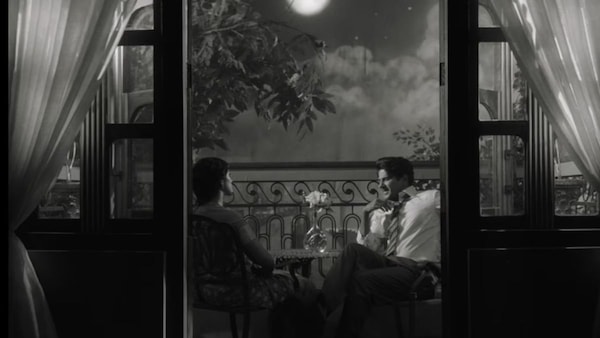
Kaantha’s production design creates something exquisitely original, bringing the era alive without making things look like replicas we’ve witnessed time and again. It is a chamber drama that mostly occurs on the sets of the film within the film, the soundstages of Modern Studios, with a sprawling living room as the main set. The lighting is aggressive, the warm direct sources mostly illuminating the faces of the protagonists and others reduced to their puppets in the background. Selvaraj, with his cinematographer Dani Sanchez-Lopez, creates some beautiful images in black and white. A particular shot on the beach against a car is gorgeous, as is a shot of Mahadevan and Kumari seated in a balcony with the moonlight at the far end of the frame, as classical a shot as any other. Mirrors are ubiquitous in Kaantha, the reflections allowing for the facades to fall through. The shifts between monochrome, dimly-lit surroundings around the main shooting location and the exterior shots in twilight are so smooth that, unless the rushes come in, one cannot distinguish between Kaantha and the film within the film. This is by design, as things escalate within the ménage à trois of Ayya, Mahadevan and Kumari, the strains behind the scenes begin to match those in the camera.
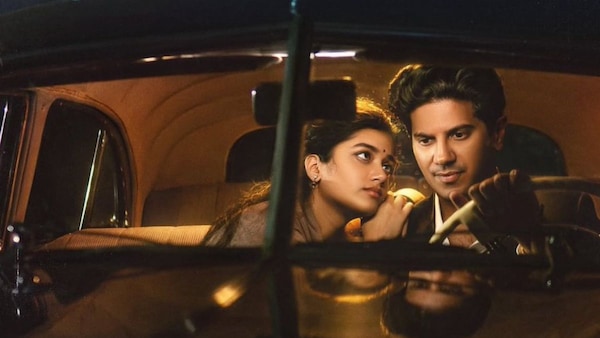
Kaantha loads purpose into every frame; scene after scene plays out with grim conflict that portends a hurricane between two boneheaded artists. What happens when ambition blinds reason? What happens when fame clouds judgment? What happens when pride eclipses love? One man wants to make his magnum opus, a film so personal that he has waited all his life for the right time. Another wants to safeguard his hard-earned image so badly that no other soul can come in the way. Kumari becomes the pivot around which Ayya and Mahadevan play their games, an unwilling participant whose love for one and respect for another bring tragic consequences.

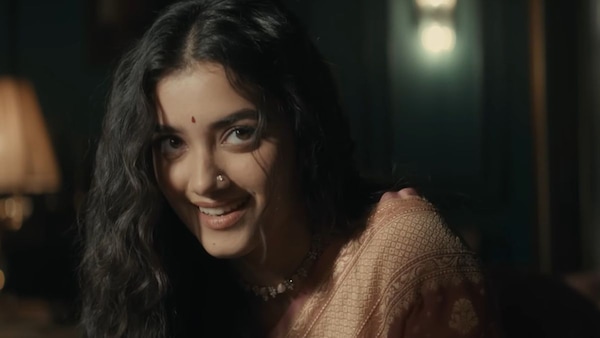
Dulquer Salmaan delivers the second actor’s actor masterclass of his career. He played Gemini Ganesan in Mahanati (2018), and here he is a star actor of a certain vintage, charismatic and gentle on screen and ruthless and cutthroat off it. Be it crisp whites with aviator glasses or three-piece suits, Salmaan displays an effortless suavity that commands love and respect in equal measure. He teams up with Samuthirakani, another wonderful actor who has a knack for disappearing into vulnerabilities hitherto untapped by middle-aged, weary men, weighed down by their dreams, balanced only by sheer willpower. The surprise of the film is Borse, who possesses a face for the classics, a countenance of such divine serenity that it blends into images of the mid-20th century as they exist in our heads. Mahadevan sees in her the early upstart that he once was, and Borse perfectly fills those shoes, playing the hapless damsel who doesn’t let her distress come in the way of her work. Kumari, a thorough professional.





Kaantha undergoes a massive tonal shift in the second half. The first half closes with murder, and Selvaraj transforms the film into a whodunnit. Police officer Phoenix, played by a freestyling Rana Daggubati who has walked in from another film, summons everyone from above the line and below the line in the production for questioning, one he carries out with tremendous hostility and tongue firmly in cheek. Selvaraj’s intentions are apparent; he wants the spectacle of cinema reproduced as the spectacle of murder, and with the location the same as the film set, Kaantha turns into a Hercule Poirot-like mystery scenario with all the parties present. Jakes Bejoy’s score, too, pointed and arresting in the first half, suddenly goes haywire and busy. Beyond a point, too many twists make the film an exercise in repetition. Yet, this is a solid sophomore effort from Selvamani Selvraj and the most gorgeous-looking Tamil film of the year. Films about films can be tricky, and by focusing on the personal, Selvaraj delivers a memorable if uneven film.