


Lord Curzon Ki Haveli Is An Annoyingly Pretentious Film That Goes Nowhere
Anshuman Jha's film represents the worst of independent cinema, where a single intriguing idea is stretched till the point of no return and portrayed with an arrogance that comes to define the intent.
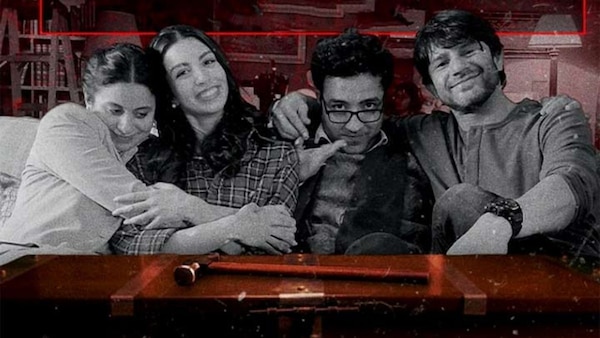
Promo poster for Lord Curzon Ki Haveli.
Last Updated: 06.36 PM, Oct 10, 2025
ANSHUMAN JHA'S Lord Curzon Ki Haveli is the kind of film that says a lot about how it was made. This, of course, is conjecture, but hear me out: a group of actors have met for a weekly hang. Conversations soon segue into discussions about mainstream cinema and how disappointing things have been. Outside, the sun has set, and inside, the room is filled with a haze of smoke and moody yellow lighting. Posters of Alfred Hitchcock and Satyajit Ray adorn the wall; the bookshelf in the corner has a section dedicated to plays by Harold Pinter and Samuel Beckett. Emboldened by fluids, one of them suggests a radical departure. He will make a film that will show others how it is done. The rest, equally fortified, chime in: yes. I’d like to believe that better sense has prevailed since then, but it was too late to back out. The result is Lord Curzon Ki Haveli
If this sounds like a sly, then this isn’t one. I am sure frustration has birthed many independent films, and their competence has only proved the audacity. Jha’s Lord Curzon Ki Haveli, however, is not that film. It also, in many ways, represents the worst of independent cinema, where a single intriguing idea is stretched till the point of no return and portrayed with an arrogance that comes to define the intent. The showy title is a good example, but not the only one.

Written by Bikas Ranjan Mishra (director of Huma Qureshi-starrer Bayaan), the film unfolds as a chamber drama between two couples. A shy woman, Ira (Rasika Dugal), and her uptight doctor husband, Basuki Nath (Paresh Pahuja inconsistently hamming it up), live in London. The film opens with them making a journey to the outskirts. They are supposed to visit Ira’s friend, Sanya (Zoha Rahman), an actor, and her husband Rohit (Arjun Mathur). The hosts are as different from the guests. If Basuki Nath is controlling and domineering towards his wife, reluctant to show any affection, then Sanya and Rohit can barely keep their hands off each other. Ira, too, leans on them while being constantly dictated by his house.
This tension is the central force of Lord Curzon Ki Haveli, distilled in a closed box in the house. Rohit tells Basuki that it has the dead body of Lord Curzon, the contentious British statesman known for carrying forth the Bengal partition in 1905. The joke hardly lands, leading to Basuki raging and getting paranoid by the minute, only to know the contents of the box. At the halfway mark, the key is found.
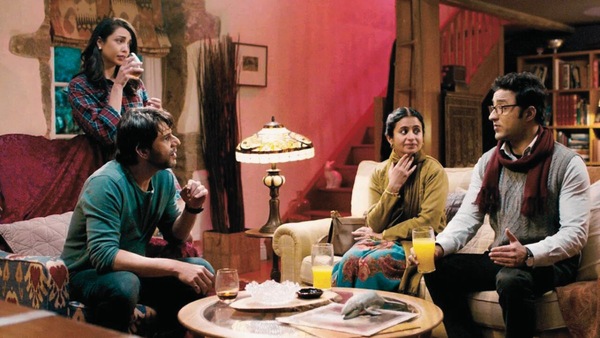
It is difficult to not see what Lord Curzon Ki Haveli wishes to be: edgy, an atypical thriller where every object on the screen carries the weight of a metaphor. It is also painfully plain to see what it becomes: a pretentious film grating on the nerves of the viewers. Jha’s directorial debut carries neither the lightness to be the film that can survive on conversations nor the intrigue to sustain the tension. Everything, therefore, feels manufactured (Pahuja’s accent, deliberately dodgy, is right there). Every frame is designed with affected flashiness as conversations quickly, and inexplicably, spiral from racism to illegal immigrants.
One would take these seriously if all the characters didn’t feel as detached from reality as possible. In one scene, a man hits a woman, and the rest keep watching with an expression of smugness plastered across their faces. Irrespective of the way things conclude, it becomes nearly impossible to care for any of them when each is as annoying as the other. The only one who gets the shortest end of the stick is a certain someone called Mr Ludwig van Beethoven, whose music accompanies the four people who, ideally, should not have met.