

Moira Rose Is Catherine O'Hara’s Definitive Legacy
Through her towering performance as Moira Rose, O'Hara realised the possibility of what women can be when allowed to take up the whole room and, in the process, uncovered the gift of excess.

There will be no one like Moira Rose, and there would be no Moira without Catherine O'Hara. What a gift and a tragedy.
Last Updated: 07.38 PM, Feb 04, 2026
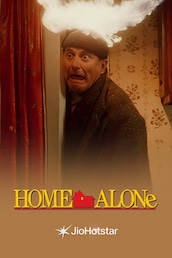
ON January 30, Catherine O'Hara passed away. The news was followed by a pall of sadness and a deluge of obituaries. Fans and colleagues were in mourning. The 71-year-old actor had had a five-decade career, dotted with all-round classics (Home Alone, Beetlejuice) and momentous creative partnerships. At the time of her passing, O'Hara was still widely relevant and actively working (she remains nominated at the Actor Awards for her performance in The Studio). That she had to bow out at a time when the stage was still warm with her presence is tragic, but the collective grieving that has ensued would make one person exceedingly happy: Moira Rose.
Moira Rose from the series Schitt's Creek is one of O'Hara’s most triumphant creations; a scintillating late-career swerve capable of resurrecting one’s filmography, which, in the actor’s case, only sealed her prowess. Through the character, O'Hara brought her signature unhingedness, the ability to elevate words and names by the sheer act of pronouncing them (“David”, “Alexis” have not sounded the same since) and sustained a largesse in her portrayal that felt defiant in its refusal to seek permission for it.
Created by Eugene and Dan Levy, Schitt's Creek centres on the Roses, a family of four, who lose all their wealth only to find their feet again. During the process, they are forced to live in the titular town, once bought as a joke but which remained as the last asset. The six-season series dropped in 2015, and by 2020, it had spawned a legion of fans. Schitt's Creek continues to enjoy a thriving afterlife in pop culture through unending memes and reels. The lines are legendary (“'What you did was impulsive, capricious, and melodramatic. But, it was also wrong,'” says a mother to her son); the repartees are iconic (“eat glass,” says a brother to his sister), and the character wardrobes are distinct. Even then, Moira Rose stands out.

Moira is many things. She is the mother of two grown-ups — David (Dan Levy) and Alexis (Annie Murphy); she is the wife of Johnny Rose (Eugene), a successful businessman duped by his business manager. She is a daytime soap opera star, and if probed a little deep, she is a has-been. Her refusal to reckon with her fading relevance comprises the comedy, and her eventual acceptance of it would be the transition reserved for her character.
Yet O'Hara’s portrayal, aided by the writing, refuses to let the guard fall even when pronouncing it. She plays into the delusion with more delusion and, by doing so, she crafts an excess that expands into a buffer. As an offshoot, Moira Rose, with her definitive vocabulary, bespoke clothing and elaborate wigs, might look ridiculous, but she is never ridiculed. Her elevated self-image might be funny, but her commitment to it almost always leads to tangible results, proving them to be flights of wisdom in the long run. Moira Rose is the backbone of the series — and also its soul.
The makers are not just aware of this, but assiduously encourage such a reading. On paper, Moira Rose is supposed to be a middle-aged woman with her well-lived life shoved in the past. But in the making, she transcends into someone who wants more — not out of greed, but as a portrait of a woman who deserves better. Unlike her children and husband, only Moira retains the burning desire to run away from the town. There is a lovely scene at the end when Alexis rues leaving the motel, their accommodation for the past six years, which brought them infinitely closer than the opulent house they lived in. “A part of me is almost glad we lost the money,” says Alexis, to which Moira replies, "You wouldn't be the first hostage to fall in love with their captor(s).”
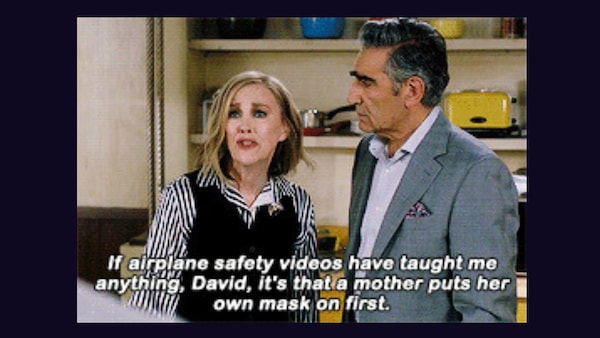
In more ways than one, the writers give Moira a rare space to be indulgent despite and because of being a mother. She is self-involved ("If airplane safety videos have taught me anything…it's that a mother puts her own mask on first”) without being punished for it; she insists on self-care without shortchanging on the care her family offers her. It is a bravura role that O'Hara not just inhabited like a second skin but ran with it.
In her hands, Moira became a vision of exaggeration. The performance was one for the ages, a masterful straddling of surplus with something deeply human. With Moira, O'Hara accomplished the impossible task of making the character both distant and intimate, impossible to both ignore and dislike. If traditionally women have been cautioned against being extra, then O'Hara threw the advice to the wind; through her towering performance, she realised the possibility of what women can be when allowed to take up the whole room and, in the process, uncovered the gift of excess.
Nowhere is this more apparent than in the way she plays a mother. Moira Rose is television's definite mother. This is true both in the way GenZ(s) use the word (her undaunting spirit has mothered people to be bold and contentious) and also in a more conventional sense, where the word, often used as a noun, was given the leeway to be a verb. As a mother, Moira Rose is worryingly self-contained, but despite constantly prioritising herself over others, she finds a way not to be selfish. It is not as such walking a middle-ground as Moira carving her own path, underlining through it all that she could love her children because she loves herself.
O'Hara became a face of this selfless selfishness, representing untamed womanhood and self-centred motherhood. After her passing, social media is clogged with reels of Moira churning out one zinger after another. Her accent is untraceable and her character unmatched. There will be no one like Moira Rose, and there would be no Moira without Catherine O'Hara. What a gift and a tragedy.