


‘Cinema Doesn’t Need Me’: The Philosophy Behind Mammootty’s Longevity
As Patriot brings Mammootty back into focus, here’s how one line — “I need cinema. Cinema doesn’t need me” — explains the philosophy behind his astonishing longevity.
Last Updated: 04.18 PM, May 08, 2026
WITH Patriot, Mammootty returns to the centre of a conversation Malayalam cinema knows well: how does a star remain monumental without becoming immovable? The answer, in his case, has never rested only on scale, legacy, box-office power, or the weight of his name on a film poster. It lies in the discipline with which he keeps stepping away from that weight.
Years ago, in an interview for a Malayalam news channel, Mammootty offered a line that now reads almost like the private constitution of his career: “I need cinema. Cinema doesn’t need me.” It sounded like humility, but it was also a working philosophy — one that resists entitlement, embraces change, and helps explain why, after decades of superstardom, he continues to look less like a monument to the past and more like an actor still in active negotiation with the present.
THE INTERVIEW AS A WINDOW INTO THE PERSONA
During that video interview nearly two decades ago, Mammootty offered a rare, introspective glimpse into the inner life of an actor, reflecting on stardom, friendship, and the public perception that often surrounds him. The conversation merits preservation not merely as an insight into his acting technique, but as a meditation on the film industry itself — its hierarchies, illusions, emotional costs, and shifting ideas of relevance.
PUBLIC HUMILITY AS PRIVATE DISCIPLINE
What makes the interview especially striking is Mammootty’s honesty about his own limitations. He openly admits that he is an actor who has evolved, someone who has steadily polished and refined his craft with each film. “My confidence is that if I keep polishing it, it will keep yielding more.”
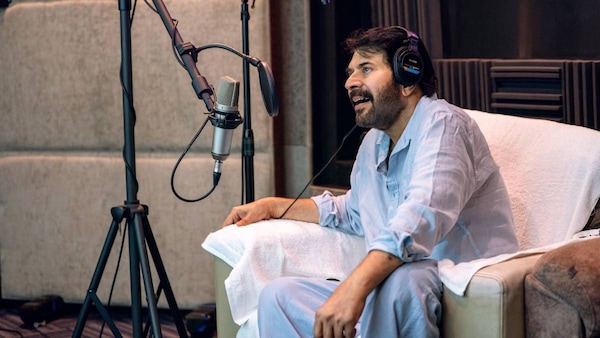
Coming from a superstar with nearly 400 films to his credit, along with numerous awards, accolades, and box-office triumphs, the statement moves beyond humility. It becomes a masterclass in self-awareness, especially because it comes from an actor of his stature. It is also a reminder that craft, for Mammootty, is not a destination. It is a lifelong discipline.
STARDOM WITHOUT ENTITLEMENT
That same interview was a treasure trove of insights, but few observations linger as powerfully as this: “I need cinema. Cinema doesn’t need me.”
In a single line, Mammootty dismantles the myth of indispensability that often accompanies superstardom. It reveals an artist who sees cinema not as something he owns or commands, but as a larger, enduring force to which he remains answerable. The statement carries both humility and resolve — an acknowledgement that relevance must be earned continuously, not guaranteed by past glory.
It is precisely this mindset that explains his sustained evolution as an actor: a willingness to submit to the craft, remain a student of the medium, and approach every role without entitlement.
ERASING THE STAR FOR THE CHARACTER
During a recent promotional interview for Kalamkaval, when he was asked what criteria a writer should consider while approaching him, Mammootty’s response was characteristically telling: “When you write, you shouldn’t keep me in mind. Only then does it become a character.”
The statement subtly inverts the usual power dynamic between a star and the text. Instead of asking the writing to accommodate him, Mammootty insists on the erasure of image, reputation, and the accumulated weight of his own stardom, so that the character can exist independently of the actor playing it.
It strengthens the same core belief he articulated decades ago: cinema is larger than the individual, and the actor’s duty is to serve it, not dominate it.
BEING ‘UPDATED’ AS AN ETHICAL STANCE
Mammootty being “updated” has almost become a cliché. Yet in his case, being updated is not merely about staying visible or current. It is about an acute awareness of social conversations, generational shifts, and a genuine openness to change.
That awareness partly explains his willingness to play a homosexual man in Kaathal: The Core, a role that could easily have unsettled long-held perceptions of him.
SUBTLETY AS A CAREER STRATEGY
With Mammootty, the responsibility does not end with performance; it often extends to the paper itself. Director Jeo Baby has spoken about the actor’s suggestions that helped shape Kaathal: The Core into what it eventually became.
When Mammootty proposed that the relationship between Mathew and Thangan be expressed through muted glances rather than physicality, it revealed his astuteness. He understood that anything more explicit might alienate a family audience, while subtlety could convey the emotional truth of the relationship without turning the film into a provocation.
VIOLENCE, RESTRAINT, AND AUDIENCE TRUST
In the recent Kalamkaval, where Mammootty plays a cop who seduces and kills women, it would have been far easier to crowd the frames with explicit violence and intimacy. Yet the film chooses restraint, relying on suggestion and implication instead.
It is difficult to entirely rule out the possibility that this creative choice stemmed, at least in part, from the actor himself. What matters is that it is consistent with the way Mammootty has often handled difficult material: not by softening its darkness, but by trusting restraint to do more than excess.
MANAGING IMAGE WITHOUT POLICING IT
A similar consciousness is evident in Puzhu, where he plays a religious bigot and toxic father. On the surface, it could be read as an actor simply seeking unfamiliar territory. But it is hard to believe Mammootty was unaware of how radically the role subverted his long-standing hypermasculine image.
These choices suggest not just a desire to experiment, but a deliberate engagement with his own cinematic legacy. He is not merely preserving the Mammootty image. He is using it, interrogating it, and, when necessary, dismantling it.
OPENNESS TO NEW VOICES
Any conversation about Mammootty’s sustained relevance eventually circles back to his rare ability to remain open to ideas, evolving methods, and voices younger than his own, without insecurity or condescension.
At a time when many of his contemporaries frame the present as a dilution of a glorious past, or speak of a disconnect from newer cinematic syntax, Mammootty stands apart. You will rarely hear him pulling down the young, dismissing experimentation, or reducing change to a threat.
ENCOURAGEMENT OVER CONTROL
Instead, his choices reflect a genuine curiosity about how cinema is evolving. From unconventional storytelling structures and intimate cinematography to shifting musical sensibilities and newer, less performative modes of acting, he has repeatedly shown an eagerness to adapt rather than resist.
More importantly, this openness is not passive. He actively encourages younger filmmakers, technicians, and writers, often trusting their instincts even when they unsettle the comfort of his own image. Films like Rorschach, Bramayugam, and Kaathal: The Core are not isolated risks but extensions of his worldview. They show how his measured persona and life philosophy manifest organically in the roles he chooses.
THE MYTH OF THE ‘MAMMOOTTY DISCOVERY’
Over the years, the industry has repeatedly spoken of a “Mammootty discovery”. It could be a serial actor, a mimicry artist, a music director, or simply an artist surprised to learn that he is not only aware of their work, but has been quietly following it.
These stories surface with striking regularity, not as anecdotes of generosity alone, but as evidence of genuine consideration.
Krishand’s Aavasavyuham gained renewed visibility when Mammootty spoke about it during media interactions for Rorschach. He invited the relatively fresh ensemble of actors and crew from Aattam to his home, a gesture that spoke less of patronage and more of his undying curiosity for new talent. At the State Awards ceremony, he openly praised Feminichi Fathima, remarking that “these kinds of stories can only happen in Malayalam cinema.”
It is also significant that Mammootty does not stop at admiration. He has openly expressed interest in collaborating with these talents. In fact, asking for roles is something he still takes pride in — an admission few actors of his stature would make, let alone practise. Even today, he remains an artist who seeks out work rather than waits for it to arrive. His durability is sustained not by authority, but by hunger.
GENEROUS WITH PRAISE, HONEST WITH JUNIORS
It takes grace and confidence to publicly acknowledge one’s peers, and Mammootty has often done it effortlessly. Two days ago, while accepting the Kerala State Best Actor award, he declared that Tovino Thomas and Asif Ali, who won special mentions, were equally deserving, adding wryly that perhaps “age” had worked in his favour.
At the Chatha Pacha success meet, he praised the physical commitment of the younger actors, candidly admitting that he could never have done it himself. Even when the filmmakers credited his cameo for elevating the film, he was quick to redirect the praise: “No, it was their energy and commitment that gave it life.”
It reinforces the idea that his stature is built not only on talent, but also on humility, generosity, and an unusual absence of insecurity.
ENDURING STARDOM WITHOUT NOSTALGIA
It is also noteworthy that, unlike many of his peers, Mammootty rarely leans on nostalgia or self-reference, the easiest crutches available to a veteran star. That is why his recent collaborations feel less like a senior actor staying afloat and more like an artist in active dialogue with his time.
With Patriot, that conversation continues. Mammootty’s longevity has never been about refusing to age, or pretending that cinema has not changed around him. It has come from something rarer: the ability to remain alert, curious, and porous to change while carrying the full weight of a legendary career.
Perhaps that is why “I need cinema. Cinema doesn’t need me” still feels like the key to understanding him. It is not a self-effacing line. It is a statement of discipline. Mammootty endures because he has never mistaken reverence for relevance. He keeps returning to cinema not as someone who expects to be needed, but as someone still willing to earn his place within it.