


Saiyaara: A Star Is Born
With Saiyaara, Mohit Suri captures the feeling of sinking in love through the musicality of a heartbreak, and it has been a while since a Hindi film let itself fall.

Promo poster for Saiyaara.
Last Updated: 02.51 PM, Jul 19, 2025
GREAT LOVES look ordinary in close-ups. A man having black coffee because someone he loved liked it; a woman keeping the other side of her bed empty for days. A boy abandoning his future to take care of someone he loves; a girl refusing care to protect the person she loves. These are familiar stories of regular people, more common than one imagines. But there is greatness still, less in the falling and more in the telling, and few filmmakers do it like Mohit Suri.
This is not to say that he has always been successful. If anything, the opposite is true. Suri’s filmography is dotted with variations of a similar kind of love story, and in the last couple of years, the balance has been scattered. It has been either too bizarre (Ek Villain Returns), too outlandish (Half Girlfriend) or too morose (Hamari Adhuri Kahani). Individually, these are peak attributes of a Mohit Suri film, and yet it took a while (more than a decade since Aashiqui 2) for things to fall into place, and then — rejoice!
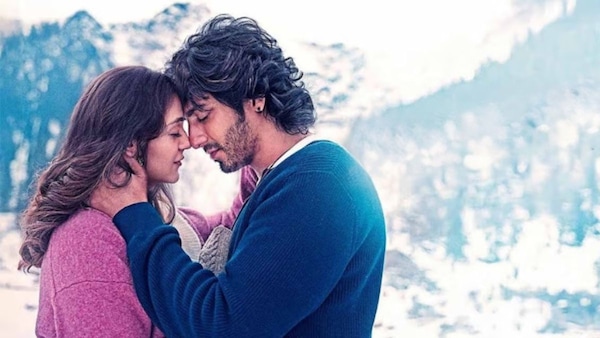
With Saiyaara, his latest take on doomed love, the filmmaker goes the whole hog. He brings back the sentimentalism of young love and pairs it with the sobering selflessness of time. He puts his finger on the crushing urgency of youth and validates it by executing a tragedy in the future. More crucially, Suri captures the feeling of sinking in love through the musicality of a heartbreak, and it has been a while since a Hindi film let itself fall.
The story is as new as old. It is as A Star Is Born as The Notebook. Krish Kapoor (Ahaan Panday), a raging young musician, meets Vaani Batra (Aneet Padda), a sheltered girl with a broken heart. He is desperate to make it big in the future, and she, a writer, is consumed by her anguished past. She sees him first, but he sees through her first. He helps her and then seeks her help. Vocally, bashfully and sensitively. It is a tried trope, too Aashiqui 2-coded in spirit, but Suri builds it up one song at a time, only to subvert it.
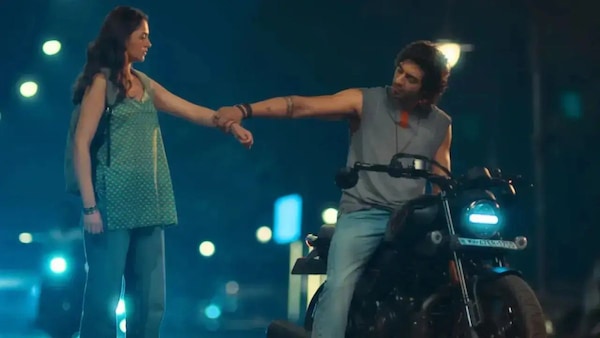
Saiyaara soon becomes about the boy fixing the girl, and although this lends ingenuity, Suri’s film proves to be as effective even when familiar. This is troubling for how shamelessly it reveals you to yourself (on another day, I would have rolled my eyes at a boy saying, “help me”, but today I had tears). In fact, most cliches work — the sadboi trope, the vulnerable girl prototype, the unrelenting parents, an alcoholic man grieving his dead wife.
There is little explanation to this except that Suri, along with writer Sankalp Sadanah, commits to the severity of first love without softening it with nostalgia. Small acts go a long way. When Vaani sits on Krish’s bike for the first time, he uses his jacket to tie them both together— a flamboyant gesture yet impossibly romantic. When she gives him a deadline by which she has to reach home, he dutifully abides only to hold her hand to spend the remaining seconds together. To a jaded eye, these might look excessive, but what are rituals if not love’s private language?
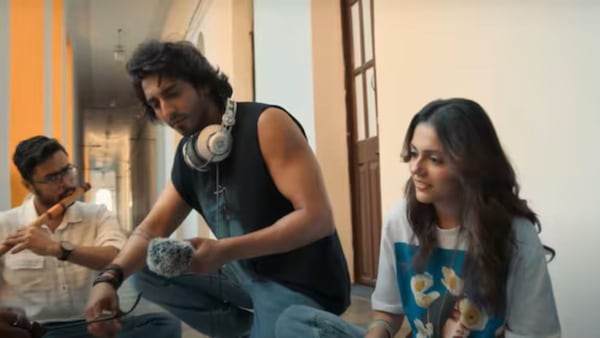
Almost the entirety of Saiyaara works because of the electric leads. Unabating debate on nepotism might make it difficult to remember, but debuts in Hindi cinema once were met with curiosity and not disdain. Panday and Padda resurrect the interest. They share pulsating chemistry, so palpable in spirit that one, it seems, would wilt without the other. To Suri’s credit and Padda's performance, Vaani, written like a woman in service of a man (she fixes him, cheers for him and then waits for him), is given the agency of a protagonist. She might be forgetting, but Saiyaara remembers it is her story. Padda previously featured in an ensemble of Big Girls Don't Cry (2024) and holds her own in every frame. Her character shares the good girl syndrome from Shraddha Kapoor’s in Ek Villain (2014; both keep diaries), but also awaits a ruin that refuses to be fixed.
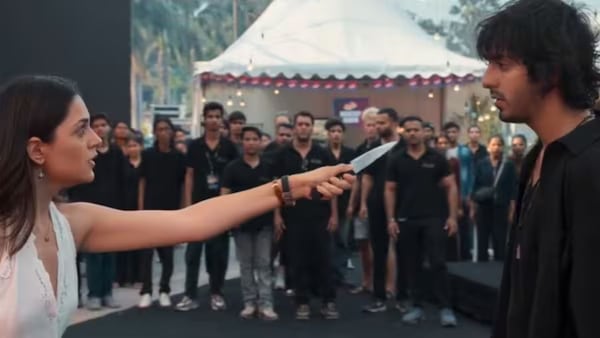
This, however, doesn’t stop Krish from trying and Panday, shouldered with the impossible task of unending pining, is rousingly effective. It has been a while since a male debut has stung so, and I cannot stop thinking about it. With Krish, Panday brings the rage of youth and wraps the brattiness with vulnerability. In several scenes, his eyes brim with tears and the ache is reminiscent of Ranbir Kapoor’s character in Rockstar (2011), a musician fated to suffer heartache in retrospect.
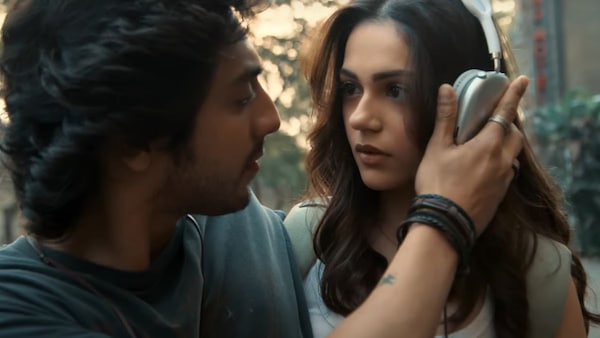
His softboy is a welcome addition to the hardened masculinity that a film like this often demands. It encapsulates what Saiyaara really benefits from — the coming together of Suri and Aditya Chopra (the producer). The central love story vibrates with Suri’s filmography, most of which recognises love as a transformational force headed to doom, and carries the central belief of Chopra’s films that to love someone is to see god in them. One of my favourite scenes is Krish running towards a giant screen with Vaani’s picture and then falling on his knees as if she is the god and the temple, the prayer and the hymn. Suri amps it up by zooming out and heightening the scale.
It tied my heart in a knot. It was not supposed to be so. As a woman in her 30s, I have known better and seen more. And yet, as traces of the title track filled the frame, I felt like I was back in my school bus, listening to Himesh Reshammiya croon and convinced that all the words in the world were written for me. Great loves look ordinary in close-ups and unfeasible from a distance. In Saiyaara, Suri uses music, the weapon of his choice, to distil what they feel like: the incurable homesickness of first love.