


Thamma Is A Bloodless Vampire Film With No Teeth Or Bite
The fifth outing in Maddock Films' horror-comedy multiverse, Thamma is a remarkably unremarkable feature. The film's individualism is consistently sacrificed at the altar of crowd-pleasing humour.
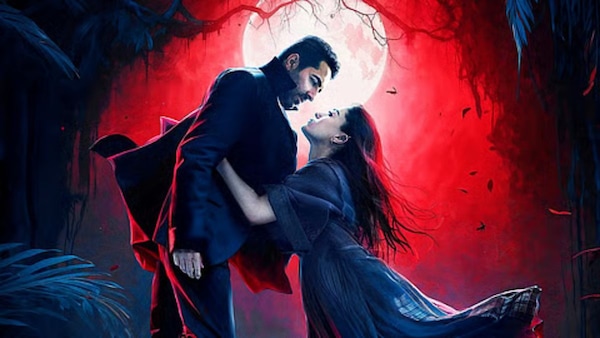
Promo poster for Thamma.
Last Updated: 03.03 PM, Oct 22, 2025
ADITYA SARPOTDAR'S Thamma is a nothing film. It is so vacuous that had the review ended with one line, the remaining blank space could have passed off as method writing. It is so empty-coded that candy floss, in comparison, would be more weighted. It is so ineffective that the cautionary tobacco advertisements attached to theatrical releases prove to be more potent. And, it is so vacant that if the film were a piece of land, it would make for a lucrative real estate deal. My thoughts are getting garbled here, but then thinking about Thamma should not be a full-time job, yet here we are.
Hindi films have been suffering for a while. Post-pandemic, viewing patterns altered, and as a result, the semantics of storytelling changed. Five years in, a pattern has emerged. Big-budget films are being mounted with increasing frequency, stardom has gained renewed leverage, and narratives are drowning in self-reflexive references. Another trend is afoot: franchises. One could view this as a response to the COVID-19 uncertainty that most production houses today are working overtime to track a connection among their films. Maddock Films was one of the early movers, and their intricate plots validated integrated worldbuilding. But their latest feature doubles down with damning certitude that franchises have run their course.
Sarpotdar’s Thamma, the fifth outing in the horror-comedy multiverse, is the film equivalent of a middle child. It sleepwalks through most of its runtime, as if immune to scrutiny, only to break out with misdirected ambition for attention. The result is a remarkably unremarkable feature despite the many star cameos waiting in the wings. In hindsight, this proves to be Thamma’s biggest problem as its individualism is consistently sacrificed at the altar of crowd-pleasing humour.
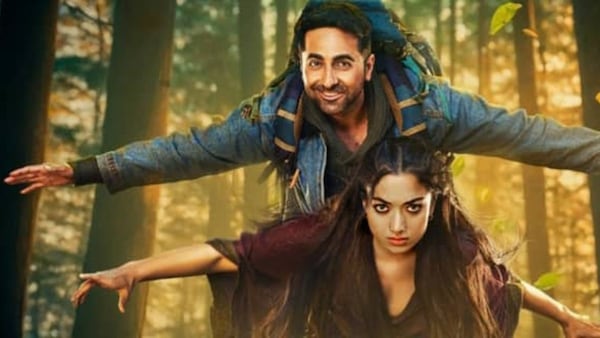
The film opens in 323 BC. Alexander and his troops are riding horses in the middle of a thick forest when a group of blood-sucking betaal attack them. The vengeance with which they kill makes them look like freedom fighters, an assumption that the film plays on. The scene cuts to real time when Alok Goyal (Ayushmann Khurrana), a recently disgraced journalist, walks into a forest for some Instagram-worthy pictures. Two other colleagues accompany him, but when a bear unexpectedly attacks Alok, they flee, and the man is left to his own devices.
This, of course, is a set-up, but the flimsiness with which it is executed says a lot about the film and its inconsistent tonality. Injured Alok meets Tadaka (Rashmika Mandanna), a troublingly honest betaal and is instantly smitten. She nurses him back to health and soon becomes the segue for darker secrets in the story. The jungle, it turns out, is filled with members of her community — all vampires and the likes who feast on blood but do not kill human beings (the reason is furnished later, but the superficiality of it is laughable). Their leader is someone called Yakshasan (Nawazuddin Siddiqui), an English-speaking betaal who lies chained because he had killed a human being.
Touted as the first love story of the franchise, Thamma springs from a familiar setting, making the road ahead easy to locate. Alok and Tadaka fall in love, and the humour is embedded in the revelations. Yet, written by Niren Bhatt, Suresh Mathew and Arun Falara, the film is bafflingly confounding in its intent. The laughs are scanty and also worryingly misplaced. For instance, a death scene is played for hilarity in one moment and at the very next, things are all sombre. Discoveries are planned in instalments even though Thamma does little to hide things.
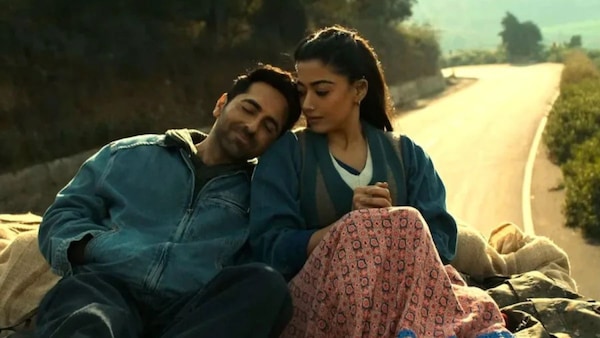
The stakes, above all, remain consistently low. Seeing himself turn into a betaal, Alok freaks out. He has a meltdown, and yet the film makes the possibility look inviting because being human in Thamma means little. Set in Delhi, the narrative is strangely scooped out of social context — a missed opportunity not just because the franchise stands on subversions but also because the confluence of the city and a female vampire lends itself to compelling iterations.
More recently, Dominic Arun’s Lokah Chapter 1: Chandra, the Malayalam-language film, explored the possibilities and unravelled a terrific addition to the superhero canon in Indian cinema. Thamma not just plays safe but portrays the idea of a female saviour as an accidental offshoot of the main premise. In one scene, Tadaka saves Alok, and later, she admits to not remembering things because she was too drunk.
Before this, Sarpotdar helmed Munjya (2024), and although I was not a fan of the film, there was something to be said about the way he upturned, and thereby critiqued, the idea of a nagging man unable to take a "no". In comparison, his latest film appears too pale to evoke commentary and too staid to initiate conversations. Both Mandana and Khurrana deliver incurious performances, playing their roles with textbook conviction much like Thamma itself.
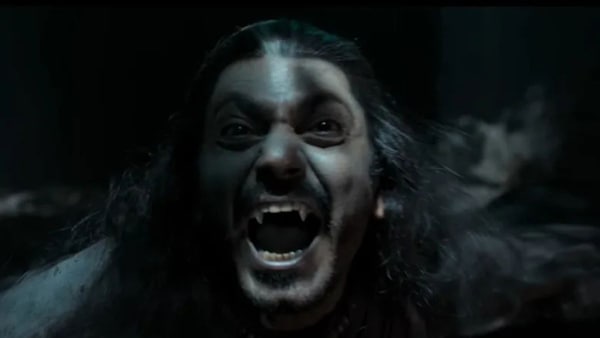
It is only Siddiqui, however, who visibly has fun. One way to look at it is that he cares little about the film, which, anyway, cares little to be experimental. But the actor finds pockets of lightness (him speaking English because he has killed many White soldiers back in the day is a gag that should have been allowed to breathe more) and in brief sparks upholds what Thamma could have been if it hadn’t chosen to be this lifeless. Imagine getting such a lesson from a vampire.