


The Sentimental Value of Hamnet: Genius Isn't Magic, It's Human
This is #ViewingRoom, a column by OTTplay's critic Rahul Desai, on the intersections of pop culture and life.
Last Updated: 09.16 PM, Mar 03, 2026
MOST OF US prefer to view great art as an act of magic: unexplainable, beyond the realms of reason, otherworldly, divine. We often speak of a landscape-altering movie or book like it’s conjured from nothing but fateful creativity and limitless vision. We perceive their creators as those who create; as those blessed with a little extra, almost as if they see worlds that we cannot. It’s not dissimilar from how we think of top athletes as supernatural beings. Terms like “gifted” and “immortal” are freely employed to describe record-breaking feats. Reframing talent as a cosmic value is the most traditional way of preserving the sanctity of ordinariness. We see them as extraordinary because it not only gives us something higher to trust in, it also absolves us from the complexities of being human. It’s easier to believe that they’re built superior so that we can reckon with our own regularity.
That’s why it’s unsettling to see someone like Steven Spielberg suddenly realise — in the middle of a James Lipton interview — that the central element of his science-fiction classic came from a personal space. He confesses that, until Lipton’s carefully phrased question prompted him, he had no idea that his parents’ professions shaped the musical-computer communication of the spaceship from Close Encounters of the Third Kind. That’s why it’s unnerving to recognise that the last half-and-hour of The Irishman is a 70-something Martin Scorsese confronting his fear of mortality and irrelevance. That’s why it’s humbling to see a photograph of a little Charlotte Wells with her young dad next to one of the father-daughter posters of Aftersun. That’s why it’s strange to hear of the real-life moment — of a writer seated between her childhood sweetheart and her husband at a bar — that inspired Celine Song’s Past Lives.
Knowing that some of the most influential stories of this generation might have originated from deeply private corners is acknowledging that the creators don’t see worlds that we cannot; they simply feel this world in ways that we cannot. It’s acknowledging that humanity — not faith or divinity — is the catalyst of talent. This is one of the reasons Chloe Zhao’s Hamnet has been the subject of much awards-season scrutiny. Many detractors have dismissed it as “fan-fiction” and “grief porn” because, by adapting Maggie O’Farell’s speculative novel of the same name, Hamnet chooses to suggest that William Shakespeare’s most popular play may have been rooted in the pain of losing a son. It’s the implication that the most adapted fiction ever might have stemmed from crippling grief, not blinding genius.
The criticism of the film revolves around an inherent struggle to believe that great art is a mortal reaction, not a magical action. That it’s the heart’s way of coping rather than the mind’s way of hoping. To consider that Hamlet is named after his boy is to consider that genius is the grammar of catharsis; that fantasy is the choice to reimagine, not the gift to imagine. It also alludes to a difficult truth: most of us hide behind the guise of ‘normalcy’ because we don’t know what to do with our suffering. A majority of society isn’t equipped to channel the rawness of trauma. Instead, it is invisibilised until we believe in the illusion of grand people and grander accomplishments unfolding in social vacuums. The greats have to be transcendent, because if they’re not, then what’s stopping us from mining our histories and excavating our wounds?
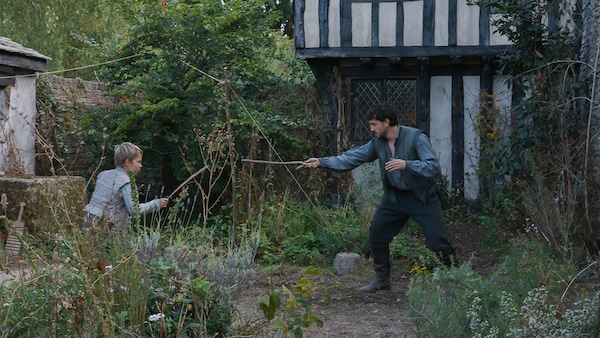
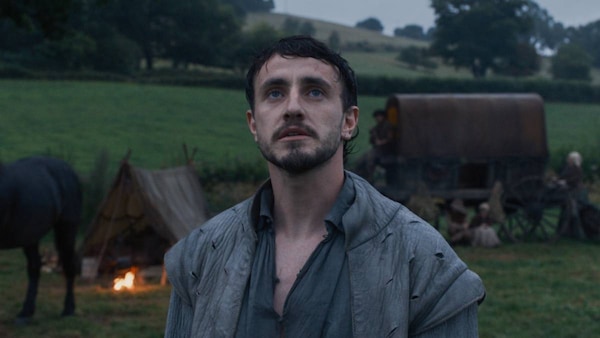
Another big awards contender this season is Joachim Trier’s Sentimental Value, a Norwegian drama about an unstable actress who discovers that she is the ‘star’ of the new script written by her estranged film-maker father. In other words, a veteran storyteller makes his daughter feel seen the only way he knows how to; a piece of auto-fiction is supposed to bridge the void between a resentful young woman and her regretful old father. Despite the similar theme, Sentimental Value hasn’t been as divisive because the characters are relatively anonymous compared to their historical counterparts in Hamnet — they’re modern, make-believe figures designed to convey the healing force of art. The conviction of Zhao’s film-making is such that Hamnet is steeped in this anonymity. It’s never really staged as a story of the Shakespeare. In fact, his full name isn’t mentioned until the final act. Paul Mescal plays him as a lover, a son, a husband, a father and a griever: seldom the acclaimed playwright. He could be anyone, but Zhao trusts us to remember that he’s not just anyone; the tonal surrealism normalises him to such an extent that he isn’t even the protagonist. The familyhood is the protagonist — the film is named after a child and centers the experience of a mother.
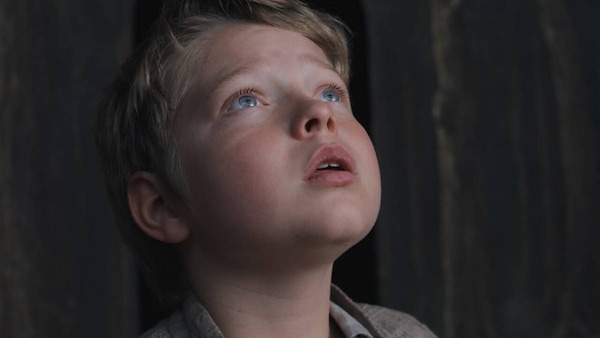
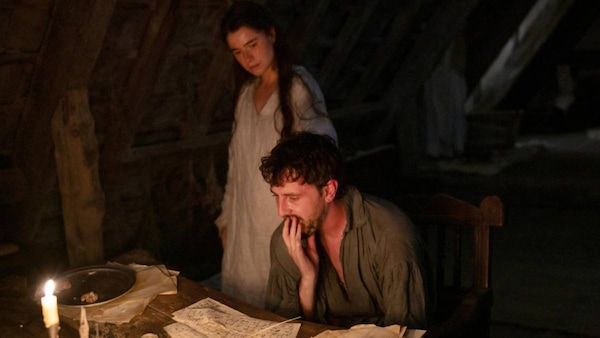
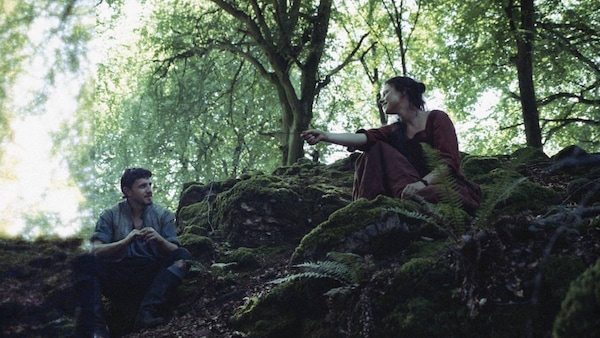
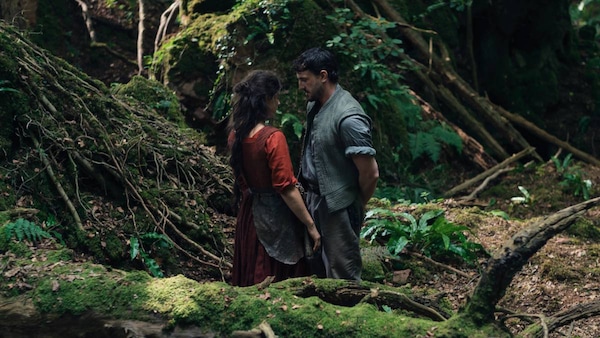
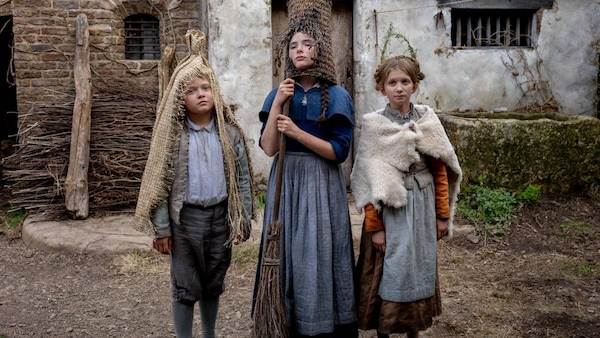
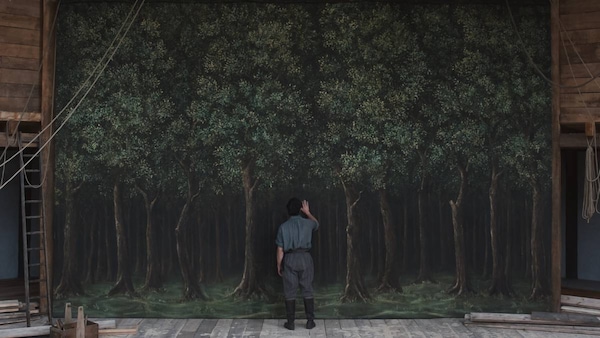
Jessie Buckley’s Agnes Shakespeare is a woman who slowly descends into a crisis of identity. When we first see her, she emerges from the forest like a wild fable wandering into the curtness of civilisation. It’s a moment of visual literature; he can only watch from a window as her primal flair consumes him. She is rumoured to be the “daughter of a forest witch,” summons a hawk with her falconry glove, practices herbal lore, and predicts the future of others by holding their hands. She is essentially a person of faith and spirituality. She foretells successfully: that her husband will have a prosperous future; that two children will be by her deathbed. Until she doesn’t. She anticipates the wrong child to die of her three, so the loss of her only son — a twin who ‘tricks’ the bulbonic plague into taking him instead of his sick sister — means that her faith is punctured. Her prediction of a 12-year-old Hamnet growing up to flourish in his father’s theater company is proven wrong. She blames her husband for not being around, and for making the boy promise that he would protect the women in the house, no matter what.
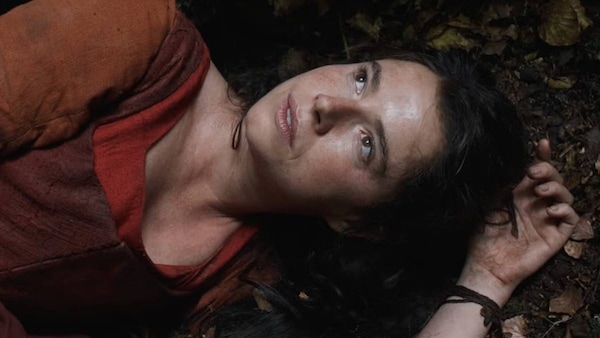
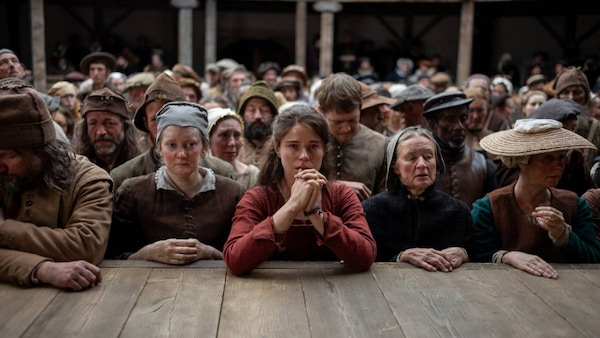
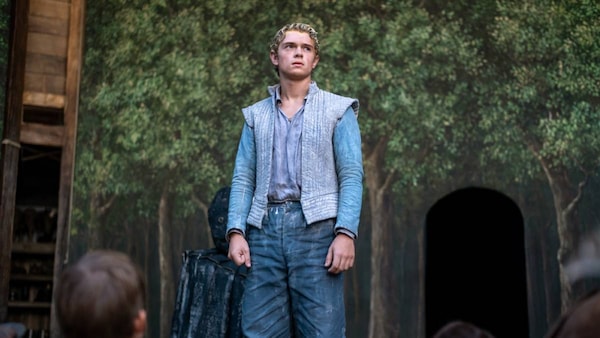
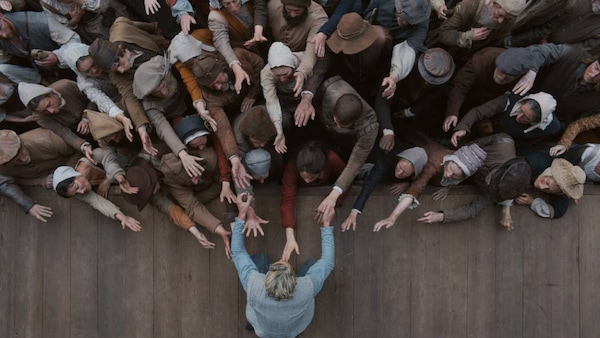
So when a distant Agnes watches the production of Hamlet in London, a Max Richter-scored climax works on two poignant levels. The main-character energy of her pain is pierced by a father’s tribute to his son — she sees her husband’s ache revealed through the vignettes of fable. What’s remarkable is the film’s courage to take a big swing and let William’s storytelling restore the sacredness of Agnes’ faith. He writes the crown prince in a way that briefly revises the future and allows her to envision her son living his dream on stage. Her foretelling is valid again; Hamnet flourishes and falls on his own terms, a tragic hero. William’s fiction not only turns their grief into a community emotion — the parents are no longer lonely in a theater full of tearful strangers — it also brings them a sense of closure. It’s one of the more open representations of how art, at its purest, is the legitimisation of truth. The film doesn’t reduce Hamlet to a glorified personal essay. It dares to exist as a reminder that not even the bard was immune to the tragedy of being. His words happened because of his standardness, not despite it; all the stories came from the madness of saying something rather than the celestiality of knowing everything.
It’s tempting to conclude that only those who have experienced the shapelessness of grief might be moved by this film. I’d like to believe that Hamnet ploughs beyond the lived-in aesthetic of missing a loved one; it erases the exclusivity of bereavement by revealing the democracy of resolution. By the end, the audience’s woe is almost indistinguishable from the couple’s despair; they’ve lost everything except the capacity to lose. I’d be lying if I said that these last fifteen minutes didn’t make me feel an overwhelming sense of relief. I broke down repeatedly, not because I understood the permanence of absence, but because I resonated with a writer’s desire to renovate this absence. It somehow validated the last three years of my life. I’ve been bleeding into essay after essay after my friend’s death in March 2023. Earlier it was just about me and my bitter journey into the abyss of an incomplete bond. The grief leaked into all my writing and thinking: film reviews, features, lists, stories disguised as columns. I tried desperately to keep him — a version of him — alive through my craft. It was a way of showing the world that I’m hurting and incapable of inching into a future devoid of his spirit. I’ve strived to make readers cry because I want them to break the way I do. It’s selfish, cruel even, to invite strangers in with a byline and then demand their tears so that I feel less alone. To be told that the greatest dramatist of all time did something similar eased the guilt a bit, I will admit.
There are times when I write about my friend in a revisionist tone — where I’m subconsciously imagining the future he was meant to have. Where he quit his job and studied sports analytics. Where he became a key numbers-and-strategy guy for his favourite football team. Where he moneyball-ed his way to the top of his field. Where he helped Manchester United win an elusive EPL title after two decades. Where he continued to suck at fantasy leagues. Where he encouraged me to take that bucket-list trip to Antarctica with him in the week between our 45th birthdays. Where he travelled halfway across the world to see me in a hospital ward. Where he nurtured the family that nurtured him. Where he never had cancer. Where I went before him. Where he missed me. Where he died a hero while trying to rescue a drowning stranger. Where people across cultures and borders choked up when they read about his tragic heroism. Where he was an inextricable part of stories passed from one generation to another.
When I ‘recreate’ the remainder of his life like this, I’ve come to realise that I’m not doing it for myself anymore. It’s no longer about my need to eulogise and claim him. Maybe it’s for his parents. Maybe it’s for his sisters. Maybe it’s for his close friends and colleagues. Maybe it’s to give us all a chance to see him go on his own terms: with his heart open. Maybe it’s to democratise the sentimental value of longing. Maybe it’s to be — or not to be. Maybe it’s to live through our own little productions without the burden of immortality or talent. Maybe it’s to share the agency of a goodbye. Maybe it’s to reclaim the brightness of his future. Maybe it’s to repair the faith of those who foretold it. Grief is not only the license to tell yourself the same story differently, it’s also the what-if of love. And if there’s one thing that a film like Hamnet epitomises, it’s that art can be the cornerstone of altruism. Because every time I do my job, I can summon a 36-year-old man who’s not just my friend. He’s a son, brother, cousin, uncle, neighbour, boss, fan and companion. Most of all, he’s a departed fact and a boundless fiction: the ordinary Hamnet who left and the extraordinary Hamlet that endured.