


Aditya Rawal on why Subedaar role was refreshing: Growing up, didn't want to be seen as 'bade baap ka bigda hua beta' | Exclusive
In an exclusive interview with OTTplay, Aditya Rawal breaks down Daldal & Subedaar, playing gritty villains, his father Paresh Rawal, his writing roots, and his "unheroic" approach to acting.
Last Updated: 10.39 AM, Mar 18, 2026
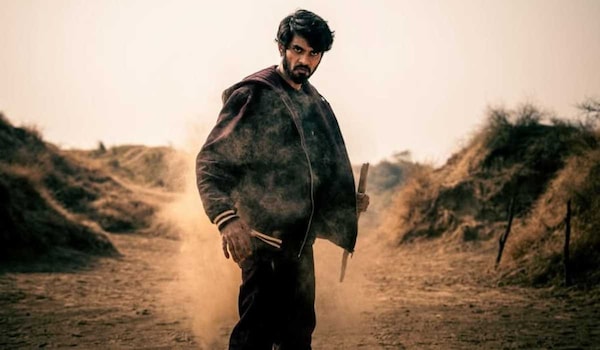
We are only three months into 2026, and Aditya Rawal is already having a "moment" that feels years in the making. He is carving out a niche that defies the typical Bollywood trajectory, balancing the layered intensity of Daldal with the reckless entitlement of Prince in Subedaar.
In an exclusive interview with OTTplay, we dissected the mechanics of the actor's craft. Aditya breaks down the "masterclass" of his career so far, from the adrenaline of back-to-back releases to the high-stakes energy of antagonising Anil Kapoor on screen. He talks about the deliberate suppression of ego and also the influence of his father, Paresh Rawal. The actor also spoke about being unafraid to look—or be—unheroic in the pursuit of a great story.
Edited excerpts below...
It has only been three months of 2026, and you are busy with promotions for Daldal and Subedaar as well as reactions to them. How is that going for you?
Aditya: It’s been great. I’ve never actually had this kind of volume—first of all, two projects of this size coming out together, then receiving such a nice response for both. And for them to be coming out back-to-back in terms of timing with the same people, the same production company, the same streaming platform, with Suresh Triveni sir and his whole team... it’s actually been so beautiful. It doesn’t usually happen, so I cherish it very much for what it is. No matter what happens in the future, I know this is one of those special times in life that I will look back on very fondly.
With characters like Sajid (Daldal) or Prince (Subedaar), you have spent a lot of time in very dark headspaces lately. Did you go back to the time you were shooting while talking about it now?
Aditya: Not really. When it comes to getting into a character, I like to take my time and do a lot of preparation. But my process is usually like this: once my exam is over, I leave my studies behind. I am able to get out of character quite fast. It’s also probably because I always have something to look forward to, whether as a writer or on another project as an actor. You’re not even thinking so much about getting out of character as you are thinking of getting into another character or the world of another story that you're working on.
What was the specific hook in the script for Prince that made you want to explore that kind of instability?
Aditya: In so many parts of the world, including in our country, there are people and entities that function as if there are no consequences. There is zero accountability. The chance to be able to portray somebody like that—somebody so bizarre, somebody so colourful—was, as an actor, a huge challenge. It was about understanding what drives a person like that.
Understanding the kind of people like Prince that exist in this world was really the hook for me. Then, once you've understood him, playing a character like that is a lot of fun because, in real life, I am the absolute opposite. Growing up in Bombay, my parents are also well-known, so one is always conscious of the consequences of one's actions. You are always wanting to put up the best behaviour because you don’t want to be seen as a bade baap ka bigda hua beta (the spoilt son of a famous father). So, for someone so conscious of consequences to play someone who isn't worried about them is actually really refreshing. And the chief reason for wanting to do this role was the opportunity to work with Suresh Triveni sir as a director. I have a wonderful relationship with him; I write with him, and I acted in his show Daldal, which he produced and showran.
You are also a writer. Does the writer in you ever bully the actor when you are on set?
Aditya: Never. Because I’m a writer and an actor, and I’ve been one for a long time now, I just know how to take my writer hat and throw it far, far away when I’m acting. Of course, your understanding as a writer helps you understand your script and the character better—you understand what the writer of this script is trying to get across. Your ability to write helps sometimes with improvisations and such. But otherwise, you’re trying to put that part of your brain completely away because you really want to do justice as an actor.
In Subedaar, the titular character is played by Anil Kapoor. It is a clash between his discipline and your entitlement. There are scenes where you humiliate his character. How was that energy on set with someone of his calibre?
Aditya: For this, I can only give credit to Suresh Triveni Sir and Anil Sir. They are the captains of the ship, the senior-most members, and the most powerful people on set. Honestly, it is their behaviour that will dictate the atmosphere on set and how comfortable the co-actors, cast, and crew will feel. Despite the prickly nature of the scenes we had to do, he was actually very generous, very open, and very helpful towards me. I always felt very comfortable trying to antagonise him on screen because off-screen, he had made me feel so comfortable. In fact, there were moments where I was doing something, and he encouraged me to even push the envelope. He’d say, "Oh, you're irritating me in this way or trying to humiliate my character in this way? Why don't you try this? This will be even more humiliating and perhaps even more fun for the audience—or more irritating or painful—to watch."
You come from theatre, but in films and series, physical locations become characters. The "sand mafia" setting in Subedaar is a rugged heartland—just looking at it made me feel the heat. How did that help you get into the skin of a mafia member with no remorse?
Aditya: It helps immensely. Any location you go to really helps you as an actor because shooting in real locations is more fun; it provokes your imagination in ways that a set just cannot. You get the smell of the place, you understand the surroundings better, and you’re able to play to those surroundings much better. You become more "of" that time and place.
With this stark landscape we shot in, it’s so unrelenting and unforgiving, and that kind of shapes the people as well. They get nothing from the land, so they dig sand out from the river to make their riches and earn their power. That act of pillaging spills over into their normal life as well. I would argue that the character of Prince would have been very different if he came from a place that had acres and acres of fertile fields.
You have played a string of characters who exist in the shadows—a radicalised youth, an addict, and now a mafia member. Is there a part of your own personality you have to suppress?
Aditya: 100%. A lot. Sometimes I’m also very eager to do a comedy or to play a role of somebody who is much closer to who I am as a person, which is very different from all the characters I’ve played. That’s nice as an actor because I can push my boundaries, but yes, it involves suppression of certain aspects of your personality while heightening others to fit certain characters.
You don't shy away from appearing "unheroic." In an industry that prioritises looks, how do you negotiate with your vanity?
Aditya: My idols have always been people like my father (Paresh Rawal), like Jaideep Ahlawat, Irrfan Khan, Rajkumar Rao, Al Pacino... These are all actors who, when they started coming up, came up because of their ability as actors, not because of how they looked or because of their vanity. I aspire to the same thing.
Then there is the idea that you trust in the imagination of producers and directors. If he’s able to play so many different characters, I’m sure he’ll be able to play a clean-cut boy from Juhu as well—because that’s essentially what I am. If you look at Al Pacino’s first film, The Panic in Needle Park, he’s playing a heroin addict. He has thrown his vanity out the window to play that character, but it is because of that play that he got the opportunity to audition for roles like The Godfather, where he does look like a hero. I’m not particularly worried; I’m only worried about serving the character to the fullest.
Does having an icon like Paresh Rawal at home make you more fearless in your choices or a harsher critic of your work?
Aditya: I think, in a way, both. Because you’ve seen somebody take those choices, commit to them, and succeed, it makes you more fearless. But because it’s somebody like him who has done it so well, a standard has been set that you, consciously or unconsciously, want to aspire to. We are also a family that loves to analyse each other's work and learn things and improve from it, so you want to make sure your work is up to scratch.
How do you choose projects in an era of "algorithms"?
Aditya: I would look at algorithms as a determining factor only if I understood algorithms in the way that I understand my instinct. I don’t understand algorithms; I understand my own instinct. I can understand my own reaction to something, so that’s what I go by. The world can function how it needs to function, but my choices can only be my choices if they are truly mine.
You have kept a mystery around yourself by only posting about work or very personal things on social media. Does this help the audience accept you in diverse roles?
Aditya: I think so. I feel like if you see me on your Instagram feed every second day being a "personality", then it might take you a little bit more suspension of disbelief to believe me completely as a character that I’m playing—which often is very different from who I am. It's not so much that I'm hiding something; it's just that if you and I are talking because of my work, then that is what we should be talking about. Also, my personal and private life is very boring, so I prefer to talk about work anyway!
What is the most practical piece of advice you’ve received from your father about playing a villain without making it a caricature?
Aditya: We’ve actually not spoken about that because when I’m playing a character, I’m not even looking at it as a villain. That’s all at the writing level. For me, as they say, "Everyone is the hero of their own movie." That is the same for this character. I’m looking at him as a person. There might be a tonal shift one has to make based on the genre or the tone of the film. For example, in Daldal, it will be a bit more reserved and "realistic" than Subedaar, but that is the calibration the director helps you execute. To me, I’m playing a person, and I have to understand that person to play them in the best manner possible.
You have worked with Shujaat Saudagar, Hansal Mehta, Suresh Triveni, and Anil Kapoor very early on in your career. How much of a "school" is this for you?
Aditya: Each time—and all the names you mentioned—it’s been a masterclass. Working with Shujaat Sir and Excel (in Bambai Meri Jaan) was a masterclass in how to shoot and execute a show that has so many characters and strands of storytelling. Working with Hansal sir... he’s just a master in creating characters and ensuring they come to life in the most nuanced way. And working with two absolute "beasts" like Suresh Sir and Anil Sir—they are so experienced, they have achieved so much in life, but still, they are the most motivated, eager, and energetic people on set. That told me that the life of an artist can be beautiful and heartening, but it is also a lot of hard work—and you can enjoy that hard work too.
Do you see yourself writing a screenplay for a mainstream film?
Aditya: There is something in the pipeline already. The life of a screenwriter is very interesting; I have probably written 15 screenplays for various producers and directors of high acclaim, but that’s just how it works with screenwriting. Because you’re in the first stage of development, many things can fall apart before a film is shot. There was a film we were supposed to make with Excel that we were going to start shooting in April 2020, and then it got shelved because of COVID and just didn't pick up again. That is just part and parcel of the life of a writer.


How are you feeling about the trajectory of 2026?
Aditya: It feels really good that people are appreciating your work and work that you put a lot of effort into realising. It just inspires me to work harder. I only see flaws in my work, so I am always obsessing about how to improve upon those things. It feels really happy, but it also serves to only motivate me to work even harder.
Subscribe to our newsletter for top content, delivered fast.
