


Sabar Bonda ending explained: Do Anand and Balya have a future, or was their love trapped in the 10-day cycle of tradition?
Sabar Bonda is a poignant Marathi film about a gay man’s grief and love in rural India. Using mourning rituals and cactus fruit as metaphors, it beautifully explores identity and maternal care.
Last Updated: 03.13 PM, Feb 08, 2026
Sabar Bonda (Cactus Pears), a Marathi feature film written and directed by Rohan Parashuram Kanawade and which received the Sundance award, premiered on Netflix worldwide this past weekend. The film has been the subject of intense discussion since its premiere on February 6, 2026, because it offers a subtle and realistic portrayal of a gay couple's love story set against the conservative traditions of rural Maharashtra.
What distinguishes the narrative style of Sabar Bonda?
This film, which won the Sundance Grand Jury Prize for World Cinema Dramatic in 2025, stays away from the usual clichés associated with high-stakes trauma. The story instead focuses on Anand's (Bhushaan Manoj) inner life as he deals with the loss of his father over the course of ten days.

The story jumps from the clinical setting of a Mumbai hospital to a rough ancestral village in no time. To carry out the last rites, Anand, a call centre employee in his 30s, goes back to his house with his mother, Suman (Jayshri Jagtap).
What are the specific rituals Anand must follow?
He goes through the typical 10-day mourning cycle, as the tale revolves around it. He needs to dress a certain way and stay away from black. Between scheduled meals, he is to consume only fruit. He must spend the night on his floor.
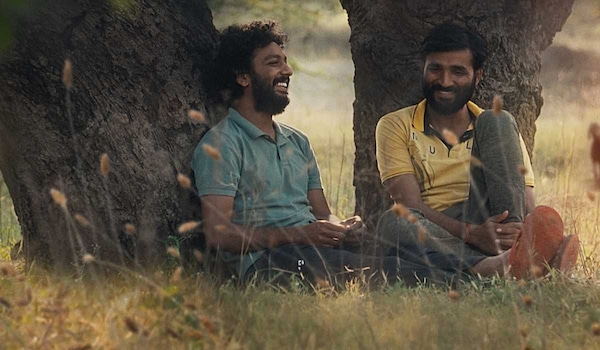
A childhood friend and neighbour named Balya (Suraaj Suman) reappears during this period in Anand's life. They take solace in their common identity, even though the village elders and relatives are often pressuring Anand to get married. They wonder why he is still single at his age.
What is the symbolic meaning behind the film’s title Sabar Bonda?
In both the film's conclusion and the lives of its protagonists, the title Sabar Bonda functions as a key metaphor. The film shows in a pivotal sequence that cactus pear sweetness is only achieved after painstakingly peeling off the spines.
In doing so, director Kanawade mirrors Anand and Balya's life. They face "prickly" and "suffocating" social standards and heteronormative constraints in their daily lives. Their love is so beautiful that it is worth enduring the "thorns" of tradition and the constant danger of reaching out.
When does the tension of Sabar Bonda reach its peak?
The 10-day ritual concludes simultaneously with the film's final act. External pressure on Anand to resume his life in Mumbai reaches its pinnacle as the period of "impure" grief comes to an end.
An epic showdown with distant relatives is one of the film's defining scenes near the climax. Because he is single, Anand's relative wonders if he is worthy to fire his father's burial pyre. In an unusual departure from the film's usual calm, Anand's mom, Suman, steps in. The sole authority to carry out the rituals should rest with Anand, she maintains, since he was the one who attended to his father during his last days. While the villagers may lack a "vocabulary" for queerness, they do have a "language of care" because of this maternal support gesture.
Does Sabar Bonda offer a traditional happy ending?
Spending one last afternoon with Balya, Anand gets ready to leave. A conventional "happily ever after" is something the film flat-out declines to deliver. The alternative is the profound, communal quietness that it provides. Anand is so distraught at his father's death and his impending separation from Balya that he weeps in the penultimate scene.
Balya doesn't give any advice or suggest a way to go to Mumbai together. He remains silently seated next to Anand. More significant than a final "fix" is the presence of another person who knows your struggle, according to the film.
How do the paths of the two men diverge at the end?
Anand goes back to being anonymous in Mumbai, while Balya stays in the village, bound to his land and goats. The ending emphasises how different the LGBTQ experience is in rural areas compared to urban ones.
At the film's conclusion, Anand departs Mumbai, but it's hardly a tragic tone. They have discovered a "chosen family" in one another, which leaves the "fate of the relationship" open-ended but grounded. One distinctive aspect of Sabar Bonda is its use of mourning as a narrative device to examine sexual identity. The concluding frames imply that the friendship they developed over these ten days has irrevocably changed their perception of their identities. There is a "liminal space" during the ten days of mourning when the ancient village rules are more prevalent than ever and the modern city rules do not apply.
How does the film challenge urban-centric views of queerness?
Kanawade debunks the idea that queer identity only resides in Westernised city centers by situating the drama in a rural Maharashtrian town with local non-professional performers, demonstrating that queerness is not an abstract concept.
During the 2025 theatrical run, critics remarked that the film highlighted the "cowardice" of relatives who hide their uneasiness with nonconformists behind tradition. Avoiding histrionics, the film maintains a restrained masculinity. The "intimate moments" are shot with a camera that isn't interested in finding out, so the men's bodies blend in with the scenery like the buffaloes and goats that pass by.
How has Sabar Bonda performed on OTT?
Since its Netflix debut, Sabar Bonda has garnered rave reviews. Many cited that the film's sound design is really impressive. Instead of a score, the kirtans, the wind in the trees, and the movement of the cows are heard.



As the credits roll, Anand and Balya's future is still uncertain. Rather, it conjures up the idea of the Sabar Bonda—a fruit that is both unpleasant to handle and difficult to grasp, but whose sweetness awaits those who are courageous enough to peel it.
Sabar Bonda FAQs:
What is the meaning of the title Sabar Bonda?
Sabar Bonda translates to "Cactus Pears" in Marathi. The title serves as the film's central metaphor: a cactus pear is a fruit protected by sharp, painful thorns. To enjoy its sweetness, one must meticulously peel away the "prickly" exterior.
Q: Is Sabar Bonda based on a true story?
A: Sabar Bonda is semi-autobiographical. Director Rohan Parashuram Kanawade wrote the script while coping with the death of his own father. He used the 10-day mourning period he experienced in his ancestral village of Kharshinde as the narrative framework.
Q: Does Anand end up with Balya at the end of Sabar Bonda?
A: Sabar Bonda intentionally avoids a traditional "happily ever after." While the two share a profound connection, the ending is grounded in realism rather than romance. Anand returns to the anonymity of Mumbai, while Balya remains in the village tied to his land and responsibilities.