


Aap Jaisa Koi review: R Madhavan and Fatima Sana Shaikh’s half-baked romcom leaves behind bitter aftertaste of patriarchy
Aap Jaisa Koi explores male loneliness and patriarchy through a problematic love story, with strong performances but a flawed narrative under the guise of empathy.

Last Updated: 12.44 PM, Jul 11, 2025
Aap Jaisa Koi story:
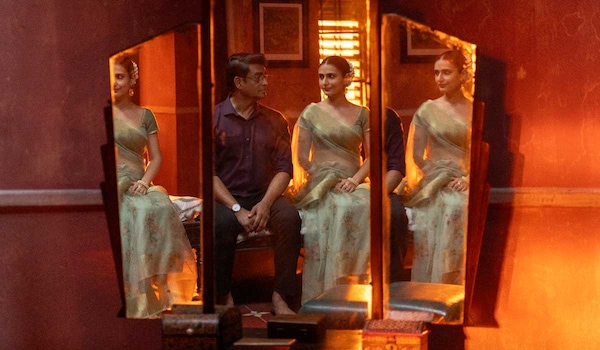
A middle-aged Sanskrit professor named Shrirenu Tripathi (R. Madhavan) from Jamshedpur falls for Madhu Bose (Fatima Sana Shaikh), a French teacher. Family opposition and societal expectations test their bond. The story examines topics including romantic relationship compatibility, interpersonal equality, and divergent worldviews.
Aap Jaisa Koi review:
Over the past year, there's a term that has been circulating on social media called "male loneliness epidemic." What is it actually? It "describes the growing concern about the increasing isolation and lack of close friendships among men." Fair enough. Understandable. But why is the bigger question? I have been reading many articles regarding the same and also realising how the popular culture has been displaying it exorbitantly over time. At the end of the day, even several men would agree that "male loneliness epidemic" is a deserving term, all because they choose to be lonely at the expense of not respecting the opposite sex in any way. The loneliness seeps in because they don't know how to treat a woman or even look at them as a fellow human being.

Why am I expounding on this issue? Aap Jaisa Koi made me tap into this disturbing concept that people have been made aware of, and there's no way you can unsee it. The film depicts a middle-aged man named Shrirenu Tripathi, who is in his 40s and works as a Sanskrit teacher, feeling extremely lonely in life. He attempted to find success in an arranged marriage but was unsuccessful. However, the film begins with him getting cursed by a girl in his teens that he will never seek happiness of any sort, and he carries that burden throughout his life. While living under the shadow of his elder brother (Manish Chaudhary), who is the patriarch of the family by title as well as behaviour, it's shown that Shrirenu has never learnt how to "treat" women respectfully, except for his sister-in-law, Ayesha Raza, who has been the caretaker of the family selflessly. On the other hand, he has a friend (Namit Das), who is a divorcee, who keeps on teasing him that at least he lived with a woman, unlike Shrirenu, who never did, even for a while.
Out of the blue, there's one girl who shows interest in him, named Madhu Bose, from Kolkata. She happens to be the niece of his family's neighbour. The girl, who is in her 30s, only raises doubts in his mind about why she is showing any interest in him or is even willing to spend her life with him. Yes, a background check is essential before choosing to stay with a partner for life. However, here, like a typical Bollywood flick, we see a stalker mode on and get it all wrong while finally settling down for her.
During their meetings, Shrirenu imagines multiple boys and men ogling at Madhu as she becomes the centre of attention. I mean, yes, I get the point that you cannot trust a woman completely because men in this world are the biggest issue in existence.
Meanwhile, Madhu, who is unaware of her surroundings, presents herself in a clear and bold manner, suggesting that she has been raised in a liberal environment. The introduction of both family members serves to remind the audience constantly that Karan Johar chose to produce a simplified version of his 2023 blockbuster, Rocky Aur Rani Kii Prem Kahaani. We observe a North Indian family that is quite conservative, ensuring that women are confined to the kitchen. There are many instances where Chaudhary's daughter, who is overqualified and independent, is questioned by him about her kitchen duties. Even when she says that she has got the opportunity to go abroad, he doesn't show happiness but shows stress over the fact that women without knowledge of household chores are incomplete. Of course, that doesn't apply to men.
Aap Jaisa Koi angered me at several instances as it reflected over the fact that women are always forgiving and have to be because men refuse to just grow up. There's a scene where Shrirenu tells Madhu that he can take her back and will "allow" her to do stuff according to her will but to certain limits. And then we see that after a redemption, he asks her to teach him how to be a man and punishes her like it happens in school, citing that both are teachers but shouldn't leave him. And why didn't he grow up? Because of his surroundings, I mean...
In Rocky Aur Rani Kii Prem Kahaani, there is an important scene where Ranveer Singh's character discusses cancel culture, and the way he delivers this monologue continues to resonate with viewers. However, when it comes to this Netflix film, the makers decided to just show that, yet again, men are the biggest victims of survivors, and empathy has to be taught to them even when they are in their 40s.




I, to be honest, secretly wished that the film didn't have a happy ending! The title is quite ambiguous because "Aap Jaisa Koi" can be interpreted as either a statement or a question—"Someone like you?"—which can also be alarming.
Although the film tackles problematic male behaviour, it still features standout performances. First things first, Fatima Sana Shaikh nails the part beautifully, showing herself as an adoring and independent woman who doesn't show her feminism in anger. It feels like the character understood that tolerance is the key to living on this planet, and the actor showcased it well.
Meanwhile, Madhavan's character is quite alarming and justifies why he needs to stay single even after getting a woman way out of his league. The actor effectively conveys the subtleness of patriarchal thinking, which is not surprising.
Another actor who stands out is Ayesha Raza, who has been given such an amazing character to portray. The actor does the heavy lifting well and also gets an arc, which was the only one needed in this film.
Vivek Soni earlier directed Meenakshi Sundareshwar in 2021, which was also called out for showing a love story set against the backdrop of Tamil culture and doesn't do any wonders, so to speak. This time, he presented a cross-cultural love story featuring an age gap, aiming to combine various elements and create a narrative that resonates in today's context. Radhika Anand and Jehan Handa have penned the screenplay, but it keeps on faltering while trying to make a point with an ending so unconvincing.
Apart from a few performances, the music by Justin Prabhakaran is somewhat a saving grace. The tracks and BGM here are calm and soothing, which gets underplayed because the film rides on rage bait in several instances. But still nothing can beat the First Kiss track from Meenakshi Sundareshwar, which he composed.
While Aap Jaisa Koi may have the right intentions, we find ourselves once again confronted with a visual essay on the "male loneliness epidemic."
Aap Jaisa Koi verdict:
Aap Jaisa Koi tries to conjugate love across generations and cultures, but ends up declining basic respect in all tenses. What begins as a promising translation of lonely hearts into a poetic pairing quickly slips into a cautionary tale of how not to treat women.
Subscribe to our newsletter for top content, delivered fast.
