


Border 2: Spiritual Sequel Saying The Same Story
We are living at a time when the merit of a film has come to be defined by not what it is but what it is not. Perhaps, this will be Border 2’s most resounding legacy.

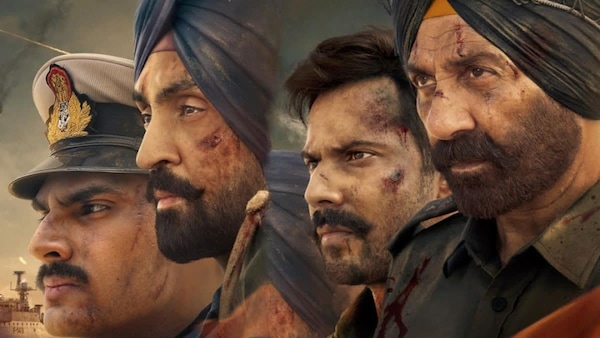
Promo poster for Border 2.
Last Updated: 06.45 PM, Jan 23, 2026
IN THE LAST COUPLE OF YEARS, the roster of Hindi cinema has been clogged with certain kinds of narratives and mostly with one kind of event: war. There has been a proliferation of war films as their rhetoric — identifying the nemesis as an “enemy”, using dialogues filled with allegories of battles — leaks into the grammar of regular dramas. It was about time that JP Dutta’s Border (1997), the original war-cry of a film centred firmly around Indian soldiers, would be reprised, and Border 2 is that.
There, however, are some differences. Border 2 is directed by Anurag Singh (he also made Kesari in 2019). Both are based on the 1971 India-Pakistan war, but if the first focused on the Battle of Longewala, where a small group of Indian soldiers had defeated a mammoth Pakistani army, then the spiritual sequel is broader in scale. Singh’s film tackles the security threats India suffered in land, air and war. More crucially, the India in which Border 2 has been released is significantly different from the country it was three decades ago.
It is a more volatile nation today, where war is understood not in terms of the cost it incurs but the result it bears. Patriotism has hardened to nationalism, and films like Border, that had captured the collective attention by showcasing sacrifice as an offshoot of devotion, are common on paper and rarer in spirit. Which is to say that today heroes are elevated to the point where they only stand to win, and this infallible heroism is feted.
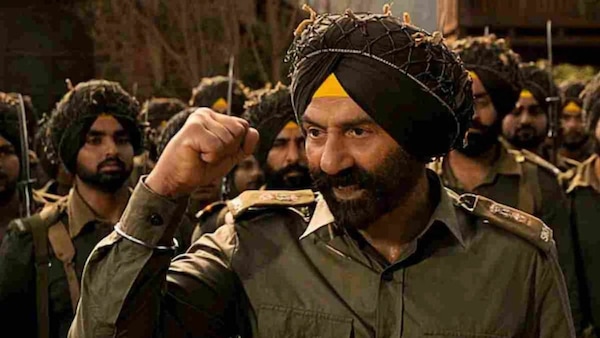
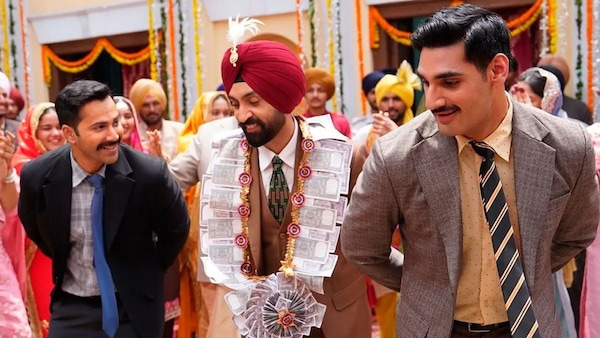
In that sense, Border 2 (Nidhi Dutta is credited for the story, and Sumit Arora and Anurag Singh for the screenplay) straddles both the India(s). Stretched across a massive 199 minutes, the film has similar beats to many similar contemporary outings. War is imminent, and soldiers are away from home. Army officer Major Hoshiar Singh Dahiya (Varun Dhawan), navy officer MS Rawat (Ahan Shetty) and Air Force officer Nirmal Jit Singh Sekhon (Diljit Dosanjh) are among the lot. Two of them are freshly married, and one has a daughter. As duty calls, all three take positions in land, air and water to safeguard the nation. Then there is Lt Col Fateh Singh Kaler (Sunny Deol), their instructor – the character connecting the three men at the centre, and the actor (Deol also in Border) connecting the two films.
Despite this, or maybe because of this, Border 2 feels like a reiteration. Tons of battle cries, bad VFX and clunky war bits (except a frenetic hand-held portion at the end) occupy the majority of the runtime. Much of this was, of course, expected. But Border 2 really goes all hammer and tong in its depiction of the Pakistani soldiers. Each of them, including former President Yahya Khan, is portrayed with an air of buffonery that one reserves for villains in television serials (one of them, very nonchalantly, says, “Hindustan par qayamat barsegi aaj (Doom will befall on India today)."
It is never not ironic that this comes weeks after Sriram Raghavan’s Ikkis, which, based on the 1971 war, was persuasive in its humanisation of people across the border (another connection is Dharmendra featured in Raghavan’s outing, and Deol is introduced, explicitly, as his son in this film). Border 2 walks in the opposite direction on all accounts. The army of the neighbouring country is faceless and terrible. Camera angle decisively shifts when portraying them (many, many close-ups as if to heighten their villainy).
It is a shortcoming because Border 2 also proves that undivided attention, like the one it offers to the Indian soldiers, can be emotionally effective, even if sporadically. The bits in the film that manage to rise from the drudgery of excess bear testament to the writers’ willingness to look beyond the bloodshed. Take, for instance, how Dhawan’s character, a bashful young man married when young, writes a letter to his wife, but the misleading poem in it makes it seem like he is dead. Or, that bit where Dosanjh’s character, filled with zealous bravado, asks his mother to pray for him to kill the enemies, only to be told that she cannot wish that for someone else’s son.
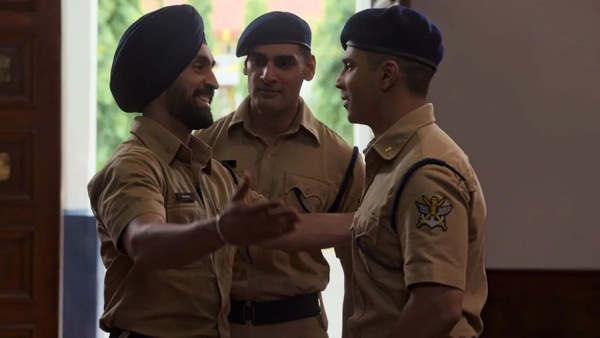
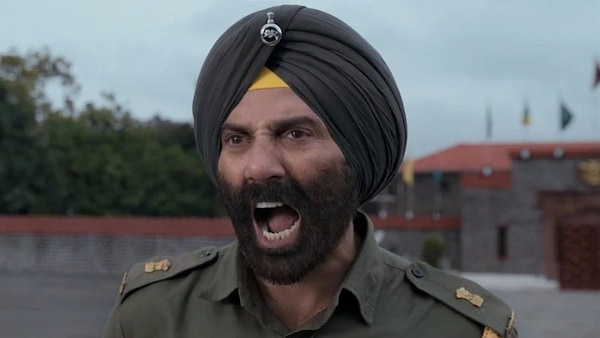
Though fleeting, these swerves gently dislodge Border 2 from the growing adrenaline-riddled hypermasculinity and all-around unpleasant nationalist films (there is but one scene of a Pakistani soldier being beheaded). In a way, these instances connect it to the country that could cheer for Border without baying for blood. Both Dhawan and Dosanjh are well-cast and bring a levity to the proceedings that gets upturned by someone like Deol. Three decades have passed, and the actor is still screaming hoarse. He is throwing grenades at the other side and swearing to destroy them. Much like last time, he remains successful at that front.
But his performance, moored to the past, also distils the issue with Border 2. Granted, it is not frightful as it could have been, but it also comes with little new to say. But then again, we are living at a time when the merit of a film has come to be defined by not what it is but what it is not. Perhaps, this will be Border 2’s most resounding legacy.
(Disclaimer: The views expressed in this column are those of the author and do not necessarily reflect the official policy or position of OTTplay. The author is solely responsible for any claims arising out of the content of this column.)
Subscribe to our newsletter for top content, delivered fast.
