Home » Features » Avatar: Fire and Ash — Wake Me Up When Pandora Ends
Features

Avatar: Fire and Ash — Wake Me Up When Pandora Ends

James Cameron commits to his vision so hard and for so long, like a character from Inception who’s missed the kick only to get stuck in limbo on a deeper dream level. There is no way out now.

Rahul+Desai
Dec 20, 2025

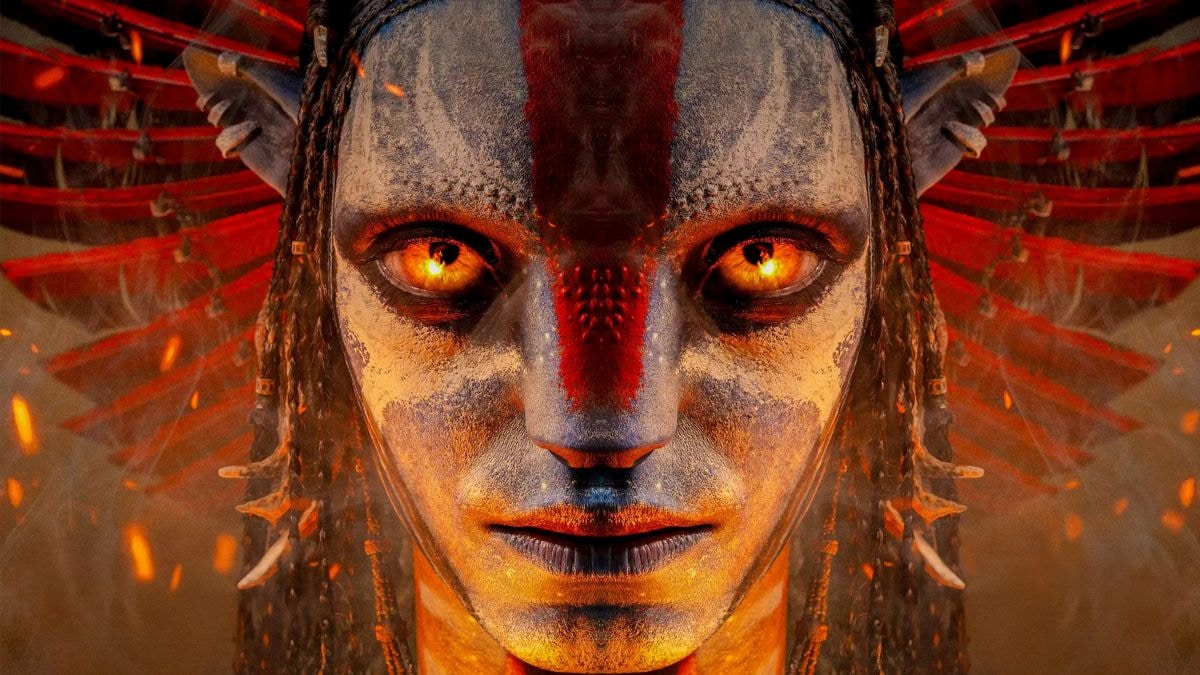
Promo poster for Avatar: Fire and Ash.

RARELY HAVE I SEEN SO MUCH used to achieve so very little. Unless you count the US invasion of Iraq — which, in the Avatar universe, would amount to cocky American soldiers looking for an excuse to plunder a mineral-rich planet after destroying their own. I want to say “empty spectacle”, but to be honest, Avatar: Fire and Ash is not much of a spectacle either. Spectacles do more than just look vast and technically proficient and convoluted and greedy in 2025; they do more than just go round and round and round in the painstaking and now-dated worlds they’ve built; they do more than employ disorienting 3D motion-smoothing effects to impress the fans rather than express the stakes; they do more than take two decades of technological advancements and old-fashioned originality only to end up feeling precisely like those superhero overkills they were once an antidote to; they do more than be a legacy of groundbreaking CGI; they do more than do more. James Cameron has made a career out of dreaming big and heavy, but with this third Avatar film, he’s a bit like that mad scientist who gets so obsessed with creating and reinventing that he bypasses the basic essence of the medium.

Dive back into Pandora and watch Avatar and Avatar: The Way of Water now on JioHotstar with your OTTplay Premium subscription.

I can’t begin to describe how frustrating it is to watch something so intent on telling us that it encompasses the future, present, and past of storytelling. I’ll take this bloated 197-minute video-game adventure over AI any day of the week, but it’s difficult to root for a franchise that keeps rehashing the same template under the guise of cutting-edge imagery and overenthusiastic set pieces. There’s just so much going on — so many parallel sub-stories and characters and diversions and conflicts and histories and emotions — that at no point does Avatar: Fire and Ash feel like a single film; they’re like several movies standing in a queue and waiting for their turn to unfold. As a result, there are multiple first acts, multiple second acts, multiple third acts and climaxes — the viewer stays confused about what stakes to pursue when, and where the little equations and threads are placed. It’s one thing to break the rules of storytelling; it’s another to simply expect us to go along with the ride because it’s taken so long to make something so expensive.
Let’s get to the plot before I forget (willingly). Avatar: Fire and Ash opens at an interesting point. The central Na’vi family is navigating grief — that shapeless, unfilmable and opaque feeling of losing a loved one before their time. The death of Neteyam in Avatar: The Way of Water (2022) weighs heavy on parents Jake and Neytiri; Neytiri, in particular, has become bitter and hostile towards humans, to the extent that she resents the presence of Spider, the adoptive human son who was Neteyam’s best friend. Once they decide to transport Spider back to his world, they’re attacked by an aggressive Volcano-residing Na’vi tribe called the Mangkwans, led by their weirdly seductive leader Varang. Colonel Quaritch’s avatar also re-enters the fray to first help his former soldier and nemesis Jake, then turn against him, then do some sexy time with Varang (who’s interested in his weapons; this is not an innuendo), then capture Jake for the General, then rescue and capture his son Spider, then I don’t know anymore. Quaritch’s motives change faster than England’s Prime Ministers and Chelsea’s managers. There’s also Spider’s journey: he is wanted by all sides for being the key to unlocking humans’ ability to breathe and survive on Pandora. There’s also his little thing with Kiri, who shares sexual tension with him. There’s also a father-son plot, a mother-breaking-free plot, a Tulkun-water-kingdom plot, a Ronal childbirth plot, and way too much more.
I’m tired just thinking about it. The screenplay loses shape very early and never recovers, choosing to juggle the tracks without really letting the audience in on any. There’s a sense of entitlement about the structure. It’s one action set-piece after another, almost as if the film expects us to be happy with the scale and aesthetic of each one; none of them are memorable, not least the emotional moments where characters nearly die but do not. The background score has a generic orchestral twang; every other sequence features Jake returning and making a rousing speech; Pandora itself looks flat and boring after two films, where the novelty and ‘realism’ of the environments have worn off, resulting in a landscape that has no actual identity. Anything goes, anyone goes, and the sheer chaos of the plot keeps folding into those clichéd beats that made the first film a gigantic hit and the second critic-proof. It’s also the kind of look-what-we-did film that makes us feel guilty for not liking it. It amazes me that Cameron commits to his vision so hard and for so long, like a character from Inception who’s missed the kick only to get stuck in limbo on a deeper dream level. There is no way out now. And nobody’s going to tell him otherwise, because he’s gone where no filmmakers go anymore: he’s played God, manufacturing a universe out of thin air, and the only choice is to worship him. WATCH | Fire And Water: Making The Avatar Films
All those simple anti-colonisation parables have long melted away and mutated into a voice bereft of modernity, context, rhythm, humour and timing. The toll of its making is supposed to inform our language of appreciation. And while I do admire the vintage power and ambition of someone like Cameron — he’d be making propaganda historicals if he were Indian, with lesser money — it’s difficult to engage with the soullessness of such artistry. Like Tom Cruise, he’s perceived as the Mayor of Cinema, upholding old values and ideals of big-screen fictions, fighting the good fight in an artificially rendered movie landscape full of adaptations and incoherent CGI gorefests. But the irony is that he’s lost in his own Pandora’s box, consumed by the magnanimity and egotism of his task rather than the freedom of pure manifestation. This is the dream. We just can’t remember it after we wake up. Avatar: Fire and Ash OTT partner revealed! Here's where you can stream James Cameron's epic sci-fi film in India after its theatrical run
Watch the Avatar films here!
Share
return(
)