Home » Features » Freedom At Midnight Season 2: Nikkhil Advani’s Masterful Drama Is As Much About The Past As It Is About The Present
Features

Freedom At Midnight Season 2: Nikkhil Advani’s Masterful Drama Is As Much About The Past As It Is About The Present

In its second iteration, the show steps up significantly, evolving into a masterclass of storytelling that marries narrative heft and political wit, embracing the ambiguity that comes with it.
Ishita+Sengupta
Jan 09, 2026
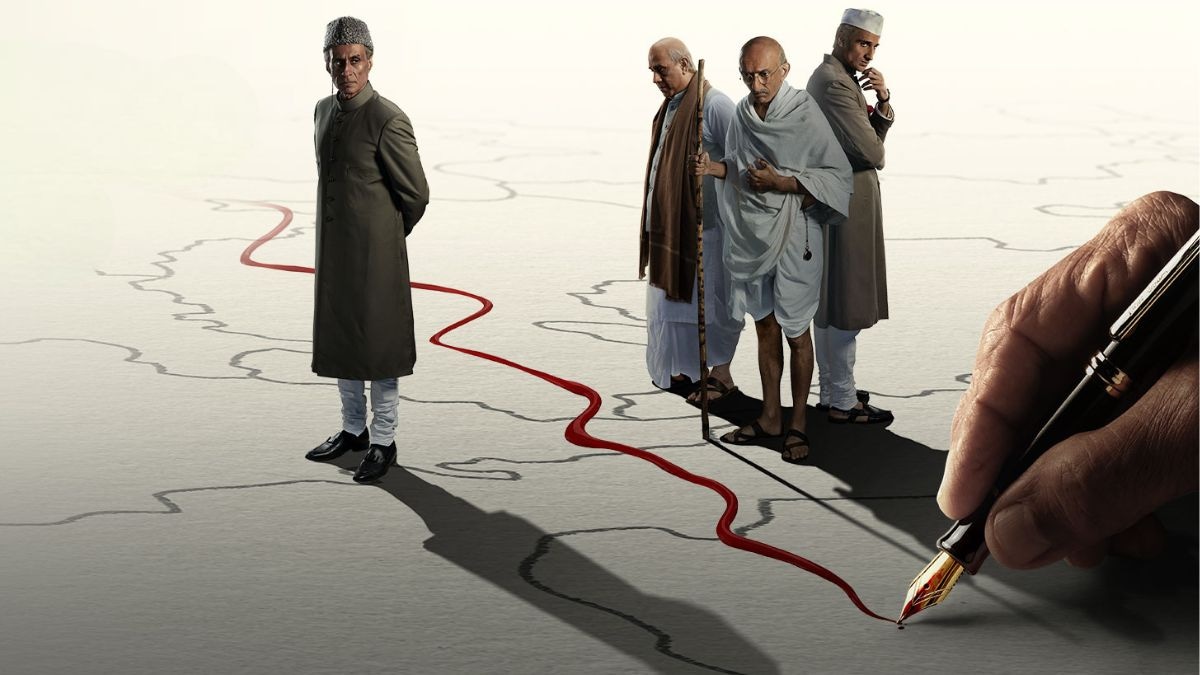
Promo poster for Freedom at Midnight season 2.
GOOD FICTION helps make sense of a specific time; great fiction helps make sense of time itself. The second season of Nikkhil Advani’s Freedom at Midnight, based on the 1975 eponymous novel by Larry Collins and Dominique Lapierre, falls in the second category. The seven-episode series serves as an excellent primer on India's history, and through its intricate world-building and painstaking details, lends itself to be a critical document of the current times when historicity is under scrutiny.Advani’s show, spread across the immediate years before and after India’s independence, has a staggering scale. While the first part was occupied with introducing the leaders — Jawaharlal Nehru, Mahatma Gandhi, Sardar Vallabhbhai Patel, Muhammad Ali Jinnah — and their ego battles, the second part probes deeper. Independence is now within reach, and so is the horror of Partition. Other things change too — in its second iteration, Freedom at Midnight steps up significantly, evolving into a masterclass of storytelling that marries narrative heft and political wit and embraces the ambiguity that comes with it.

Stream the latest films and shows with OTTplay's Power Play monthly pack, for only Rs 149.

Take, for instance, how none of the characters are lionised nor villainised. This is a tricky balance to maintain, not least because of the polarising times we have to come to inhabit. It is also because Advani is dealing with a specific chapter in history that is widely familiar and prone to being streamlined. The filmmaker, however, maintains admirable objectivity, which is reminiscent of the first season but is also an improvement.The improbability of achieving something like this gets accentuated when one considers the narrative design. Freedom at Midnight is inherently designed as a chamber drama, filled with talking heads relaying information. And there is a lot. It seemed a little clunky in the first season; scenes were stagey and the tone flirted with campy excess. Most of that has subsided this time. Advani’s filmmaking is sophisticated and fluid, reminiscent of his other show, Mumbai Diaries 26/11 (2021). Several montages are spread across the runtime, each thoughtfully crafted to convey the dense and turbulent period the show has chosen to depict while keeping the human faces at the centre.The episodes leading up to India’s Independence and thereafter are thick with communal riots breaking out in Punjab and Bengal (the cities which were divided to carve out Pakistan). Advani portrays them but the intensity finds most resonance in the worried faces of Nehru (Sidhant Gupta) and Patel (Rajendra Chawla), in the stubbornness of Gandhi (Chirag Vohra), in the egoistic resoluteness of Jinnah (Arif Zakaria), in the meltdowns of Lord Mountbatten, and in the child-like curled up image of Cyril Radcliffe, the British lawyer entrusted with the task of dividing the nation. ALSO READ | 'Freedom At Midnight 2 will be about the consequences of…': Writer Abhinandan Gupta on season 2 & more.
In the filmmaker’s hands, these figures become flesh-and-blood people, allowed to be petty and conniving, hurt and hurtful. This is a rare complexity that a historical show like this espouses, evident in the way Nehru, known for his scientific disposition, accommodates the opinions of Hindu priests when deciding about India’s independence, or Patel being wily when coaxing and mildly threatening the Maharajas and Nizams of the princely states, semi-autonomous by nature, to be part of India, or the brief shot of Jinnah looking pensively at his old house in India even though he fought for a different nation.The upshot of this is that incidents around them are also imbued with a sense of tactile reality. It is astonishing how Advani lends a real intrigue to the proceedings, even though much about the period is known and dissected. Moments leading up to the announcement of Independence, the ticking sound of the clock, a recurring background music for much of the first season, finally halts. Nehru starts giving the famous speech. And although the words are familiar, the bigness of the scene translates even through the veneer of recreation. Ditto for Gandhi and the influence he exerted on an undivided India. Every time India hit a roadblock, Gandhi resorted to fasting. In any series, the frequent visuals could have come unintentionally funny, but Freedom at Midnight builds up to them through the pained expressions of others. Like he was the Father, and the rest, his children rallied for him.
Much of it comes down to the treatment. Advani is more flashy in the pivotal scenes, freely supplying archival footage and cutting them with his careful reconstruction of the past. Nehru’s voice is juxtaposed with Gupta’s heavily accented speech, Jinnah’s frail frame replaces Zakaria for a moment as Pakistan comes into being. These work on a basic level where the accuracy of such remodelling informs one’s judgment of it. But it works more in its reiteration of history at a time when it is being constantly rewritten. Nikkhil Advani on tackling partition in Freedom at Midnight: 'Not colouring the events' Freedom at Midnight comes at a thorny and opportune time. Through the ego clashes of the leaders, Gandhi’s fasting for the rights of Pakistan, Nehru’s obduracy about Kashmir and secularism, and assumption of a moral high ground due to that, the series presents a picture of a time that provides context to the time we have come to inhabit. Seeds of the misgivings of the Hindus, which have erupted in staggering proportions today, were planted at that time. So was a sense of secularism so deep-rooted that it outlived those who championed it. As a result, Advani’s show is both a bridge, connecting the two timelines, and a magnifying glass that enlarges the past as if it were the present. In many ways, it is.
For a work of such stature, persuasive performances are imperative. And there is plenty on display. The second season of Freedom at Midnight is less showy. Pressing concerns await, and that leaks into a more sober rendition from all. Zakaria, more ostentatious in the past, offers a more mellow turn. It still has its share of theatrics, but the actor also brings a tragedy to Jinnah’s persecution complex. Both Gupta and Chawla are tremendous. The former’s casting as a much-older Nehru is a gamble that continues to pay off. His stilted accent and sunken eyes do most of the heavy-lifting, and the remnant youth could be read as a metaphor for his modern ideas. Chawla, too, is spectacular. He was already great in the first season. He is better now, encapsulating adequate shrewdness and empathy in his gestures. There is a scene when sits before the lifeless body of Gandhi, unable to believe the reality in front of him. Chawla is impossibly moving. ALSO READ | Freedom at Midnight: All you need to know about the casting process for the historical drama
Vohra, however, towers above all. Gandhi has been portrayed by several actors in the past, but the actor inhabits the mannerisms with unbelievable authenticity. It is a career-defining performance that comes after Vohra spent years doing bit roles. So much of it comes down to his refusal to play it straight. Vohra plays Gandhi as someone aware of his influence and not burdened by it. This slight awareness provides a rare intentionality to his turn that will go down as one of the finest.In any other time, Freedom at Midnight would have been a colossal project. The production is massive and the detailing impressive (one finds a picture of Sri Ramakrishna hung in Gandhi's room — an unlikely sight but not a false one). Today, however, it arrives with the legacy of hindsight. The series stitches together the freedom India gained at midnight and also underlines the premonition of the darkness that would consume India many years later. Freedom at Midnight is currently streaming on Sony LIV, available with your OTTplay Premium subscription. Watch the show here.
Share
return(
)