Home » Features » Malayalam Cinema’s New Stars Were Never Built For Old-School Mythmaking
Features

Malayalam Cinema’s New Stars Were Never Built For Old-School Mythmaking

Nivin Pauly’s Pratichaya raises an old question in a new form: why do we still measure Malayalam cinema’s newer stars against Mammootty and Mohanlal? Neelima Menon writes.
Neelima+Menon
May 11, 2026
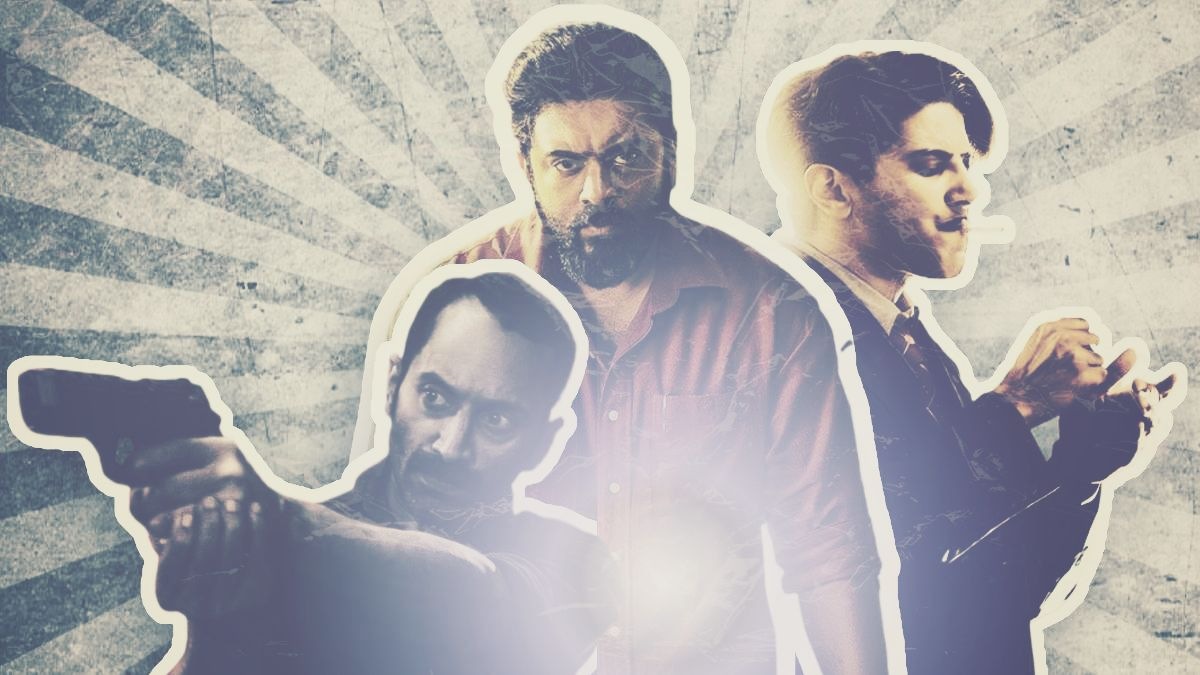
Why do we keep measuring Fahadh, Nivin and Dulquer against a scale they were never meant to fit?
In the recently released Prathichaya there is a telling moment when Nivin Pauly’s John Varghese walks into frame for his swearing-in ceremony as the new Chief Minister. The staging is designed to project gravitas, to announce the arrival of a powerful, larger-than-life figure. But the moment also reveals a larger tension around Malayalam cinema’s newer male stars: what happens when actors built on relatability are asked to occupy frames designed for myth?Nivin’s body language in the scene feels restricted, as though the role demands a kind of authority that does not sit naturally on him. There is a stiffness to the performance, a sense of an actor placed inside a world rather than one who has fully grown into it. Throughout the film, he seems to carry this unease, as though the narrative’s demands are slightly alien to his natural screen persona.In contrast, his performance as Prabhendu in Sarvam Maya rests firmly within his comfort zone. Here, he leans into his familiar boy-next-door charm, a space where he does not have to perform as much as simply be. The ease is evident, and it works because the role aligns with the emotional accessibility that has long defined his presence on screen.
Which is why the frequent comparisons to Mohanlal feel misplaced. Mohanlal’s career has been defined by an extraordinary fluidity, especially in his ability to move across genres and inhabit both the ordinary and the mythical with equal conviction. To measure Nivin against that kind of range is not merely disproportionate; it is unfair. It places an unnecessary burden on a younger actor still navigating his space, while also diminishing the sheer scale and depth of Mohanlal’s four-decade-long filmography.That brings us to the more uncomfortable question: why are we so intent on forcing actors like Fahadh Faasil, Dulquer Salmaan and Nivin Pauly into the mould of Mammootty and Mohanlal, when, over time, they have already crafted identities that are distinctly their own?The comparison misunderstands not just the actors, but the eras that shaped them. Mammootty and Mohanlal emerged in a cinematic landscape that allowed for the slow construction of myth. Stardom was not instant; it was accumulated. Over decades, their screen personas evolved into something monumental, supported by scripts that reinforced layered masculinity, heroic dominance and emotional grandeur.
By the time Nivin, Dulquer and Fahadh arrived, that ecosystem had already shifted. Malayalam cinema was, in many ways, searching for a different kind of leading man: someone who could be vulnerable, awkward, morally uncertain, emotionally accessible. Their stardom was not built on distance, but on relatability. Unlike their predecessors, they also did not have the same luxury of time. They had to navigate shorter cycles, sharper criticism, and the relentless gaze of social media, where every performance is dissected almost in real time.There is also the question of visibility. The older superstars benefited from a certain elusiveness; their personas existed largely on screen, protected from constant public scrutiny. Today’s actors do not have that shield. Their off-screen selves bleed into their on-screen reception in ways that fundamentally alter how audiences engage with them.Even the filmmaking ecosystem has changed. Directors like Lijo Jose Pellissery, Dileesh Pothan and Basil Joseph have helped shape a more democratised cinematic space, one that resists hero-worship and prioritises character immersion and narrative authenticity. In such a space, the idea of a singular, towering “alpha hero” naturally begins to dissolve.Perhaps that is why this shift feels so necessary. By the early 2000s, Malayalam cinema was already showing signs of stagnation, weighed down by repetitive superstar narratives. What the newer generation represents is not a failure to live up to the past, but a conscious departure from it.So maybe the real question is not why they do not measure up. It is why we are still using the same scale. Unlike their seniors, these actors are not burdened by the rigid weight of a fixed “star image”. That absence is not a limitation; it is a kind of freedom. It allows them to push against stereotypes instead of protecting them. Even when they embody swagger on screen, it is calibrated through relatability, never distance.
Take Rangan in Aavesham as played by Fahadh Faasil. He can walk into a bar flanked by intimidating bodyguards, exuding menace and control, and yet, in the very next beat, become disarmingly goofy, almost childlike. The contradiction does not break the character; it completes him. We believe him not because he is larger than life, but because he is unpredictably human.Or Charlie in Charlie where Dulquer Salmaan manages to hold onto an aura of mystery while simultaneously radiating warmth and compassion. The swag is there, but it never hardens into untouchability. It remains porous, inviting.Then there is George in Premam embodied by Nivin Pauly. In one moment, he erupts, beating up a peon for a disparaging remark about Malar miss, tapping into that familiar masculine impulse of cinematic heroism. But almost immediately, the film undercuts that elevation. His friends pull him back down, restoring his ordinariness, as if the narrative itself resists allowing him to drift too far into myth.That is the defining difference. These characters are allowed their moments of elevation, but they are never permitted to remain there. They are constantly brought back to earth — by humour, vulnerability, embarrassment, failure, or simply by the people around them. In that push and pull between swagger and softness, what emerges is not the unreachable star, but the recognisably human figure.As for whether Fahadh, Dulquer and Nivin can truly command the larger-than-life, incite fear, deliver punchlines with swagger, or dominate as action heroes, it is not only a question of ability. It is also about the weight of history. The towering, almost mythic stardom of Mohanlal and Mammootty has set a template so definitive that stepping into that space now inevitably invites comparison rather than evaluation.At the same time, these younger actors have, quite consciously, built images that resist that very template. Their stardom is rooted in permeability, not distance; in emotional access, not intimidation. So, when they step into spaces traditionally reserved for spectacle and dominance, there is an inherent friction. Not always because they fall short, but because the grammar itself has changed.Which is why, for now, it feels more honest to negotiate between these worlds rather than collapse them into each other. Between Rangan and Stephen Nedumbally. Between Bilal and Charlie. Between a masculinity that asserts and one that reveals.That may be the real transition Malayalam cinema is living through. Stardom has not disappeared; it has changed texture. It no longer always arrives as distance, dominance or myth. Sometimes, it arrives as permeability, self-awareness, humour, hesitation and emotional access.So perhaps the question is not whether Fahadh Faasil, Dulquer Salmaan and Nivin Pauly can become the next Mammootty or Mohanlal. Perhaps the question itself belongs to another era. These actors are not failing to become legends the old way. They are revealing what stardom can look like when it is allowed to come down from the pedestal and live closer to the ground.
Share
return(
)