Home » Features » The Perfect Neighbor: The United States Of Horror
Features

The Perfect Neighbor: The United States Of Horror

The documentary reveals a perfect storm of cultural rot: problematic gun-control laws and mental-health negligence cross-breed with institutionalised racism and sinister self-defence rules.

Rahul+Desai
Oct 22, 2025

Still from The Perfect Neighbor | Netflix.

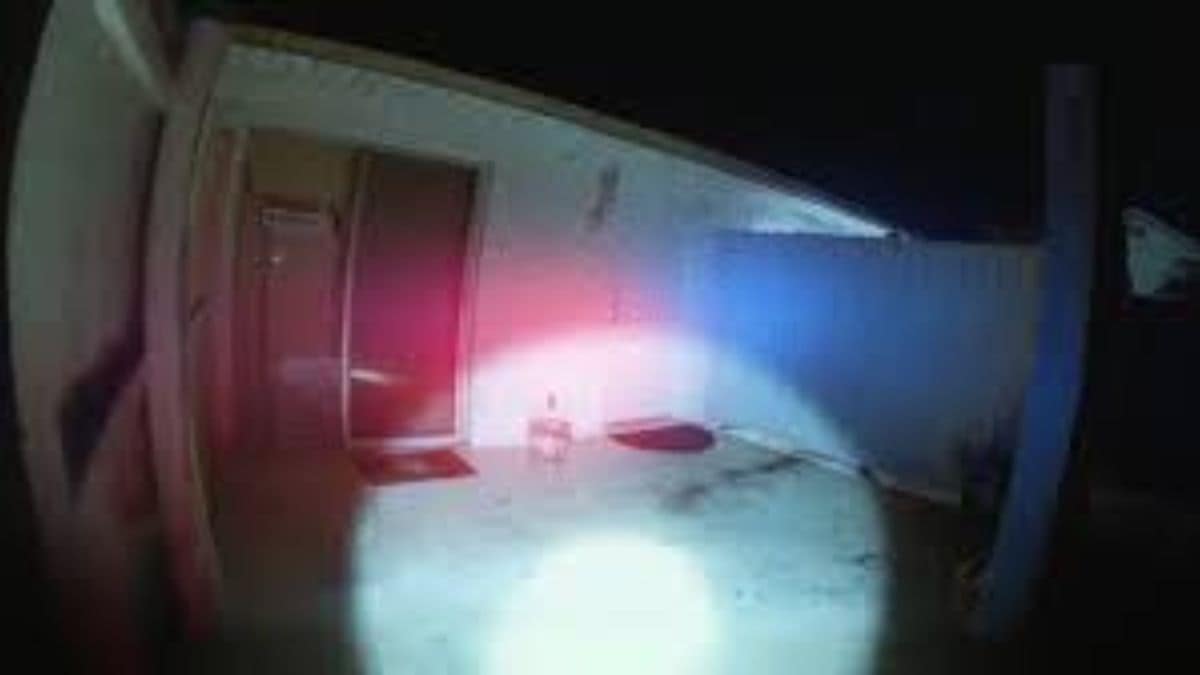
GEETA GANDBHIR'S The Perfect Neighbor unfolds like a found-footage horror film. The genre usually riffs on reality, and remains rooted in the fear of seeing things we shouldn’t see. But this 97-minute documentary is rooted in the fear of seeing things we should see. It’s a broad-daylight horror movie — primarily constructed from police bodycam footage — in which the ‘characters’ are already haunted by the ghosts of systemic prejudice. The natural is scarier than the supernatural, especially in an America that’s built on the validation of white paranoia. The documentary reveals a perfect storm of cultural rot: problematic gun-control laws and mental-health negligence cross-breed with institutionalised racism and sinister self-defence rules. It’s unlike anything I’ve seen before in terms of both technical urgency and bullet-proof critique, which is saying something, given the deluge of shock-and-awe Netflix true-crime projects that have desensitised the whims of modern America in recent years.

Stream the latest films and shows with OTTplay's Power Play monthly pack, for only Rs 149.

The Perfect Neighbor plays out in a middle-class Florida neighbourhood. The “cinematographers” — who, in this case, are two beat cops from the Marion County Sheriff Department — arrive at the house of one Susan Lorincz, an irritated and self-serious white woman who complains about the Black kids in the area and their ‘mischievous’ antics. Unlike the other homes, her door doesn’t overlook the main street; it’s to the side of the house and cordoned off (or “protected”) by those all-American picket-fences. It’s as if she refuses to have the same visual perspective — of a racially diverse and lively young neighbourhood — as the others. We see Susan express her grievances and accuse one of the parents, Ajike, of bodily harm with a cardboard sign. We hear the kids playfully yelling “Karen” in the background. The cops hear out both sides politely and professionally. You can sense them sympathising with Ajike, while also trivialising the rage of Susan. One of them makes a point: “You’d rather have them play around here than go out robbing cars”. The racial identity of the place is established.
Given the nation’s infamous relationship with police brutality, it’s almost a relief to hear the patrollers interact with the Black children and the locals. The documentary shows a series of similar encounters over a few months between 2022 and 2023. The pattern is the same: Susan is tired of the noisy kids encroaching on her property, while her neighbours make it clear that she’s the only one with issues. It becomes so common that you can almost hear the cops sigh behind their bodycams every time they walk up to Susan’s shaded door and knock. It’s their duty to listen to her; it’s also their duty to question everyone she blames. WATCH | Unmissable international true crime series on JioHotstar that would leave you with haunting puzzles
What this does, though, is craft an atmosphere of an imminent ‘jump-scare’ and escalating tensions. The cops seem to presume that, by being affable with the kids and their parents, they’re already doing a better job than most. It’s the bare minimum, but in an age of state-sponsored intolerance and weaponised hate, the ‘civil exchanges’ look like gestures of compassion. The relief that we, as viewers, feel while observing white officers with coloured tenants is a smokescreen that lulls us into trusting the system — until we cannot. The patterns are there for anyone looking, and it’s almost as if the law enforcement officers aren’t willing to be human enough to detect them; they treat the situation with kid-gloves in the subconscious hope that Susan is just another attention-seeking bigot who barks more than she bites. They’re used to people like her because they come from people like her.
When all hell breaks loose, The Perfect Neighbor’s gaze stays unbroken. It continues to employ the view of the system — bodycam footage gives way to interrogation-room recordings and courtroom clips — to see the story through. By using this technique (the access is remarkable), what you get is what you see. The truth is in the facts. There is no room for blanks that can be misinterpreted or discourse that can be hijacked. Suddenly, the ‘harmless’ ways of a crabby white homeowner start to acquire chilling designs and performative victimhood. Susan is just as persuasive as anyone else in the initial portions, so the average viewer feels just as responsible for letting her Karen-isms slide under the pretext of pop-cultural levity. The documentary skillfully crafts the aftermath as an indictment of a land for which violence is the first resort of self-preservation. Those like Susan are emboldened by the knowledge that most systems are composed and reverse-engineered to legitimise their instincts. The burden of proof, then, falls upon those who exist outside the purview of justice. WATCH | Best India-based documentaries and docu-series on Discovery+The film hits harder once we realise that mothers like Ajike are punished for being mothers, and her kids are punished for being kids. If they stray, they become stereotypes; if they don’t, they become tragedies. It’s kind of surreal to see the incident being reported in the media; the ‘tone’ is so normal that you wonder who the perpetrator is, or worse, you wonder about the discounted cost of a human life. It also speaks volumes that everything we see of the Black family — their innocence, their love, their jokes, laughter, grief, protests and tears — is literally through the lens of the law. It’s as though they aren’t allowed to survive, dream, play, stand up or thrive outside of a culture that’s wired to keep a watchful eye on them.
At some point, it’s easy to forget that they’re being captured as part of a procedure; the cops, too, seem to be unwittingly moving and approaching them as if they’re filming them. It takes no less than bodycam footage (and the cruel irony of the phrase “being shot”) to archive and dignify their narrative. But the thing about any sort of archival footage is that it can be erased. Like people, places, bloodlines and entire histories. All it takes is a glitch in the social matrix. In other words, The Perfect Neighbor transcends the true-crime template to show that there is no truth to crime. It proves beyond a reasonable doubt that, sometimes, the only right that people in America have is the right to remain silent. The Perfect Neighbor is currently streaming on Netflix. Fascinating documentaries on JioHotstar that can help you broaden your horizons. Watch them with your OTTplay Premium subscription.
Share
return(
)