Home » Features » Three Years Later, Rorschach Refuses To Fade
Features

Three Years Later, Rorschach Refuses To Fade

Nissam Basheer’s psychological thriller still grips with quiet menace, as Mammootty’s Luke Antony lingers on — a slow-burning meditation on grief, revenge, and the ghosts we become.

Neelima+Menon
Nov 03, 2025

Rorschach is a haunting exploration of the human psyche — a powerful ode to its shifting moral terrains and emotional ambiguities.

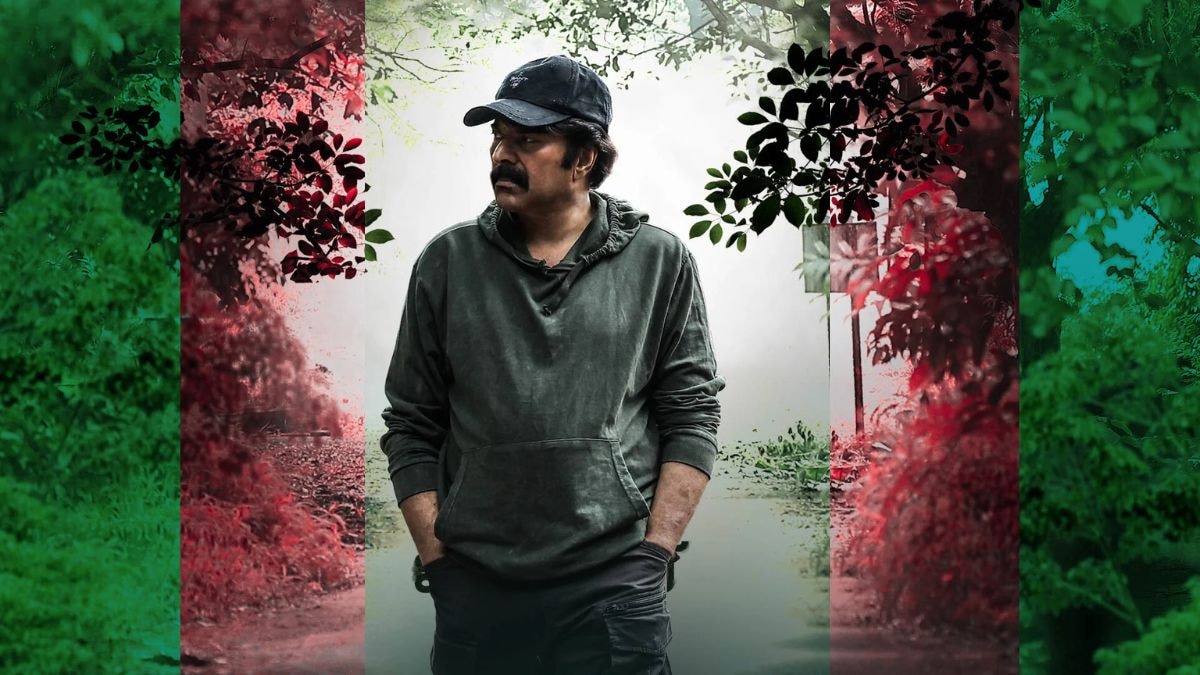
THREE YEARS LATER Rorschach refuses to let go. This isn’t nostalgia — it’s a dive back into a world where morality is fluid, every character hides shadows, and the line between revenge and obsession blurs. Even today, Luke’s eerie calm and calculated torment keep audiences on edge, proving that some cinematic ghosts only grow stronger with time.As the title cards unfold and Luke Antony drifts through the forest, lost in thought, a haunting prosody sets the tone: “I might not find what I lost. I pursue not pleasure. Nothing was a choice. No thing was a choice.” It feels like a confession, a poetic overture that captures the film’s inner rhythm — about a man consumed by ghosts, both real and imagined.Luke’s world is one of quiet torment. He is chasing the ghost of his enemy, intent on erasing every trace of that presence. Hallucinations shadow each step he takes, his mind blurring revenge and grief into one. There’s a strange satisfaction in his suffering, as though pain has become the only form of control left to him. What remains is not a life but a lingering existence — a man who, in truth, died alongside his wife, and now haunts the ruins of his own story. Rorschach, directed by Nissam Basheer and written by Sameer Abdul, is a haunting exploration of the human psyche — a powerful ode to its shifting moral terrains and emotional ambiguities. It follows a man teetering between morality and madness, truth and illusion, right and wrong.
There’s an eerie tonal consistency that runs through the film, establishing a mood that refuses to waver — tense, meditative, and unrelenting. The grey Ford Mustang GT that ferries Luke Antony through the winding roads can be termed as a metaphorical extension of his cold, impenetrable inner state, moving with purpose through the fog of his own obsessions. And the muted colour palette mirrors this psychological terrain, where nothing is black or white, only layered shades of decay and doubt.The background score creeps in stealthily, unsettling without ever announcing itself. In fact, every sonic choice, from the disturbing silences to the sharp bursts of sound, feels like a reflection of his fractured consciousness. Even the village and its people operate within this uneasy greyness. They’re not the stock rural archetypes Malayalam cinema often leans on; instead, they echo Luke’s own ambiguity, each character hiding motives, fears, and quiet complicities.The fact that the narrative doesn’t give emotional relief or moral certainty is perhaps what keeps us riveted on screen. It’s a film that sustains discomfort, daring the viewer to stay in its darkness, to interpret its shades much like the psychological test it borrows its name from. WATCH | These pathbreaking Mammootty films are available to stream on OTTplay Premium
Perhaps Luke’s motive carries faint echoes of Raghav from Sriram Raghavan’s Badlapur — both men driven by grief and consumed by revenge. But where Raghav confronts his enemies head-on, Luke’s battle is inward, spectral. His adversary is not flesh and blood but a ghostly presence that he must erase to reclaim control over his own mind. If Badlapur was about a man descending into moral darkness in pursuit of justice, Rorschach is about one already swallowed by it, haunting himself through the memories he refuses to bury.Luke’s trajectory is so meticulously etched that his descent into absolute, blindsided vengeance begins to unsettle you from a psychological space. What makes it even more chilling is the eerie composure (Mammootty at his finest) with which he plots his traps and executes his hunt. There’s no frenzy in his violence, no visible rage — only a cold, methodical precision that suggests both mastery and madness. In Luke, vengeance sheds its usual heat and becomes something unnervingly serene, almost meditative, as if he’s carrying out a ritual rather than revenge.The film stages Luke’s psychological complexities in a deeply unnerving manner. Rather than succumbing to the fear of the unseen, Luke deliberately invokes the ghostly presence, finding a strange satisfaction in provoking his own hallucinations and psyching himself out. It is here that Mammootty elevates his craft to a rarefied level: his conversations with the ghost — gentle, precise, almost tender — carry a tangible weight, as if these spectral interactions are as real as any human exchange.
As he teases and torments himself, a ghoulish joy slowly creeps across his expression, unsettling and fascinating in equal measure. The sequence following his wedding to Sujatha exemplifies this perfectly: performed with such sadistic conviction, it evokes a paradoxical mix of horror and pity. You witness a man both orchestrating and surrendering to his own obsession, and in that delicate balance, Mammootty’s performance becomes hypnotic — terrifying in its restraint, grotesque in its subtle delight, and strangely tragic in its humanity.What works in parallel to Luke’s calm is the ensemble of characters who mirror his ambiguity, each negotiating their own moral compromises. If Dileep’s father trades loyalty for survival, betraying his own family without hesitation, his younger brother, Anil (Sanju Sivaram), kills with a disarming lack of remorse while the brother-in-law, Shashankan (Kottayam Nazeer), teeters constantly under the weight of circumstance and self-interest. 5 Best Mammootty films to stream on Sun NXT (via OTTplay Premium) - Pranchiyettan and The Saint, Munnariyippu, and more...There is a sex worker whom Luke befriends but maintains a guarded ambiguity, while Sujatha (Grace Antony), Dileep’s widow, struggles to retain her cashew factory, only to find herself ensnared by Luke’s manipulations into a forced marriage. Even Satheeshan (Sharafuddin), her childhood friend and relentless spy, perhaps perceives Luke’s designs before anyone else — and yet remains powerless to intervene. There is a cop (Jagadish) who eventually outsmarts himself out of greed.
But Luke’s biggest adversary turns out to be Seetha, Dileep’s 60-something mother, whose life at first seems deceptively quiet. She has long chosen to ignore her philandering husband and keep her focus on her children and the fragile equilibrium of their lives. When her husband is found dead, Seetha does not flinch from asserting her rights, claiming her share of wealth with the same determination that governs her familial stewardship. One of the most chilling moments comes when Seetha tells Luke that her sons mirror her own values and that she will protect them at any cost. Yet the film immediately complicates this perception when she flees to save herself after realising that Luke has overpowered her son. That’s when you see her maternal devotion being tempered by self-preservation, when she appears neither heroic nor culpable.Though she initially evokes the familiar figure of the devoted cinematic mother, Nissam Basheer and Sameer Abdul carefully complicate her, painting subtle shades of grey that darken as the story progresses. Her protective instincts mingle with opportunism, cunning, and an uncanny sense of foresight. Bindu Panicker’s performance deepens this tension: her serene, composed exterior conceals a quietly formidable intellect and moral flexibility, making Seetha’s actions both believable and quietly terrifying.Her character also underscores one of the film’s central motifs: that morality is rarely absolute. Even figures who seem inherently virtuous, devoted, or gentle carry shadows within them, and these shadows are capable of influencing the narrative as powerfully as Luke’s own calculated vengeance. Through Seetha, Rorschach explores the idea that survival and family loyalty can demand morally ambiguous decisions, complicating the binary of right and wrong in ways that ripple across the film’s ensemble of characters. Psst... Rorschach is now streaming on JioHotstar, available with your OTTplay Premium subscription. If you haven’t seen the film yet, watch it here!
Share
return(
)