Home » Interview » Maanvi Gagroo on legacy of Four More Shots Please! - 'We humanised women because nobody else was doing it' | Exclusive
Maanvi Gagroo on legacy of Four More Shots Please! - 'We humanised women because nobody else was doing it' | Exclusive
Maanvi Gagroo reflects on her decade-long journey on OTT as Four More Shots Please! ends. She talks about Siddhi's growth, body positivity, and humanising women in this bittersweet finale.
Dec 20, 2025
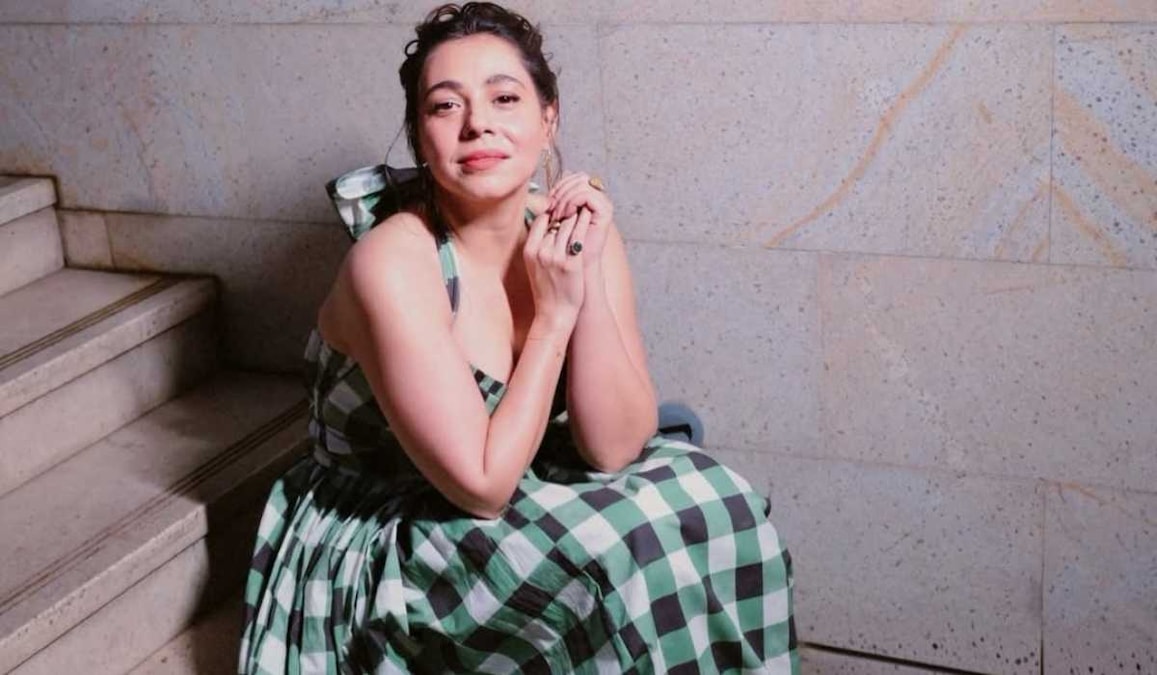
Maanvi Gagroo/Instagram
As the final moments of one of India's trailblazing OTT series bid goodbye, Maanvi Gagroo gets ready to say a bittersweet goodbye to a character who has become practically a byword for her. Four More Shots Please! Season 4 the last installment of the beloved series, made its debut on Prime Video on December 19, 2025, marking the culmination of the actor's ten years of leading the OTT revolution. Maanvi reflects on Siddhi Patel's journey from a wealthy girl floundering through life to a self-assured lady discovering her stand-up stage voice in an exclusive interview with OTTplay. This conclusion is more than just a goodbye; it's a joyful send-off to a sisterhood that altered the game forever. Maanvi talks about the show's significant impact on body acceptance, the "scary" reality of live comedy, and the "humanisation" of women on film.
Watch Maanvi Gagroo’s standout performances in Pitchers, Tripling, and Tu Hai Mera Sunday with OTTplay Premium.
Edited excerpts below...
Q: It's the last season, so how is it feeling, saying goodbye to this—one of the most unforgettable roles you've ever played?
Maanvi: It's exactly how you said it; it's completely bittersweet. And you know, when we started with Season 4, I was very excited. I was like, "Arey chalo, one last time" and you know, "Let’s..." So there was all of that—that "okay, last time we're doing this" feeling. There was a lot of excitement, but it was only on the last day of shooting that it hit us. I remember when I was driving on my way to the location, tab mujhe suddenly aise laga ki, "Oh sh*t, this is the last time I'll be playing Siddhi." Like this scene—and it was only one scene that day—and I was like, "This scene, this is the last time I'll be playing Siddhi; I'll be inhabiting this world." And obviously, we'll keep meeting, but to be in that setup, on a set, with everyone... you know, woh pata nahi kab hoga ki nahi. So I think that was in our minds, and we started crying at the last shot and all that. So yeah, it's the end of an era. Or as Sahira, who's from Amazon, has this beautiful line—and I told her I'll keep chipkao-ing it everywhere—which is, "This is a send-off; it's not a goodbye."
Q: After shooting, you're reuniting for promotion—what was that vibe like, seeing your people again after a few weeks or a few months and talking about this character you've been playing?
Maanvi: It's the same. Everybody had that vibe of, "Okay, come on, let's do this one last time." We're all trying to enjoy every minute of it, every second of it. It gets hectic, promotions and all, but kar rahe hain, enjoy kar rahe hain. But that hecticness is also something that we've always wanted.
Q: From Seasons 1 to 4, how do you see the transformation of your character? When you were portraying it, how would you describe what Siddhi is like now that it's over?
Maanvi: So, she's definitely grown up since Season 1. Obviously, the character hasn't changed because people don't—like, the personality doesn't change. But at the core of it, while she's the same, she's more sure of herself now. In Season 1, she was trying different things; she didn't know what she wanted to do with her life. But that came from a place of privilege and entitlement—not knowing kya karna hai life mein, or karna bhi hai kuch ki nahi. Because she never felt the need; she never worked because she wanted to work. It was just like, "Okay, I'm free; what do I do? Chalo ballet try kar lete hain, chalo baking try kar lete hain, chalo yeh try kar lete hain." And that's how she stumbles upon stand-up comedy. That's where she kind of finds herself. She becomes a little confident about herself. So by Season 4, she's pretty much doing this only; she's just trying out different things, but at least she's come into her own. Now when she's doing things, she knows what she wants to do, she knows what she doesn't want to do, and she knows why she's doing something. So that awareness has come in. Baaki hai toh woh abhi bhi; she's the baby of the group, and she's very immature. She's trying to be an adult in Season 4, but we'll find out how she does. But yeah, more or less she's the same, but I do see a growth in her worldview of herself also.
Q: One of the most constant things, apart from the dynamics and your character, is the changing of directors in every season. Was it challenging for you? I understand that the script is in place, but a fresh perspective is constantly emerging. They have to fit in the world that you have already created.
Maanvi: It's hard for them, I'm sure, because with every passing season we were that much closer to each other, to the characters, and to the world. They were the ones entering an already established world. But I think it was a very good call from Rangita and Ishita because it's not that every season we have a different crew altogether. Only the director changes. The showrunners, Rangita (Pritish Nandy) and Ishita (Moitra); our DOP, Neha (Parti Matiyani); and the writers, Devika (Bhagat) and Ishita—they're all the same. Actors are the same; our costume stylist, Aastha (Sharma), and editor, Antara (Lahiri)—everybody's more or less the same. The director comes in because that is also needed; you need a fresh perspective. Otherwise, hum same hi cheez kar rahe hote every year, every season. So with every new director, we had a different vision. Except for Anu (Menon), who started the show, when Nupur (Asthana) came in, Joyeeta (Patpatia) came in, and now Arunima (Sharma) and Neha, they've all watched the show. They had their opinions on the show, and they got that chance to either enhance it or give it a different spin, while staying true to the nature and core of the show, which comes from the rest of the crew and especially the showrunners. It's beautiful.
Q: Siddhi, I think she is one of the boldest characters in the show because, as you mentioned, her transformation is significant; however, you have also addressed body image issues and many other difficult topics that are uncomfortable for girls to discuss. I even read comments where they have thanked you for this role. Tell me about your feelings when you receive reactions like, "You brought a little change in me."
Maanvi: I was also one of those girls who wasn't very confident about a lot of these things. The interesting thing was, I thought I was always confident, but I didn't realise that... like, even with body positivity, I never thought of it as an issue with myself until I was doing this show. I remember Season 1; Siddhi wears a lot of short dresses and skirts, and I used to be very conscious of my lower body. Bohot unse ladai ki maine ki "Please nahi nahi, give me jeans, upar de do—give me off-shoulder, give me halter—I'm okay with that, but bottoms I need..." They were like, "No, no, but you know, whatever." And through the show, subconsciously somewhere, I became very comfortable. It's just a matter of doing it. Because aisa nahi hai ki maine baith ke bola apne aap ko ki, "Okay, from tomorrow I will only wear shorts because now I'm confident." No, it just happened on its own.
In fact, Anu, our director for Season 1, was the one who pointed it out because we'd met for lunch many months after we'd finished shooting, and main ek short dress pehen ke gayi thi. She saw me, and she said, "Maanvi, is this the same girl jo matlab 8 mahine pehle bol rahi thi 'I will not wear' and now as Maanvi she's wearing?" And I didn't even realise! And then when Season 1 came out and lots of girls... and it wasn't like body positivity in—it's a huge umbrella, right? It's not just about weight; it's about skin colour, texture, height, and hair—it's about so many things.
To me, I was looking at body positivity through the narrow lens of weight—fat or thin. And so when skinny girls would come up to me, or young girls in college, and they were saying, "You know we relate with Siddhi," toh pehle mujhe samajh nahi aata tha. I was like, "But how are you relating with Siddhi?" And then they would tell me that people close to them, like from their families, would say, "Arey, tu itni kaali hai, teri shaadi nahi hogi" or "Skin kitni kharab hai, kaun karega shaadi?" Things like that—or how girls in our country are told, "Bahar mat khelo dhoop mein, kaali ho jaogi." That's when I realised that, oh, this is so much bigger than what I was thinking. So then, from Season 2 onwards, I became the other end—I was like, "Guys, it's a responsibility; now we have to do this, we have to do that." It took me a while to find a balance between the two seasons—one where I was totally relaxed and the other where I was like, "I'm making a social impact." So then I was like, "Maanvi, don't take yourself so seriously also."
Q: One of the most interesting aspects of your character is your dabbling in so many other things, but the main thing that's stuck is stand-up comedy. While performing that, did you realise that you have a comedian inside you that Maanvi would like to pursue?
Maanvi: I believe I'm a very funny person in real life. But I'm petrified of doing comedy on screen because I feel in real life there's no pressure. I'm funny because it comes naturally to me; it's not like someone has paid to watch me talk. I can fool around; ek joke flat bhi chala gaya, kisi ko nahi samajh aaya joke, it's okay. But on stage, it's very hard. So I have never—I have been petrified of doing comedy on stage also. On screen is still acting—I'm playing a stand-up comic, so there is a script. Ishita and Devika have written those dialogues. Now it's about performing, and even in that I get scared because sometimes I feel I'm not able to put out the humour the way it was intended. I also feel comedy on screen is made on the edit table; that's how you make a good comic scene. Stage pe toh main kabhi na karoon—live comedy I can't do. My partner is a stand-up comic, so I'm like, "I don't know how you guys do it, man." They have bad shows, they have great shows, and it's all them—they are writing the jokes, and then uspe you have so much pressure of "Did I say something wrong?" or "I hope no one gets offended." So yeah, hats off to stand-up comics.
Q: Is it easy now to move on from Siddhi?
Maanvi: We'll find out. I don't know if it's easy to move on. I mean, I'm usually someone who can switch on and switch off, but the character always stays, right? Depending on how the character's received, it stays with you longer or shorter, kinder or not kind. I think when I meet the girls or someone from the show again, I'll automatically slip into a certain personality, but I should be fine.
Q: You have been part of the world of OTT even before it was OTT. It was referred to as a web series, and I believe it has been nearly a decade since it first premiered—
Maanvi: It's actually ten years. Pitchers came out in 2015, and it's 2025. Exactly. I'm a legend.
Q: How do you see the journey of the OTT space in terms of female characters being written?
Maanvi: I think it has come from there. We had female-led narratives, but woh bohot kam hota tha in movies. Television was always mostly about women, but I'm not sure whether they were progressively portrayed. With OTT—in fact with Pitchers—my favourite thing about it when it came to me (of course I wanted to do it because I knew there was something very interesting happening) was that it never defined Shreya, the character I played, in a physical way. Usually, when you get a script, the character's entry says, "And a beautiful, attractive girl walks in" or "A cute, bubbly girl walks in." But in this, there was none of that. It was just, "Shreya, 26 years old, comes in—she's very confident, she's this, she's that." She was defined by her personality traits rather than her physical traits. I thought that was so refreshing, main wahin pe maine yes bol diya. After that, in general, women were being put in the centre of the stories. I think Four More Shots Please! has been a great show in that respect. You may like it or not, but you can't deny the fact that this was the first show that humanised women. Because up until then, women were either very perfect or pious or...
...or they were like ekdum vamp, matlab kisi ka ghar bigad rahi hain and all of those negative things. This show talked about girls who are normal, who are sometimes bad because they make bad choices, and then sometimes they are very good and they stand by each other. It just humanised women. And sadly, we had to do that because nobody else was doing it. So when we look back, this will be a benchmark for sure.
Q: Has playing these roles helped you in making career choices? Like saying no to certain roles? Has it given you more courage?
Maanvi: Yes and no. Because of course, it's given me the privilege of choice to begin with. As actors, you don't always have that choice; if you're only getting one or two roles, then you will end up doing them. But Four More Shots Please opened a lot of doors for me, so I had a lot of options to choose from. When it comes to stereotyping, I think it's just the nature of the industry, but thanks to social media, that has given us an avenue to show ourselves the way we want to show ourselves. So yeah, I think it's a mix of both for me.
Q: So last question: describe the Four More Shots Please! finale in four words.
Maanvi: Joyous, closure, friendship, and forever.
Top 6 Maanvi Gagroo Performances
Share