Home » News » Gustaakh Ishq ending explained: What happens to Vijay Varma’s press, why his mission for Fatima Sana Shaikh and Naseeruddin Shah is 'audacious' triumph
Gustaakh Ishq ending explained: What happens to Vijay Varma’s press, why his mission for Fatima Sana Shaikh and Naseeruddin Shah is 'audacious' triumph
In 1998, Pappan tries saving a legacy Urdu press through deceit in Gustaakh Ishq. He finds love and redemption, choosing artistic integrity over profit as the digital age begins.
Jan 28, 2026
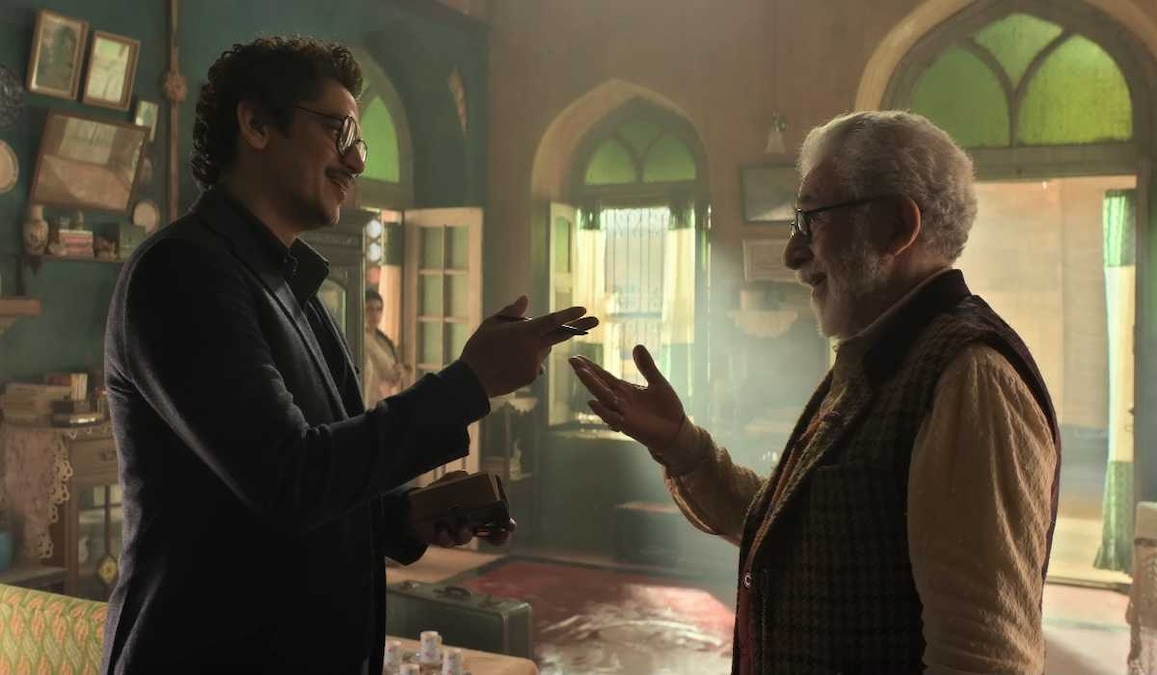
Vijay Varma and Naseeruddin Shah in a still from Gustaakh Ishq
An eagerly anticipated OTT release of the Vibhu Puri romantic drama Gustaakh Ishq on JioHotstar (OTTplay Premium) took place on January 27, 2026 following its theatrical run in late 2025. The film, which Manish Malhotra's Stage5 Productions produced, has recently garnered a lot of attention again thanks to its thoughtful narrative, lyrical tone, and moving depiction of a literary and artistic age that is rapidly passing.
Experience the versatility of Fatima Sana Shaikh by streaming her latest poetic romance Gustaakh Ishq, the gripping military biopic Sam Bahadur, and the soulful classic Tahaan, all available now with one simple subscription to OTTplay Premium.
What is the premise of Gustaakh Ishq and who leads the cast?
The film transports audiences to 1998 through its score by Vishal Bhardwaj and lyrics by Gulzar. The story follows Nawabuddin Saifuddin Rahman, better known as Pappan, played by Vijay Varma, as he deals with the challenges of staying true to his creative roots in a society that is fast becoming more modern.
Pappan is a man facing significant challenges. Rising debts threaten to bankrupt the "Mustaqbil Printing Press" in Darya Ganj, Old Delhi, which was his father's Urdu press. He is facing a formidable challenge to rescue it. Jumman (Rohan Verma), Pappan's pragmatic younger brother, is prepared to either sell the land to developers or shift his focus to publishing sensationalist "pulp" literature in order to meet their financial obligations. Papa considers the press a sacred treasure.
What is Pappan’s deceptive plan to save the press?
He goes to Malerkotla, Punjab, in an attempt to save the press by locating the famed poet Aziz Beg (Naseeruddin Shah), who disappeared many years ago. The foundation of Pappan's scheme is dishonesty. In his role as shagird (disciple) for Aziz, he pretends to be a budding poet. He discreetly seeks out and purchases Aziz's unpublished works, hoping that their fame will revitalise the press.
He develops romantic feelings for Mannat, the daughter of Aziz, played by Fatima Sana Shaikh. Mannat is a guarded schoolteacher and a divorcee who is hesitant to interact with strangers.
How does Pappan’s moral journey evolve under Aziz’s mentorship?
As Pappan's guilt mounts, the suspense of Gustaakh Ishq increases. He starts to understand that the poet's retreat from society wasn't due to hubris but rather to a profound disappointment with the "commercialisation of the word" as he studies the intricacies of Urdu and tehzeeb (etiquette) under Aziz's guidance.
The subplot revealing the close friendship between Aziz and Pappan's father intensifies the emotional tension. As Jumman arrives in Malerkotla to ask for Pappan's hand, the lies start to make sense. Mannat sees Papa's behaviour as betraying his confidence, and he must decide whether to prioritise the material success of his company or the eternal well-being of his soul.
How do the characters reach a point of forgiveness?
There are three main resolves to the film's subtle emotional beats. Pappan opts for candour rather than a theatrical showdown. He recognises that art isn't just for the "bazaar" (market), but he also boasts about his academic achievements and his failures as a businessman. Forgiveness comes to Aziz Beg as he realises that Pappan represents the language's actual mustaqbil, or future. He doesn't sell or trade his manuscripts; he gives them away as a gift so that future generations might read them.
Pappan halts the press's sale upon his return to Delhi. Still, he doesn't become one of those business tycoons. Instead of going for mass appeal, he opts for a "slower, more dignified path," which prioritises quality and artisanal publishing. The film implies that the Urdu press is still an important cultural force, even though it is not a major player in the industry anymore.
How is the relationship between Pappan and Mannat resolved?
"Thehraav" (stillness) is the final note on which Pappan and Mannat's relationship ends. There is no big ceremony, just a peaceful mending of fences based on common ground. He has grown sincere in his affection for the language and for her, so Mannat forgives him.
Significant symbolism is there in the film's last moments. As 1998 draws to a close, we see a character holding a bulky, early-model mobile phone. This implies that the days of lengthy letters and meticulously typeset poetry are fading away.
How does the film highlight the irony of the digital revolution?
Puri emphasises the irony of Pappan's mission by concluding the film at the start of the digital revolution: the rescue of the press occurs at the same time that paper is going to be obsolete.
The romanticism and the audacity of attempting to revive a dying craft are both referred to as Gustaakh Ishq (Audacious Love). Naseeruddin Shah's "Ghalib-esque" solemnity and Vijay Varma's controlled, era-spanning performance serve as the film's lynchpins, and although some critics thought the ending was "too convenient", the majority lauded it as an atmospheric miracle.
Gustaakh Ishq FAQs:
Q: Is Gustaakh Ishq based on a true story?
A: No, Gustaakh Ishq is an original story written by Vibhu Puri and Prasshant Jha. While it is deeply rooted in the authentic cultural atmosphere of 1990s Old Delhi and Malerkotla, the characters of Nawabuddin (Vijay Varma) and the reclusive poet Aziz Beg (Naseeruddin Shah) are fictional creations intended to honor the dying craft of Urdu printing.
Q: Where can I watch Gustaakh Ishq on OTT?
A: Following its theatrical release in late 2025, Gustaakh Ishq began streaming on JioHotstar (OTTplay Premium) on January 27, 2026.
Q: Who composed the music and wrote the lyrics for Gustaakh Ishq?
A: Gustaakh Ishq features as oulful, old-school soundtrack composed by Vishal Bhardwaj, with evocative lyrics written by the legendary Gulzar. A standout track from the film is "Ul Jalool Ishq," sung by Shilpa Rao and Papon.
The Naseeruddin Shah Playbook
Share