Home » News » Kohrra Season 2 ending explained: Devastating truth behind Preet Bajwa’s killer and haunting symbolism of the migrant labour twist
Kohrra Season 2 ending explained: Devastating truth behind Preet Bajwa’s killer and haunting symbolism of the migrant labour twist
In Kohrra S2 Garundi and Kaur uncover that Preet Bajwa’s murder was a land-driven hit. It exposes deep-rooted systems of migrant exploitation and toxic patriarchy that persist despite the law.
Feb 12, 2026
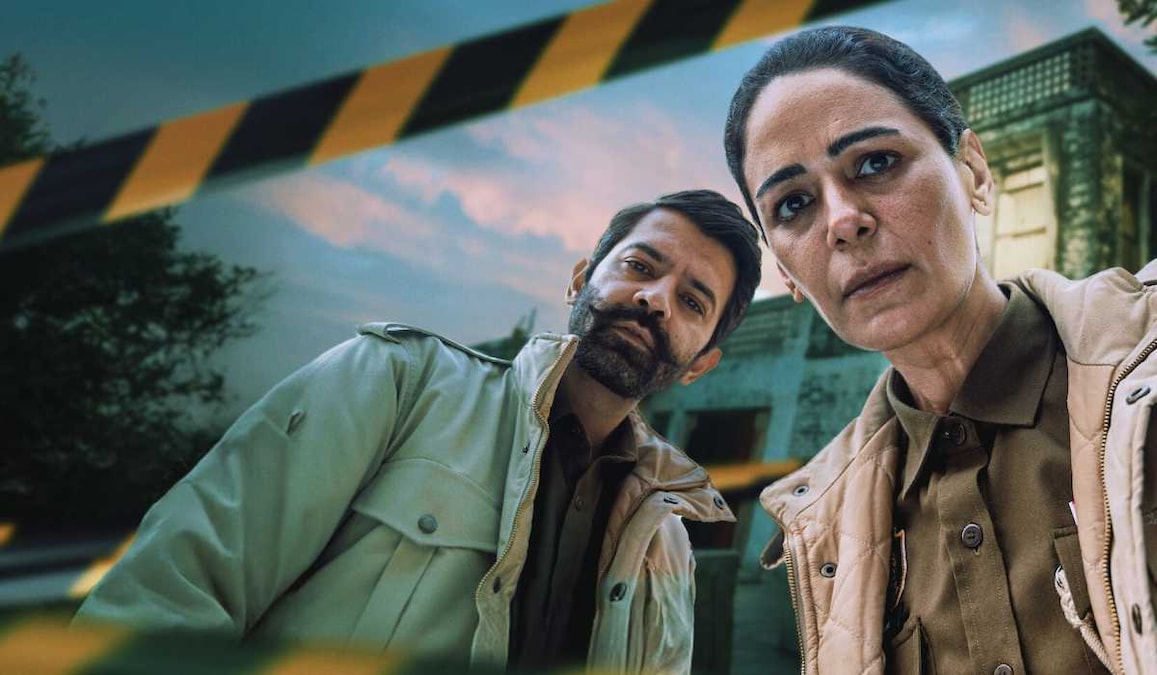
Barun Sobti and Mona Singh in a still from Kohrra Season 2
Kohrra Season 2 has only been available on Netflix for over twenty-four hours but critics are already praising it as a social procedural masterpiece. Season two, which premiered on February 11, 2026, broadens the focus to include the "poison of the soil" in the made-up town of Dalerpura, whereas the previous season zeroed primarily on the claustrophobia of familial secrets in Jagrana.
The 2026 T20 World Cup’s most awaited clash — India vs Pakistan — is almost here. Watch exclusive previews, streaming updates and all the World Cup matches with OTTplay Premium.
What is the central theme of Kohrra Season 2 finale?
Instead of ending on a triumphal note, the six-part season reflects somberly on how systematic exploitation and historical trauma ultimately necessitate a blood sacrifice. We explain the intricate climax and the identity of Preet Bajwa's killer below.
Pooja Bhamrrah's character, NRI influencer Preet Bajwa, is found impaled on a vegetable cutter in the barn of her brother Baljinder, played by Anuraag Arora, in the first scene of the season. Initially, the investigation is guided along the typical "crimes of passion" path, with Sub-Inspector Dhanwant Kaur (Mona Singh) and a new, more restrained Amarpal Garundi (Barun Sobti) at the helm.
Who were the initial primary suspects?
The suspects were numerous. Tarsem (Rannvijay Singha): Preet’s estranged husband in the US, who was allegedly being "held hostage" for $600,000 Her brother Baljinder, who was indebted to her and despised her "rebellious" ways of living, was angry that she had returned. Her local dance partner and lover, Johnny Malang, had an outward demeanour that belied his darker, more volatile side.
"The Fog Lifts" (the series finale) shows that multiple types of "honour" were protected throughout Preet's execution, even though many of the men in her life had greedy and destructive motivations.
Who hired hitman to kill Preet?
The trail that Garundi and Kaur follow in their investigation ends up taking them to a childhood friend of Baljinder's wife, Twinkle. It turns out that her brother Karamjot plotted the crime. It wasn't that Preet was "characterless" (a term often used by the village elders), but her presence and demands for her share of the family estate endangered Baljinder's estate, which Twinkle and Karamjot's family were eager to control, so he hired a hitman to kill her.
The murder weapon, an agricultural tool, takes on an eerie significance as a symbol of the land. A system that prioritises land ownership and male legacy over human life ultimately led to Preet's demise, rather than the actions of a single individual.
Where do the two main storylines intersect?
The most heartbreaking part of the finale is perhaps when the main case and the story of migrant worker Arun (Prayrak Mehta), who is trying to find his father Rakesh, intersect.
The hunt for Rakesh uncovers a horrific warehouse fire and a web of forced labour. Preet and Baljinder's relatives, the Atwal family, have amassed their fortune at the expense of the "disappeared" migrants, as we now discover. Preet had discovered the extent of this exploitation—specifically the fate of Rakesh—and was using it as leverage to secure her inheritance. The local power structures could only guarantee that the "fog" would persist over the village's history by ensuring her death.
What does the "Kohrra" represent in Sudip Sharma’s narrative?
Sudip Sharma, the showrunner, uses inheritance as a central subject. The second season suggests that in Punjab, the past is never really forgotten, whether it's Garundi taking on the shame of his affair or Dhanwant dealing with the loss of her son. A society's collective decision to ignore the harsh realities of caste, class, and the exploitation of the "outsider" (the migrant) is like the "Kohrra" (fog)—not merely a weather condition.
The last scene, in which Garundi and Kaur share a peaceful moment, emphasises that their triumph was ultimately meaningless. Even after the murder was solved, the machine that caused it is still fully operational.
What defines justice in Dalerpura?
Justice in Dalerpura isn't based on morality. The question is who gets to claim the earth beneath your feet.
Kohrra Season 2 FAQs:
Q: Who is the actual killer in Kohrra Season 2?
A: While several suspects had motives, the finale reveals a tragic accident born of systemic trauma. Rakesh, a former migrant laborer who was mentally broken after years of bonded labor on the Atwal farm, killed Preet Bajwa. In a state of psychological distress, Rakesh had returned to the barn to re-chain himself; when Preet tried to intervene and help him, he pushed her in a panic, causing her to fall onto a sharp farm tool.
Q: Does Barun Sobti’s character Garundi return in Season 2?
A: Yes, Barun Sobti reprises his role as Amarpal Garundi. However, he is no longer working under Balbir Singh. Now transferred to Dalerpura and recently married to Silky, Garundi serves as an Assistant Sub-Inspector under a new, formidable commanding officer, Sub-Inspector Dhanwant Kaur (played by Mona Singh).
Q: Is Kohrra Season 2 a direct sequel to Season 1?
A: It is a thematic sequel rather than a direct continuation of the first murder case. While it features the return of Garundi and maintains the "social procedural" tone of the original, it introduces a new lead investigator (Dhanwant Kaur), a new fictional town (Dalerpura), and a fresh mystery involving the death of NRI influencer Preet Bajwa.
Top 6 Must-Watch Mona Singh Performances
Share