Home » News » Kurukshetra Part 2 ending explained: From Karna's tragedy to Krishna's curse, how no one escapes law of Karma
Kurukshetra Part 2 ending explained: From Karna's tragedy to Krishna's curse, how no one escapes law of Karma
Final stages of the Kurukshetra War bring a tragic, morally complex end. The Pandavas win, but at the cost of loved ones and moral clarity, with Karma haunting all, even Krishna.
Oct 25, 2025
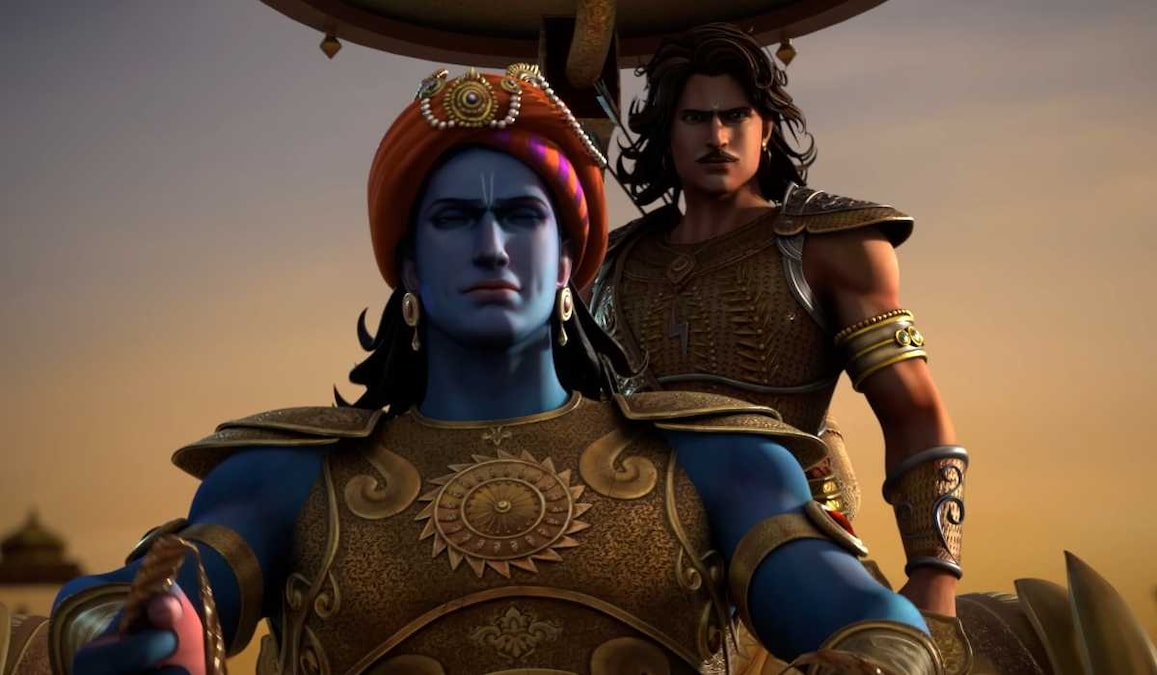
Kurukshetra: Part 2 ending explained
The animated epic Kurukshetra Part 2 concluded the 18-day fight in a visually stunning and ethically complicated way and is available to stream on Netflix. The dramatic conclusion, which focused on the final stage of the Dharmayudh (War for Righteousness), set a dark and complex tone for the ancient epic by highlighting the heavy price of triumph and the inevitable consequences of karma for everyone concerned.
Unlock the complete sagas of Devon Ke Dev... Mahadev, Mahabharat, and Jag Jaanani Maa Vaishnodevi by subscribing to OTTplay Premium.
Fall of the Kauravas pillars
The remaining pillars of the Kaurava camp are brought crashing down in the latter episodes by a mix of fate and Krishna's clever manipulation of the rules of war.
The series' most emotionally charged scene is the inevitable confrontation between Arjuna and Karna. As a result of a curse, Karna's chariot wheel gets stuck, and he meets his untimely demise. Krishna gives Arjuna the ethically dubious order to attack the disarmed hero, but the story presents it as an unjustifiable tactical decision that is required to guarantee Dharma's triumph. The previous revelation that Karna is the eldest brother further highlights the tragic division within the Pandava family.
Bhima's unlawful victory over Duryodhana
The war ends with the horrific mace combat between Bhima and Duryodhana, the last remaining Kaurava. Under the influence of Krishna's nuanced signal, Bhima violates the laws of fighting by landing a blow below the waist. The series portrays Duryodhana's tragic downfall as a just consequence of his unrelenting egotism, jealousy, and the unresolved sin of shaming Draupadi. He feeds the desperate act of revenge with his last breath.
The show convincingly proves that the war's conclusion brought about a terrible act of vengeance rather than peace.
Ashwatthama's savage night raid
As Duryodhana nears the end of his life, the last Kaurava survivor, Ashwatthama, is chosen commander and begins a covert, savage night assault on the Pandava camp. Killing the whole Pandava army, including the five Upapandavas (Draupadi's sons), he commits an unspeakable act of brutality. The last step towards adharma (immorality) is symbolised by this occurrence.
In a final act of desperation, Ashwatthama summons the celestial sword Brahmastra and uses it to kill the unborn child in Uttara's womb, ending the Pandava family bloodline. Krishna's intervention spares the kid, Parikshit, from the weapon's effects, making him the sole heir to the Kuru throne. Krishna lays a heavy curse on Ashwatthama, dooming him to wander the land for millennia, sick and alone, as punishment for the unpardonable sin of attempting to ruin the future of a dynasty.
Futility and true cost of war
The climax conveys a profound message about the futility of war and the true cost of the throne.
Even though they prevailed, the five Pandavas appear to have lost all that mattered to them: their brothers, sons, friends, and even the moral clarity they had when they started. Now that Yudhishthira, the newly crowned monarch of Hastinapura, is grieving, the story moves away from the battlefield and into the emotional vacuum that has been left behind. The depiction portrays his ascent to power as a burden rather than a victory, as he will forever bear the responsibility for the massacre.
Gandhari's curse and universality of Karma
The series features Gandhari's (the Kauravas' bereaved mother) post-war curse. She says that Krishna and his Yadava family are to blame for starting the war. In the distant future, the curse takes hold, leading to the disintegration of Krishna's clan in a drunken civil war and his solitary death at the hands of a hunter. This scene furthers the epic's point that no one is actually exempt from the repercussions of their deeds, not even the divine protagonist, and it is demonstrated that even he is subject to the rule of karma.
FAQs:
Q: Who won the Kurukshetra War in the series?
A: The Pandavas won the Kurukshetra War in the series, but their victory is portrayed as a Pyrrhic victory marked by immense grief and a moral burden, with the Pandava side losing all their sons and moral clarity.
Q: What was the ultimate consequence of the war for the Pandavas?
A: The ultimate consequence was the loss of all their sons (the Upapandavas), brothers, and friends. The surviving Pandavas were left with the burden of guilt and accountability, with newly crowned King Yudhishthira seeing the throne not as a triumph but as a lifelong sorrow.
Q: How did Karna die in Kurukshetra Part 2?
A: Karna died when his chariot wheel became stuck in the mud (mirroring a curse). Lord Krishna instructed a hesitant Arjuna to strike the disarmed hero, a tactical move framed as necessary for Dharma's victory but explicitly violating wartime rules. His identity as the eldest Pandava was revealed prior, heightening the tragedy.
Top 6 Mythological Shows
Share