Home » Reviews » Freedom at Midnight Season 2 review: Slow-burn masterpiece that explores the raw, internal cracks of a divided nation
Freedom at Midnight Season 2 review: Slow-burn masterpiece that explores the raw, internal cracks of a divided nation
A hauntingly relevant dive into 1947’s chaos. Through powerful performances, Freedom at Midnight Season 2 captures the agonising birth of two nations.
3.5/5
Jan 08, 2026
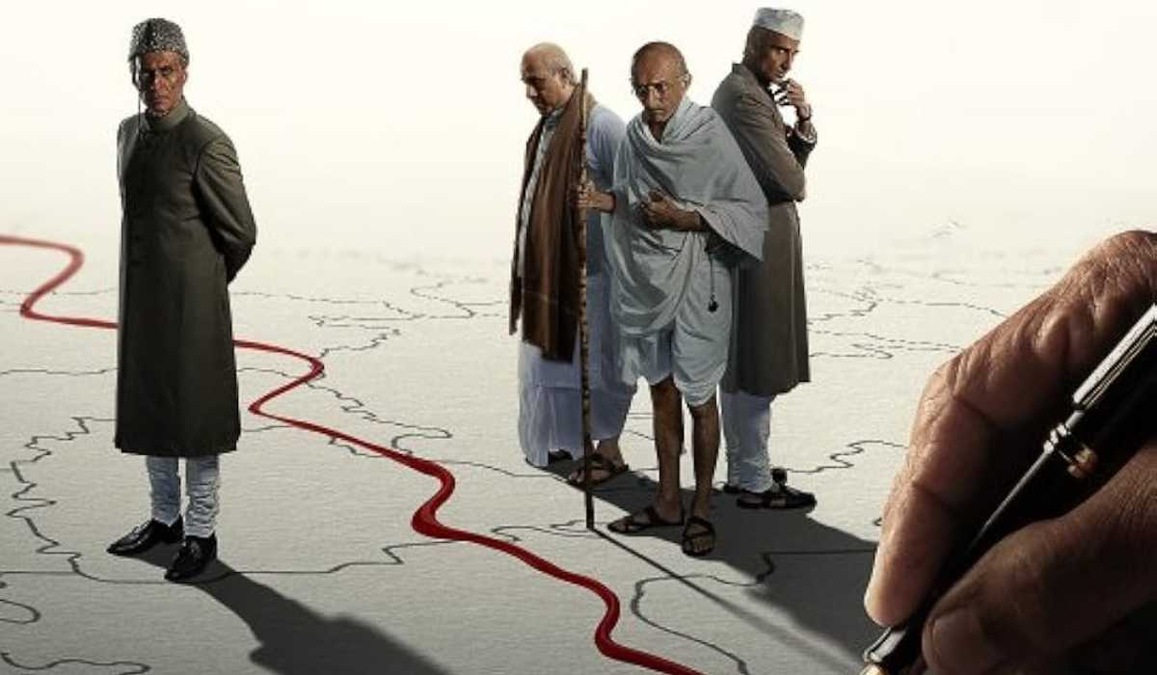
Freedom at Midnight Season 2
Freedom At Midnight
Freedom at Midnight Season 2 story:
Freedom at Midnight Season 2 picks up just after August 1947's stroke of midnight, moving the action from the independence movement's high-stakes political debates to the Partition's terrifying and disorganised aftermath. The new season investigates the "bloodied and agonising" processes of a country that has recently been divided, focusing on the massive influx of refugees, the brutal violence that crosses borders, and the enormous diplomatic task of assimilating more than 500 princely states, such as Junagadh and Hyderabad, into the Indian Union. The story builds to the tragic end of Gandhi's assassination, shedding light on the enormous human cost and moral challenges that shaped modern Pakistan and India as leaders like Sardar Vallabhbhai Patel, Jawaharlal Nehru, and Mahatma Gandhi dealt with mounting tensions over Kashmir and internal discontent that threatened the very essence of the fledgling democracy.
Watch The Hunt: The Rajiv Gandhi Assassination Case, The Waking of a Nation, and Rocket Boys now on OTTplay Premium to experience the most defining moments of Indian history brought to life.
Freedom at Midnight Season 2 review:
When we consider India's history in relation to its struggle for freedom, it is so extensive that your entire education may not be sufficient to fully understand it. Nikkhil Advani's Freedom at Midnight demonstrates that one season is insufficient to provide the conclusion we have eagerly awaited for over a year, detailing how events unfolded until the stroke of midnight and beyond.
In the first season, we saw that the Indian government with a heavy heart gave in to Muhammad Ali Jinnah's (Arif Zakaria) demand of a separate country for Muslims who are a "minority" in undivided India and don't believe the country will ever be right for them. People from both countries still bear the repercussions of the entire discussion and the brutality they witnessed.
Freedom at Midnight illustrates that, although the foundation was strong, it had many internal cracks, making me realise how relatable so many moments are even after nearly eight decades of independence. In one of the scenes, when Lord Mountbatten (Luke McGibney) declares that India will attain freedom from British rule in about five weeks or so, everything goes haywire for the country. It shows how the country is unprepared to live on its own.
There's a moment between Sardar Vallabhbhai Patel (Rajendra Chawla) and Jawaharlal Nehru (Sidhant Gupta), where the former tells the latter that they have been waiting for this moment for ages and India should look forward to it and not worry about attaining its independence all of a sudden.
From "divide and rule", which began from British rule and continued even after we attained independence, to people within continuing the communal riots, all because we get a neighbouring country for minorities in India. The series has Nehru constantly saying that he will not let religion divide the country and make it a part of the rule. Well, we are living in such times that we are almost mirroring what happened in 1947 right now.
The series is packed with seven episodes, which take us to each of the chapters that kept unfolding from July 1947, a little earlier than independence, until about January 1948, when one of the darkest moments takes place—Mahatma Gandhi's (Chirag Vohra) assassination. The chapters are titled "Borders of Blood", "Tryst with Destiny", "Exodus", "Basket of Apples", "Kashmir", "The Last Fast" and "Hey Ram!" To be honest, the episode titles are quite revealing, and since each episode is nearly an hour long, you become so engrossed that you may not realise how much time has passed. The spread of seven episodes delves deeply into details, causing each chapter to initially seem unimportant; however, they ultimately prove to be so significant that they cannot be ignored even now.
Advani takes the book adaptation seriously and ensures that the harsh realities of the regions depicted are not diminished, even 25 years after we entered the 21st century. When I first watched the series, I was heavily surprised over the fact that it might be so tough to execute the series, given so many moments that cannot be ignored, but also to have a daring book-to-screen adaptation based on the politics of its country with a lens that's not leaning towards anyone.
The series calls a spade a spade and doesn't shy away from showing the mistakes of the then-ruling government; however, these are presented through factual sequences rather than propaganda. From the christening of the "newborn" country to the brutal fight over how to create an India-Pakistan border, every minute detail is explored, and it gives you a dry mouth for actually thinking how unimaginable it might have been for people back then to witness this horror live.
People in any country often suffer when politicians make decisions or manipulate situations for their own benefit. The ego clashes of having the country divided led to the people slaughtering each other even when they had to uproot their lives and leave the place they called home for many generations.
Moreover, the series, while maintaining its pace of expanding on each of the narratives, witnesses a slight drop while it reaches midway. However, it doesn't stop making the series more intriguing because of the relevance it retains.
It's always said that everything is a vicious cycle, and time comes back again even with constant change. While watching the second season, it became a constant reminder of the fact that history sets a change, but it's also a lesson that it's not meant to be repeated for good. The series also talks about how it took India a very long time to weave a breath of fresh air while facing the struggles on every path.
Freedom at Midnight is a slow-burn narrative, and deservedly so. The series on the face packs up with the history of this country with narratives that run deeper as it progresses. While we have many films and series showing the importance of Gandhi and Nehru's roles in the freedom, there's less talking about Patel's contributions, which have been dabbled into like never before. The chemistry between these actors is magnetic; they inhabit their characters so completely that the performance disappears into the history.
In the freedom struggle, we see the country being divided with borders being created. However, it's quite intriguing to watch the whole episode on how princely states had to give up their monarchy to eventually tie hands with the government of either of the two countries. When there's India and Pakistan, Kashmir is always an important topic, as is how it also led to the first war between the two nations. Like I mentioned, the vicious circle of life of two newborn countries where the state has always been a sensitive topic.
Freedom at Midnight profoundly illustrates that freedom always comes at a cost and involves an undeniable struggle. But to maintain that burning the midnight oil is a must for it to stand on the foundation this country was built on – equality and integrity.
Freedom at Midnight Season 2 verdict:
Freedom at Midnight Season 2 explores the painful morning after the big celebration, highlighting the steep cost of self-rule. It shifts debates to the gritty reality of a split land and an honest look at how hard it is to mend a broken map.
Top 6 Definitive Sagas of Indian History
Share