Home » Reviews » Homebound Review: Through Ishaan, Janhvi and Vishal, Ghaywan finds melancholy in the margins we ignore
Homebound Review: Through Ishaan, Janhvi and Vishal, Ghaywan finds melancholy in the margins we ignore
Homebound Review: Neeraj Ghaywan holds up a mirror, and what you see may not be flattering. But if you’re willing to sit with that discomfort, it will stay with you long after you leave the theatre.
5.0/5
Sep 20, 2025
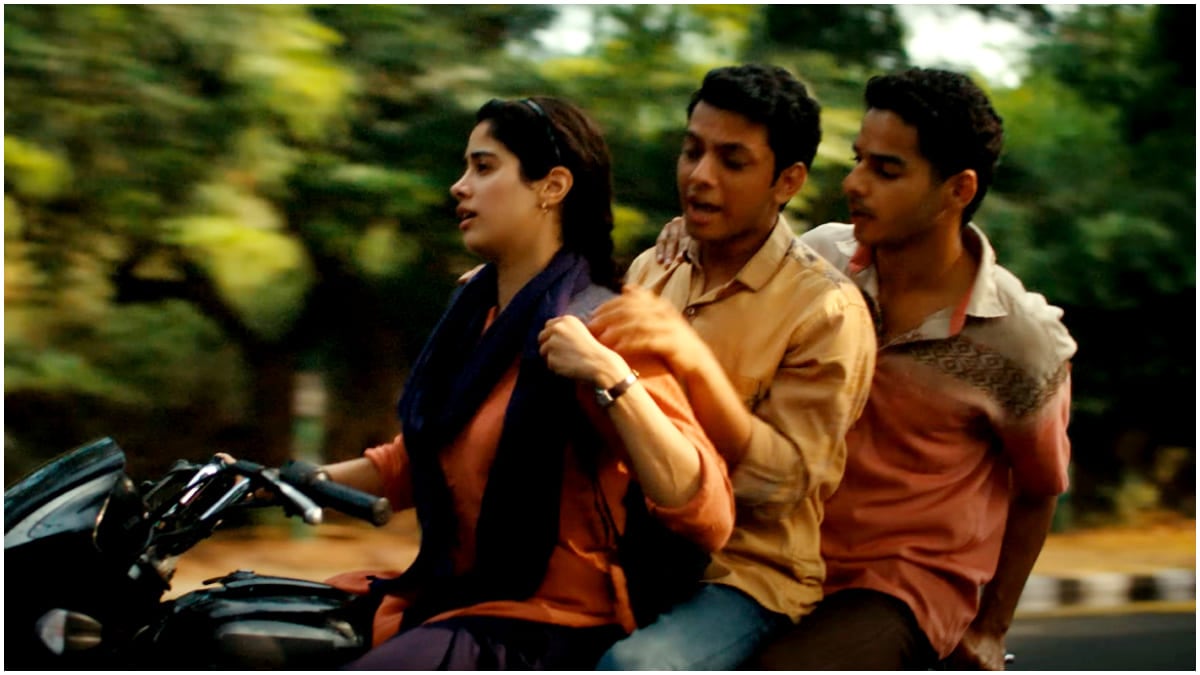
Homebound Movie Review
Homebound
Homebound Review: Story – In a remote village called Maapur, Chandan Kumar (Vishal Jethwa), Mohommad Shoaib Ali (Ishaan Khatter), and Sudha Bharti (Janhvi Kapoor) are each at different stages of grappling with their marginalised identities. They all want the same thing—freedom from the discrimination they’ve suffered every single day of their existence. Their dream of becoming police officers feels like a chance to rise higher, to rewrite the stories that society has forced onto them.But fate isn’t kind. Just as they appear for their recruitment exams, life hurls them into a different city, and then the COVID-19 outbreak hits. Chandan and Shoaib find themselves stranded far from home, with survival itself becoming a test. Will they ever make it back, crossing the barricades of systemic oppression, communal hatred, and the crushing weight of poverty? That question sits at the core of Homebound, and it’s one that doesn’t promise easy answers.
Stream The Storyteller, Kadvi Hawa, and Mukti Bhawan seamlessly with OTTplay Premium, giving you access to 25+ top OTT platforms including JioHotstar, ZEE5, Sony LIV, discovery+, and Fancode for just Rs 149 per month.
Homebound Review:
Back to normalcy now, when you think of lockdown—how do you define the pandemic? For some, it was about staying safe indoors, complaining about boredom while waiting for things to “go back to normal.” For many, it meant loss of livelihood. For some, it meant losing everything they ever had. And for a few, it meant falling into hell all over again, this time without even your closest ones able to rescue you. Stories about the have-nots rarely make it to mainstream cinema. But thanks to filmmakers like Neeraj Ghaywan and Anubhav Sinha, we’ve got voices that care—voices that highlight people the system, and society at large, would rather ignore. Stories about the pandemic will be told for years to come, but I doubt many will be told as efficiently—or as empathetically—as Neeraj does in Homebound.
The reason I chose film appreciation as a career was Neeraj Ghaywan’s Masaan. That film shook me in a way no other had before, and putting that feeling into words eventually led me here. So if this review feels like a love letter to Neeraj's art, I’ve got no regrets.
From the very beginning, Neeraj has been a filmmaker with a voice—not one with a sympathetic gaze that distances itself from its subjects, but one rooted in empathy. With Homebound, he doubles down on that gift. The film portrays not just one margin, but a second, harsher layer of marginalisation stacked upon the first. The result is suffocating—there’s no room for the have-nots to even imagine life, let alone live it. We first meet Chandan, Shoaib, and Sudha on the day of their police exam. All three come from backgrounds where even reaching the exam centre feels like a war. Chandan, a Dalit youth, fears that even if he passes, his caste will still condemn him to sweeping floors. Shoaib, a Muslim man, has endured hate and discrimination for as long as he can remember, but still dreams of bouncing out of it. Sudha, an Ambedkarite, isn’t just fighting for her own dignity; she wants to lift her entire community, and she believes education is the only way.
Adapted from Basharat Peer’s Taking Amrit Home, the script by Neeraj Ghaywan and Sumit Roy, with dialogues by Varun Grover and Shriidhar Dubey, captures three individuals at different stages of accepting their identities and confronting their fates. When these three meet on common ground, Homebound blooms. Neeraj forces us to acknowledge the privileges we take for granted, pre- and post-pandemic. He lingers on details that break you quietly: Chandan’s mother wearing her cracked heels not as a sign of suffering but as a badge of endurance; Chandan’s sister kept away from education so that he can study under the General category because he’s too scared to claim his Dalit identity; or the HR manager who won’t let Shoaib fill his water bottle because he’s Muslim.
Also Read: Ishaan Khatter-Janhvi Kapoor's Homebound is now India's official entry for Oscars 2026 | Official statements
Every moment is a slap of reality. Yet, the film never raises its voice to become a war cry. Neeraj isn’t demanding rebellion; he’s asking for empathy and equal dignity. He doesn’t play God—doesn’t claim to have the answers. He simply tells the story as it is, without melodrama, without sugar-coating. That balance is his greatest strength: the ability to pull you up a mountain with hope, only to drop you without warning, shattering you when you least expect it.
The pandemic here is not the story itself but an added layer, an amplifier of suffering. Neeraj doesn’t show the lockdown as a moment of reflection or boredom; he shows it as a period of displacement, of broken dreams, of livelihoods wiped out. And for many like Chandan and Shoaib, it was never just about the virus—it was about hunger, fear, and being invisible. Watching these moments unfold, you’re reminded of how lucky most of us were to have suffered only inconvenience while others faced devastation.
Vishal Jethwa as Chandan is nothing short of brilliant. He captures the fear of a young man caught between ambition and identity. His gradual shedding of naïveté is heart-wrenching to watch. Ishaan Khatter as Shoaib undergoes a complete transformation. His anger and resilience feel lived-in, the product of a lifetime of being othered. Watching him is a reminder that Ishaan is an actor who deserves far more challenging roles than Bollywood usually offers him. And then there’s Janhvi Kapoor (Good Luck Jerry). Yes, Janhvi is the surprise package here. As Sudha, she taps into something we haven’t seen from her before—a quiet strength, a sharp intellect, a fire tempered by compassion. She has limited screen time, but she leaves you wondering: what shaped Sudha into such a diamond? What hardships carved her into this strong-headed woman? Honestly, Sudha deserves her own spin-off film.
Of course, performances don’t shine without the right words and visuals. Varun Grover and Shriidhar Dubey’s dialogues are unflinching yet poetic. Pratik Shah’s cinematography makes the camera feel like the fourth character—always present, always observing, sometimes suffocating, sometimes liberating. Together, the team ensures you don’t just watch the story; you feel the pain that pulses through every frame.
Homebound Review: Final Verdict –
Homebound isn’t a war cry or a demand for rebellion. It’s gentler but just as powerful: a call for empathy, for treating people with dignity regardless of caste, class, or religion. It’s a reminder of the privileges we often overlook and a plea to make the world better for those who’ve never had the luxury of choice. It’s not an easy film to watch—but it shouldn’t be. Neeraj Ghaywan holds up a mirror, and what you see may not be flattering. But if you’re willing to sit with that discomfort, Homebound will stay with you long after you leave the theatre.
Homebound releases in Indian theatres on September 26, 2025. Stay tuned to OTTplay for more reviews like these and everything else from the world of streaming and films.
Top 6 Critically Acclaimed Indian Films
Share
Where To Watch