Home » Sports news » IND vs ENG Ends 2-2: 5 Yorkers From A Test Series For The Ages
IND vs ENG Ends 2-2: 5 Yorkers From A Test Series For The Ages
The Anderson-Tendulkar Trophy was contested with passion, fire, resilience and courage to become one of the all-time greatest series in the Test format, writes <strong>Karan Pradhan</strong>.
Team OTTplay
Aug 05, 2025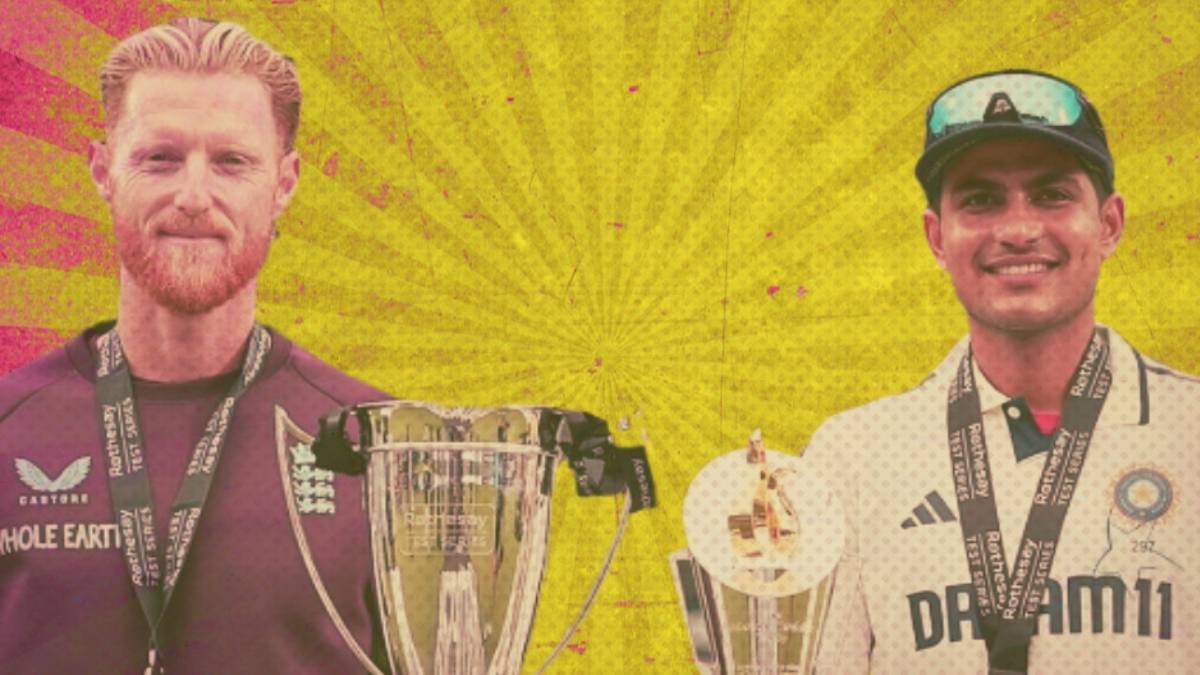
India and England matched each other step for step in a dazzling dance of Test match performances that culminated in the most nail-shredding of finales.
IT MAY LACK the colourful and gold leaf-encrusted kits, it may take the best part of 30 hours to complete a match (and even then, there may be no result) and it may only be contested at the top level by a very small handful of teams, but there can be no substitute for Test cricket. And the Anderson-Tendulkar Trophy (as befitting the gentlemen in whose honour it was named) was contested with passion, fire, resilience and courage to become one of the all-time greatest series in this format.
What distinguished the series from any others in the past is that there was rarely a moment when any team could be declared an overwhelming favourite in terms of winning the series. India and England matched each other step for step in a dazzling dance of Test match performances that culminated in the most nail-shredding of finales on Monday morning. In fact, the series was so well balanced that at its absolute halfway mark right in between the third Test, both teams had scored exactly 387 runs apiece. A statistician’s delight, certainly, but here’s what we made of 25 days of riveting Test cricket.
Stream live sports, blockbuster films and hit shows across 30+ platforms with OTTplay Premium's Power Play monthly pack, for Rs 149 only. Grab this limited time offer now!
1st Test at Headingley, Leeds: Duckett steals the show
Having amassed 471 in the first innings on the strength of three first innings centuries, India would’ve imagined it was in the driver’s seat. Unfortunately, England was more than up for the challenge scoring only six fewer runs in its first outing. With a target of 370 on the board, Shubman Gill would’ve expected his bowlers to run through the hosts’ batting lineup with plenty of time to rest up for the short journey to Birmingham, alas, it was not to be. A Ben Duckett riposte (ably aided by useful contributions down the order) saw the home side cruise with relative ease to a five-wicket win.
2nd Test at Edgbaston, Birmingham: The Rise of Gill
In its storied Test match history, India had never won at this venue. With the weight of history against Gill and his charges, the visiting skipper piled on a gargantuan 430 runs across both innings. But there was still the small matter of England’s batting blitzkrieg to contend with. Despite Harry Brook and Jamie Smith’s sterling efforts, a 10-wicket haul by Akash Deep handed India a 336-run win, and a hand in rewriting the history books. No longer would Edgbaston be an unbreached fortress for an Indian Test team. The series was square at 1-1.
3rd Test at Lord’s, London: Siraj’s heartbreak
With 387 runs apiece in their respective innings, India and England achieved the rare distinction of a series being perfectly balanced at the halfway mark (something alluded to above). A Washington Sundar masterclass with the ball would leave India with a mere 192 to surpass in order to register a win at the Home of Cricket. Unfazed by a poor start that left the visitors hobbling at 82/7, Ravindra Jadeja rallied the lower order around him and almost saw his team to a famous victory. Unfortunately for him, spinner Shoaib Bashir returned to the field with a strapped up hand following a finger injury and snapped up the wicket of Mohammed Siraj, to leave India 22 runs shy of its target.
4th Test at Old Trafford, Manchester: Jadeja and Sundar’s great escape
It wasn’t only Bashir who was injured and returned to the field of play in the previous Test because Rishabh Pant performed the same feat. The fit-again Indian wicketkeeper strolled back into the Indian XI, only to suffer a foot injury this time. While Dhruv Jurel would once again substitute for him behind the stumps, Pant would perform his duties with the bat. After England’s series-high first innings score of 669, India found itself in a battle to stave off an innings defeat. But despite the best efforts of Ben Stokes and Co, three tons in the Indian innings, including those from Jadeja and Sundar at the end, saw India to a relatively comfortable draw.
5th Test at The Oval, London: Siraj strikes back
The draw in Manchester meant Indian hopes of winning the Anderson-Tendulkar Trophy would have to be postponed for at least two years. However, there was still the opportunity to square the series and give it the scoreline it rightly deserved. As if on cue, English weather and conditions decided to arrive at the party a whole month and a half after the tour began. The ball was swinging, the pitch was green and conducive to fast bowling, the sky was overcast and there was rain in the air. England (the island nation, and not the team) had finally decided to log in, it appeared. Ebbs and flows in momentum saw Yashasvi Jaiswal and Sundar almost put the game past England, until Brook and the world’s newly-minted second-highest Test scorer Joe Root nearly put it past India. It all came down to the final hour or so, on the final day, of the final Test of this rollercoaster series. Siraj shook off his Lord’s trauma, a crucial dropped catch and any doubts about his abilities to scythe through the English batting lineup and claim the narrowest win in Indian Test history.
Karan Pradhan is editor-in-chief of Story Mode a gaming and gaming-adjacent magazine. Follow him on X/Twitter @karanpradhan_
Psst! Watch the highlights from the finale of the 5th IND vs ENG Test, with OTTplay Premium.
Share