

Raat Akeli Hai: The Bansal Murders — Honey Trehan’s Masterful Whodunnit Is More Rewarding Than It Seems
The film unfolds as a whydunnit instead of a whodunnit, and this shift in pursuit allows for a fuller documentation of our times, where the death of an affluent family digs out more bones than graves.
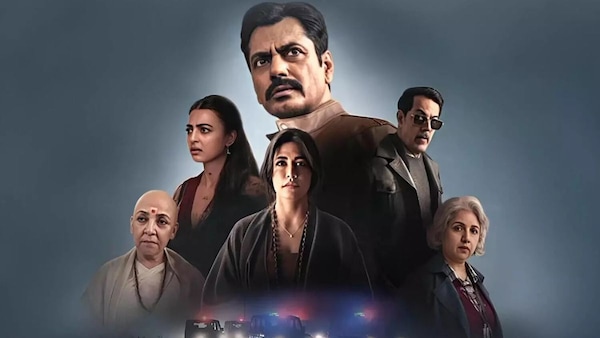
Promo poster for Raat Akeli Hai: The Bansal Murders.
Last Updated: 02.47 PM, Dec 23, 2025
BEFORE THE ART COMES THE ARTIST. Honey Trehan, director of the Netflix crime franchise Raat Akeli Hai, has been stuck in an unending ordeal with Panjab '95, his 2022 directorial feature struggling for certification and thereby a release, for three years now. The process can be disillusioning, and makers, in lesser acute situations, have appeared to be overcome with distress to craft minor works. But not Trehan. If his latest film is any proof, then he has funnelled his rage to make a terrific slow burn that weaponises genre trappings only to elevate them.
Raat Akeli Hai: The Bansal Murders comes five years after the first instalment, Trehan’s directorial debut that explored the murkiness of patriarchy through the death of a patriarch. Leading the investigation was Inspector Jatil Yadav (Nawazuddin Siddiqui), whose inquiry into the murder and accompanying obsession with the young widow, Radha (Radhika Apte), cracked open his truth-seeking leaning and social prejudice. The latest takes off from where the first had concluded. The setting shifts to Uttar Pradesh, and death multiplies into a mass murder of a family, but Trehan retains the intrigue and marries it with social context in a way only he can.

Written by the inimitable Smita Singh (Sacred Games, Khauf), The Bansal Murders opens small. A woman is alarmed by what she sees. Top cops are informed, and the family panics. But the reality is far less grave. Turns out that at the courtyard of their expansive farmhouse, an attack was staged that led to a severed pig head planted on a newspaper (owned by them) and a couple of affected birds. Although no human being is harmed, the air is thick with fear. Jatil arrives, and the proceedings start, only for things to heighten. Soon, several members of the family are found dead, except three members of the family, including Meera Bansal (Chitrangada Singh), a grieving mother whose son had recently passed away, and two domestic helpers.
The anticlimactic start sets the tone for the film, which focuses on class wars under the guise of a murder mystery. On paper, it is a thorny issue, not least because it tends to reiterate suspicion in such instances. But Trehan and Singh subscribe to expectations only to subvert the morality linked to these cases, insisting through it all a retaliation that feels more prescient than vindictive. In essence, The Bansal Murders unfolds as a whydunnit instead of a whodunnit, and this shift in pursuit allows for a fuller documentation of our times, where the death of an affluent family digs out more bones than graves.
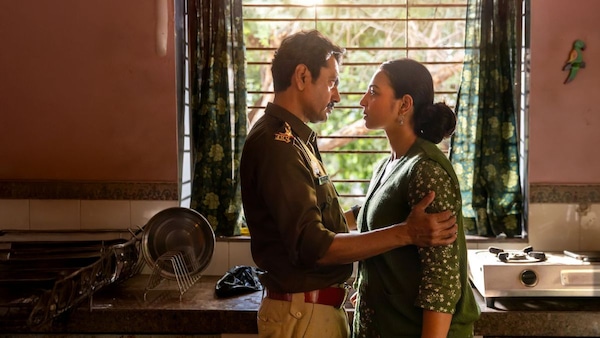
Red herrings are plenty. All members of the family were devout members of a godwoman (eerily played by Deepti Naval), which puts her under the scanner. There is also an addict in the family, the one Meera believes killed the rest due to years of ill-treatment. Then there is Meera herself, who could be taking revenge on the family for the untimely (natural) death of her young son. Jatil is aided by Ms Panicker (Revathi), the forensic expert whose earlier confirmation of Meera’s testimony doesn’t sit well with the inspector.
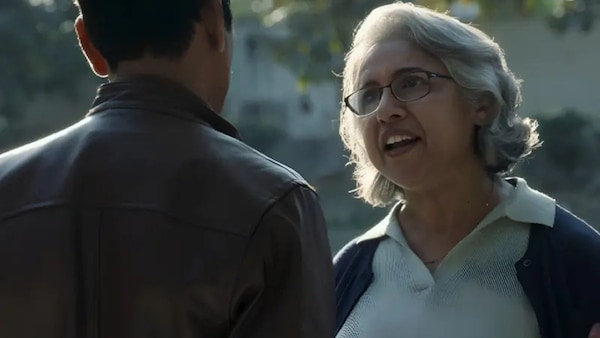
Trehan takes his time and refuses to hurry. More details surface. The members of the family were drugged before being killed, the very drug that Meera consumes. On the other hand, a possibility of ritualistic suicides like the Burari deaths looms large. Trehan uses such references both as a shorthand and to convey a politically rife murder mystery that proves to be more potent as it unravels.
In his probing of class wars, the filmmaker casts an expansive eye into the current happenings, taking into account the death of news, the tendency of the rich to use nationalism as a shield to protect their wrongdoings and the role religion plays in all of this. It is an incisive inclusion where Trehan and Singh refuse to treat the devoted nature of the Bansals as a clue. Rather, it becomes an entry point to underline that organised religion for the rich is an escapade and a coping mechanism, while the poor are denied even the act of prayer.
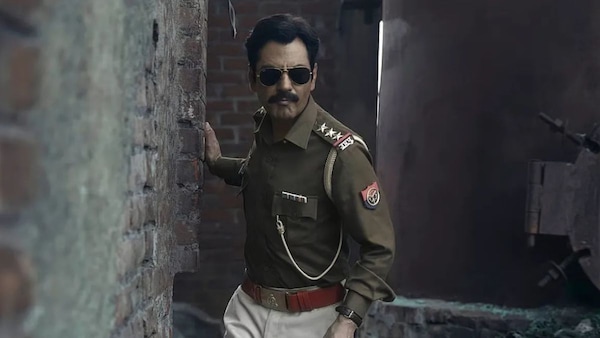
It is also a marvel that the busy narrative makes time for a glimpse of Jatil’s inner life and the superstition he, too, finds himself wrapped in. If this indeed evolves into a Knives Out-like franchise, then Jatil is the fitting protagonist, a man learning to unlearn with every case. The way forward is both another case and less delusion.
Raat Akeli Hai: The Bansal Murders is currently streaming on Netflix.