


The Bride! Is A Monster Movie That Dares To Be Deformed
This is #CineFile, where our critic Rahul Desai goes beyond the obvious takes, to dissect movies and shows that are in the news.
Last Updated: 06.53 PM, Mar 07, 2026
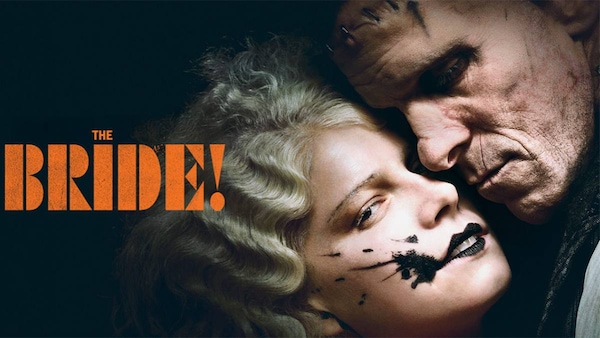
THE BRIDE! is what happens in a laboratory when a mad scientist stitches together the gory torso of Passengers (2016) and severed legs of Frankenstein (2025) with the decapitated head of Joker: Folie à Deux (2024) and the leaky brain of modern-day wokeness. There is undeniable life and limb in this resulting corpse, but it’s so chaotic and incoherent and ugly and randomly provocative that it feels like director Maggie Gyllenhaal — the gifted storyteller behind The Lost Daughter — woke up every morning and decided to make a different movie. I cannot overstate how frustrating it is to watch ambition go so awry, especially in an age where artistic audacity is increasingly being treated as a cautionary tale (Babylon, anyone?). Instead, all that’s truly impactful in The Bride! is the exclamation mark in the title. It’s not a terrible film; it’s just a film that takes the medium for granted. I find it fascinating that hundreds of creative people bought into this project at a script level; it takes a degree of mass psychosis to collectively create and unleash such a thing across the world. I suppose that’s what art is.
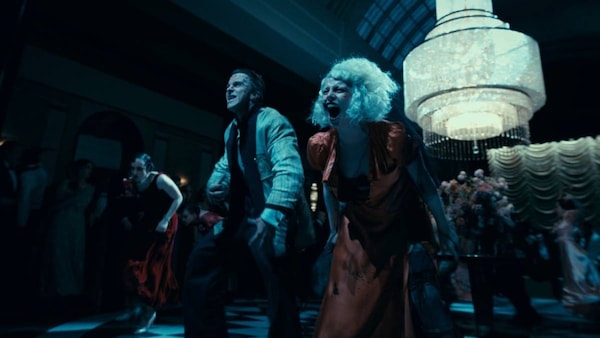
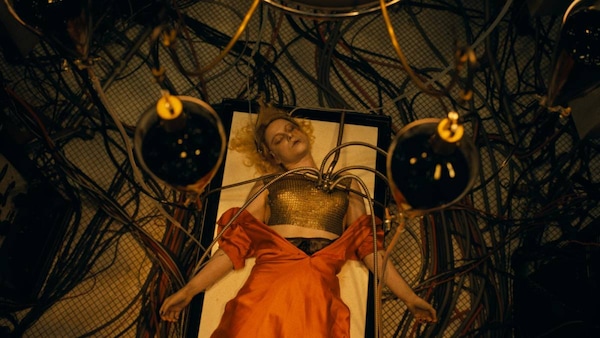
I have to admit, though, the trailer looked great. The actual framework? Not so much. We know it’s inspired by the film Bride of Frankenstein (1935), which itself was based on the famous Mary Shelley novel Frankenstein (1818), so it’s hard to fathom that the source is baked into the story with all the imagination of a baked teenager. It opens with a dead and theatrical Mary Shelley herself (Jessie Buckley) telling us that she resents the novel she wrote, and so we will now see the woman-centric book she actually planned to write. So we are flung (forcibly) into 1930s America, more than a century after the novel, where a woman named Ida (Buckley again) is entertaining a table full of debauched men. In moments, the cinematically unthinkable happens: Shelley and her voice (the ‘narrator’) start to take control of Ida, infusing defiance and madness in her. Ida begins to speak her gibberish version of “language” — a character upon whom a new vocabulary has suddenly been enforced. She dies in a scuffle soon after, after which we see a glum Frankenstein’s Monster (Christian Bale) approaching a doctor (Annette Bening) to create a companion for him because he’s dying of loneliness after more than 110 years of existence. Naturally, she digs up the grave and brings a recently deceased Ida — of all the bodies there — back to life. Ida does not remember much of her ‘past,’ so a lovelorn Frank simply convinces her they’re a couple. He is also obsessed with a black-and-white movie star (Jake Gyllenhaal), whose pictures he watches at the theatre multiple times a week. Even monsters can be cinephiles. At this point, it’s still not clear if The Bride! is eccentric-gothic or just a parody of Guillermo del Toro and Tim Burton movies.
After this, The Bride! turns into a campy and deformed Bonnie-and-Clyde-esque chase movie, where the gleefully undead couple wreak havoc across the country and a couple of detectives (Penelope Cruz, Peter Sarsgaard) get on their trail. During this strange love story, I can only deduce that the nameless bride, formerly Ida, slowly grows a memory, some agency, some resentment, some dissent, some identity, some feminism, and becomes an unwitting catalyst of social change along the way. We know this because that pesky author keeps going God-voice on us, breaking into the movie (like the spliced reel of Melanie Laurent’s character terrorising the Nazis in Inglorious Basterds), and provoking the woman into fits of unpredictable emotions. The intent, I gather, is to revel in how it takes nothing less than turning into a wild and incomprehensible beast to escape patriarchy and abuse — or not even that. Even the ‘good guys’ are problematic in her afterlife. It’s also perhaps to reclaim the genre from the clutches of male-dominated fantasy and monster tales. The bride thinks she is free, except she is still haunted by the world that didn’t let her live. It makes sense that she’s such a mess, and that the film she’s driving is such a mess, but the idea is inventive on paper and just a misguided gimmick on screen.
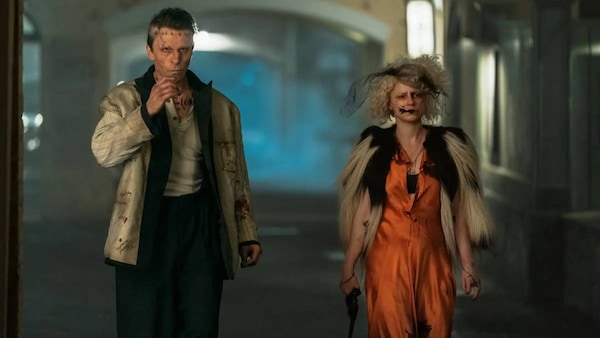
I don’t really know how to describe Jessie Buckley’s performance: Is it terrible or so glorious that it’s uncertifiable? It’s probably both, but it’s why a craft like acting exists. I can’t think of a bigger swing than her ‘rendition’ of the bride in recent memory. It’s everything and nothing at once. Christian Bale is visibly having fun at the expense of the genre, so what you see with him is what you get. He knows he’s too good to play a monster, and he leans into the tragicomedy of it all. It often feels like the film has given them a free license, and then it regrets doing that and changes its mind, only it’s too late by then. It’s a bit too freestyle; they keep getting away from the movie, just as the movie keeps getting away from them. And they both keep getting away from the viewer. Just the concept of a woman being summoned from the dead against her consent for a horny monster might have been a decent vessel for whatever the film wants to say through her. But no, it instead plays out like a passionate argument by a debater who keeps losing their train of thought. It’s not pretty.
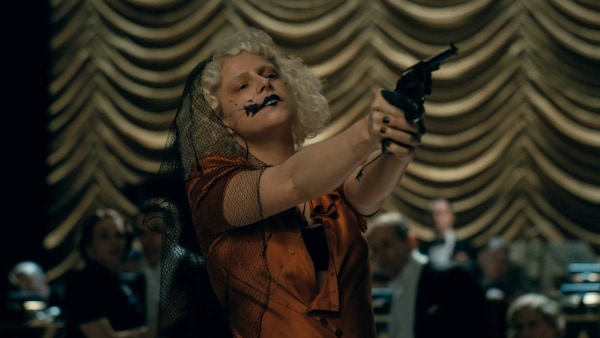
There’s one thing that irks me about the reception to a film like The Bride!. It’s true that male film-makers make downright awful movies (sometimes slotted under “misunderstood genius” or “auteur”) every other week, but it recently has seemed like a lot of online hate and criticism have been reserved exclusively for female directors who make divisive and fiercely individualistic movies: Chloe Zhao’s Hamnet was subjected to awards-season scrutiny, Emerald Fennell’s Wuthering Heights received the most colourful snubs, and now this one. At some level, even if these are only subjectively disagreeable movies (I liked Hamnet and couldn’t stand Wuthering Heights), it’s almost empowering that women storytellers are owning the right to be as ‘indulgent’ as their male counterparts. But there’s a problem with this grammar of ownership, too. Such voices have been suppressed for so long that, when they do get the opportunity to hit the screen, it’s hard to tell the volume from the voice. So much of it can be excessive and reactionary, because every word acquires the obligation to be a statement, every scene a heightened expression of senses, every image a blinding ray of light. Every moment must register, at any cost. That’s what Fennell did with female desire in Wuthering Heights, what Zhao did with grief in Hamnet, and now what The Bride! does with…something.