


Green Girl Director Sarthak Hegde: 'Sophistication Shouldn't Make Us Silent'
In a conversation with Subha J Rao, 24-year-old filmmaker Sarthak Hegde discusses Green Girl, his film that explores religious intolerance in coastal Karnataka and its impact on a young couple.

Sarthak Hegde (right) and a still (left) from his film Green Girl.
Last Updated: 09.40 PM, Sep 15, 2025
THERE'S A SHOT in Sarthak Hegde’s featurette Green Girl, where Ameena (a splendid Sucharita) and Jeevan (Mayur Gowda lives the role) speak about where they want to live, and later sit in companionable silence — he helps her with the lighter, she smokes, he is never tempted to. In that tiny space of freedom, the young couple lets the other be — their love encompasses, but also lets the individual in them thrive. That’s also why Ameena tries telling Jeevan not to get involved with a brash set of boys and men who affiliate themselves with a religion. But when he does not listen, she lets it be. He is also her safe space, and she’s herself with him.
Green Girl, to put it simply, signifies a certain kind of courage — to write, direct and put out a film that speaks blunt home truths, especially when two people from different faiths fall in love. The film, less than 50 minutes long, is backed by KRG Studios and takes you on quite a journey in its runtime. It is both a searing commentary on the state of affairs in coastal Karnataka, where religious polarisation is high, and also an edge-of-the-seat love story, where things change by the minute.
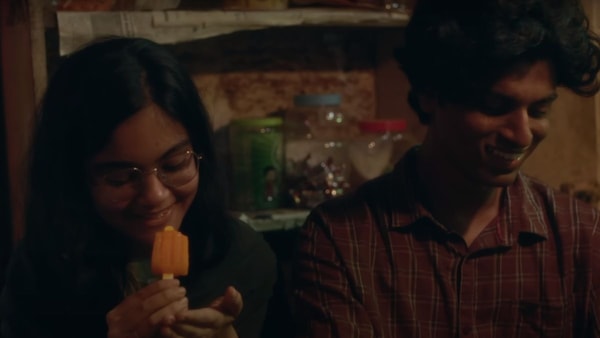
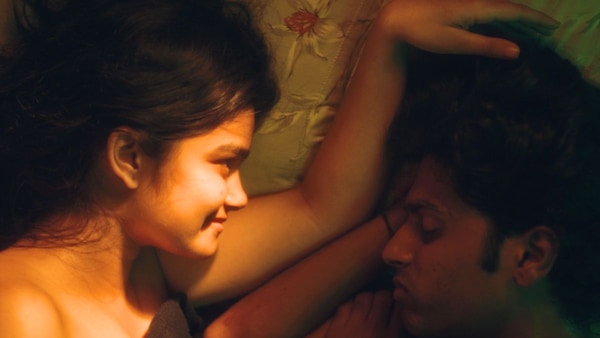
In today’s day and age, two friends who have been together since childhood still have to meet in secret and still have to face ridicule and physical harassment for meeting each other. Is going abroad the only solution, as they discuss, or will the winds of change ever blow? Their love is fledgling; they are yet to let seriousness or fear step into their hearts. Their love has a lived-in feel to it, like the very air they breathe — as if one begins where the other ends. After an especially traumatic incident, Jeevan cracks a joke, and Ameena actually smiles — by then, you suspect what might happen, and your heart breaks at the innocence that is being slowly slaughtered. But there’s also an element of fantasy — even amid the greys and blacks, there is a pop of colour in life, there is a possibility of a ray of hope. Cinematographer Abhinay Pandit, please take a bow. And Green Girl tells you to invest in that ray. It tells you that no love is forbidden, that love is just that — love.
Sarthak, all of 24, grew up in similar surroundings in Puttur, near Mangaluru. He says he wanted to make a film about young love because, however immature their love might seem to the world, it is real for them. “Everyone looks at this bond like it is shameful. It is not. I wanted to give them the glory they deserve, celebrate their silent rebellion.” Edited excerpts from an interview below:
Let’s begin by speaking about the very fact that this is possibly the first such Kannada movie to discuss an issue spoken about in hushed whispers…
I think the ones who are polarised are louder, because they’ve been given such a strong voice, and they don’t mind saying problematic stuff. There’s a group amid this that’s quiet. They possibly know they lack the numbers to make a difference, but we need to stand up, right?
I think ultimately, sophistication is what holds people back, rather than the number game. We don’t want to get into the cesspool. But, sophistication should not make us silent. We should not be limited to talking among ourselves and agreeing with each other.
How long has Green Girl stayed with you?
From the first year of my Bachelor of Fine Arts in Los Angeles, this film has travelled with me. I worked on it after coming here.
How did you escape the nationalist tendencies that are popular in this region?
My parents let me be. My school was pretty nationalistic, and that added to my rebellion. At home, we subconsciously knew we could do what we wanted, and that our parents would constantly support us even if they did not understand or agree with our choices. My pursuing an education in arts was one such.”
The film shifts in tonality between tenderness and edginess…
We were clear that the film needed to oscillate between these two, because they come together in the climax. The main reason why we went for that is because we did not want subtle pacing (editor: Bhuvanesh Manivannan), we wanted the film to be engaging and entertaining too. The structure, pacing, music (Surya Srini) and editing added to this feel.
You also write your characters with a certain attempt to understand, never to lend them a hero arc…
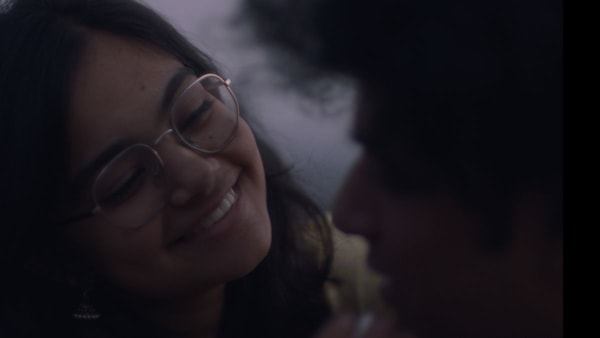
Yes, I did not want to turn anyone into a hero. Every nationalist’s display of aggression stems from some repression. These loud characters have so much to hide; their anger is a facade. So, I wanted to peel the layers they wore. Everyone has a reason to be who they are. I wanted to show why they are so. I wanted to be understanding, not sympathetic.
The love is so lived-in, the relationship comes across as deeply organic. How did you manage that effect?
When we wrote (Sarthak, Manish Kumar and Triko) the love portions, we wanted it to feel curious, and as real as possible. And, we wanted to show it in a way that nothing looked vulgar.
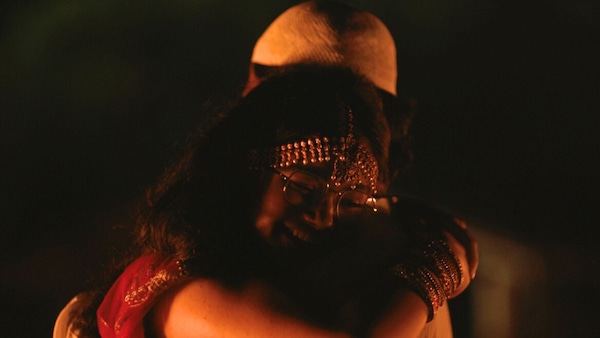
We had great actors, and that was a huge plus. We had to establish that they knew each other from Class 5 in the very first scene. Much of their communication is through their body language, and that calls for a certain chemistry. We had some months before the shoot, and Mayur and Sucharita formed a good bond. They improvised on some things, like the tiger dance scene.
How has the response to the movie been?
It’s all yet to hit us. We are still overwhelmed at the theatrical release. I want to reach the ‘right’ people and the others. Let people talk, let there be discovery. Let this film show others that they will find backers. If someone disagrees with this film, they can make a film to contest this; we can make another film in reply. That will keep the conversation alive and ultimately bring down barriers. That will be the best win.
Subscribe to our newsletter for top content, delivered fast.
