Ikkis: Sriram Raghavan Never Misses
Raghavan doesn't limit the story of a soldier to the act of his sacrifice. Instead, he offers the beats of his heart, the arc of his living, and the picture of his youth that perished too soon.
ONE SIDE WINS A BATTLE but both sides lose in a war. Hindi films of late, committed to depicting historical warfare, have been relaying stories of battles. Neatly structured narratives keep pitting men — and nations — against each other as hyperstylised filmmaking and hypermasculine action nourish an appetite to roar for one and ridicule the other. Bravery in these tales is distinct and calibrated, above moral probing and beyond mortal restraint. In his war drama, Ikkis filmmaker Sriram Raghavan looks in the eyes of onlookers, trained to bay for blood, and offers them water.This feels radical because Ikkis is ripe with trappings that could be, and are, weaponised for provocation. Raghavan’s latest documents the life of Arun Khetarpal, an Indian army officer who died on duty at the age of 21. Coming from an army lineage, Khetarpal was deployed in the 1971 India-Pakistan War as part of the Poona Horse Regiment and had famously refused to abandon his blazing tank, even when ordered. His fight till the end posthumously earned him the distinct military decoration, Param Vir Chakra. It immortalised his role in the Battle of Basantar, a key army operation during the ‘71 conflict. In the retelling, Raghavan trains the camera on the battlefield only to look beyond.
Stream the latest films and shows with OTTplay's Power Play monthly pack, for only Rs 149.
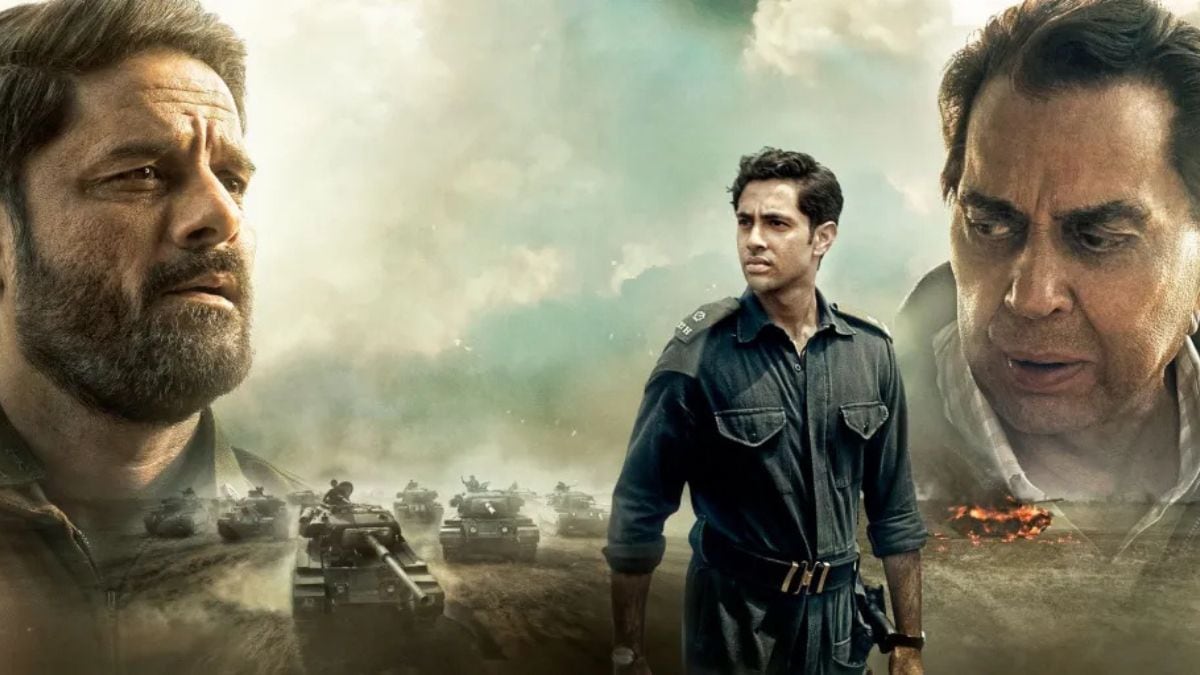
The shift alters everything. It refuses to limit Ikkis to a biopic, a genre notorious for being self-serving, without shortchanging on the protagonist’s personhood. It makes space to include scenes from a battle without overlooking the human cost incurred; it allows the outing to unfold as a portrait of a martyr without losing sight of those who were left behind. More crucially, the expansion of gaze, which looks at the ground soaked with blood and the grass that grew on it later, makes Ikkis a war film that, most decisively, cautions against its cyclicity.Shouldering such a liability is rare. Across the last decade, a lot has changed in the landscape of Hindi cinema, but none more than the nature of disclaimers. They have fattened up and assumed an all-round vigilant tone. No film, it appears, wants to hurt any community or person, but this preemptive disclosure has only granted immunity to makers to do so. Even the common preface, “work of fiction, inspired by incredibly true events” — a harmless caveat — has devolved into a minefield of whataboutery, offering a shield to dispense agendas in the cover of fiction and use the seduction of excess to pass them off as “true events”. Raghavan, however, does something else and, most moving. He foregrounds a chapter from history without embellishment and insists that in most cases, the truth is incredible.Written by him and his frequent collaborators Arijit Biswas and Pooja Ladha Surti, Ikkis flits between two timelines — both defined by courage. In one, a young army personnel (Agastya Nanda) faced imminent danger to his life but refused to retreat. And in the other, the man who fatally shot him (Jaideep Ahlawat) gathered the nerve to meet the slain soldier’s father (Dharmendra) three decades later. The incredulity of the premise resides in the fact that the two people involved are from India and Pakistan, neighbouring nations with volatile relationships; it is hardened by the realisation that this indeed had happened.In 2001, Brigadier Madan Lal Khetarpal travelled to Pakistan for a college reunion. He was hosted by Brigadier Khawaja Mohammad Naser, a former Pakistani officer, only to be told at the end of his three-day stay that Naser had briefly faced his son in ‘71 and was responsible for his demise. Ikkis’ inclusion of this and emotional investment in the admission humanise Pakistanis at a time when brutalising them is the new norm.It retains the light eyes, the “janaab” on tongues and the biryani on the plate. But also renders people across the border with a fullness of character that is reminiscent of Meghna Gulzar’s spy drama, Raazi (2018; Ahlawat’s presence in both strengthens the comparison). The more critical shift, however, occurs in the refusal to use one narrative in service of the other. Madan Lal and Naser are not reduced to a chorus in the story of a young martyr. They reiterate his valour (Ikkis opens with Naser readying his house for Madan Lal’s visit by removing Khetarpal’s portrait from his wall), but their reflective gaze, as men who outlived battles and survived scars, informs the intent of the film.Raghavan, master of noir thrillers and an unlikely director for a film like this, employs the hindsight of war veterans to demystify the myth-making of war films. In his hands, Khetarpal comes across a boy who has heard of battles but hasn’t faced a war. He is young in ways everyone else once was — prone to falling in love but unsure to go forth with it. His bravery is uncontained; the anticipation of combat is thrilling to him, and the prospect of peace without killing the enemy is a failure. His patriotism is pure but borrowed, and his sense of duty untested. In any other rendition, these attributes would be amped up, but not this.Nanda plays Khetarpal with wide-eyed wonder, and Ikkis surrounds him with people who temper that without abating. The girl he likes (Simar Bhatia makes her debut) gifts him For Whom the Bell Tolls Ernest Hemingway’s 1940 anti-war novel set during the Spanish Civil War; when his batchmate and he qualify to join the war by accomplishing a task (Nanda is gleeful in these moments, using the tank like playing a game), his seniors applaud and give them a final task: to sacrifice an animal. He falters. Lieutenant Colonel Hanut Singh (a significant Rahul Dev) is taken by the young man’s enthusiasm but attuned to the follies, and this insight bleeds into the film, enabling Ikkis to extract Khetarpal from a textbook character to a flesh-and-blood person.
Amitabh Bachchan reviews Agastya Nanda's Ikkis not from a grandfather's POV: 'His presence justifies the character' The filmmaking aligns with the de-romanticisation as the camera glides into tanks during the battle but refuses to halt at lifeless bodies. People die mid-conversation, and young people die on both sides. Tanks keep blowing up. Such frantic pacing mimics the inherent cruelty of war itself, which sees nothing except uniforms. Even then, the most effective bit turns out to be the narrative design that keeps cutting between 1971 and 2001 (a brief Pune training portion in 1970 is featured), a bravura decision that anchors Ikkis with unmatched heft.The majority of the 2001 bit, based in Pakistan, revolves around the bond Madan Lal and Naser shared. The latter shows the former around as Madan Lal, born in an undivided India, fondly looks at a tree that, overnight, became part of a new country. If Merry Christmas (2024), a love story in the garb of a thriller, had proved Raghavan’s efficiency in evoking a scream and a tear, then Ikkis seals it. The filmmaker’s fondness for Dharmendra is part of pop culture lore, and here the articulation finds the loudest resonance — not just for the context (the film is his swan song) but also the subtext.In Raghavan’s quiet rally for pacifism, Dharmendra, someone who witnessed Partition and spoke about it often, becomes both the messenger and the message. His brittle frame literalises the fragility of the peace call in a country that has refused to listen. But his insistence till the end lends a poignant tenderness, allowing the film to shapeshift in unexpected ways. For instance, there is a scene in which he faces an Alzheimer-afflicted old man who has forgotten that India has been divided. That the two actors on screen are Dharmendra and Asrani (both of whom no longer exist) suddenly enlivens Ikkis with the pathos of a Saadat Hasan Manto story.But Dharmendra’s sizable screen time is not just an emotional response but a considered one. With Ikkis, Raghavan pulls off a feat of not limiting the story of a soldier to the act of his sacrifice. Instead, the filmmaker offers the beats of his heart, the arc of his living (when he enters Pakistan in his tank, Khetarpal exclaims there is no difference in the land), and the picture of his youth that perished too soon. What remained is a legacy and a grieving father who, having outlived enough battles, knows there is no winning in wars. But by letting the old man book-end the bravery of his son, Ikkis culminates as a rare patriotic film that mourns the patriot.
READ | Agastya Nanda’s Ikkis to release on this OTT platform after theatrical releaseShare