Home » Features » In Rahul Sadasivan’s Cinematic Horror, Society Is The Real Monster
Features

In Rahul Sadasivan’s Cinematic Horror, Society Is The Real Monster

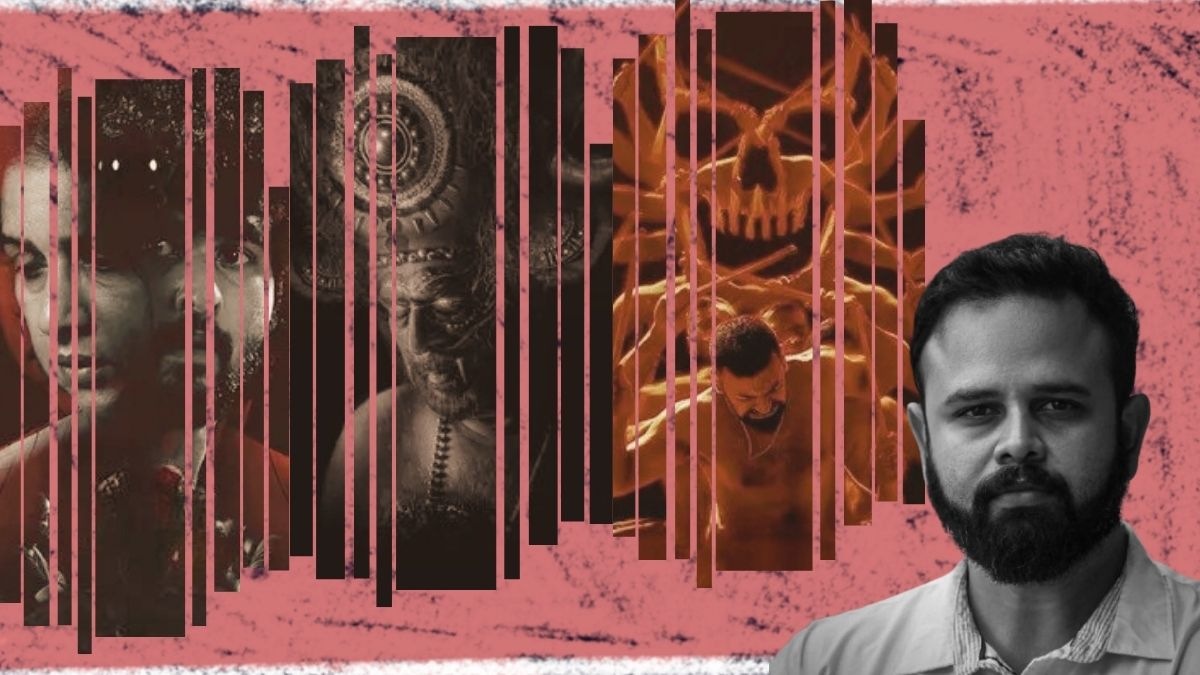
In Bhoothakaalam Diés Iraé and Bramayugam, Sadasivan isn’t chasing ghosts; he is diagnosing India. His films aren’t about demons breaking in. They are about the horrors we are already living with.

Neelima+Menon
Nov 13, 2025

In Rahul Sadasivan's cinema, the supernatural is only a frame — the real horror hides in mental illness, inherited privilege, and caste power.

DIÉS IRAÉ opens in Rohan Sankar’s (Pranav Mohanlal) world of inherited wealth, where pleasure is cheap, incentives are endless, and accountability is non-existent. At his mansion party, cocaine, music, and bodies blend into one infinite night. Rohan’s personality fits every cinematic cliché around the rich: fractured paternal equation, reckless routine, pathological aversion to commitment. And Rahul lets us size him up in minutes — he is the classic rich brat. But very soon comes the rupture.When Rohan’s former lover takes her own life after he ends things, instead of guilt, he reacts with a spasm of discomfort, despite knowing exactly what his cowardice has cost. But here is the subversion: he doesn’t transform into a remorseful man. Instead, when the dead lover returns as a ghost to torment him, Rohan reacts with fear mixed with indignation that seemed to say — "How dare her pain follow him into his curated hedonism?” This is where Diés Iraé is intelligent: it refuses the easy redemption arc. The threat of the supernatural doesn’t “correct” him; it merely softens his edges, like a spoiled child realising that the world won’t always bend.

Stream the latest Malayalam, Telugu, Tamil and Kannada releases, with OTTplay Premium's Power Play monthly pack, for only Rs 149.

In a way, Rahul Sadasivan flips the genre expectation here. So instead of horror punishing the man into moral clarity, it exposes the vacuum inside him. In the end, he remains recognisable, not rehabilitated, just a little less invincible, and a little more aware that even the rich cannot fully escape the consequences of the wounds they inflict.Bhoothakaalam is the other end of Rahul’s spectrum. If Diés Iraé begins in excess, Bhoothakaalam begins in scarcity. For Rahul Sadasivan, horror is not one emotion, but rather a condition of being trapped. ALSO READ | Rahul Sadasivan’s Diés Iraé Proves Horror Can Be Minimalist — & Still Terrifying Vinu’s (Shane Nigam) world, unlike Rohan’s, is small, stale, and repetitive. His house itself acts like a parasite feeding on stagnation, with suffocating rooms and light that barely enters. You can almost smell that faint old-house odour that sticks to your skin. This is the geography of depression.
And the mother-son dynamic is complex and human. Asha’s (Revathy) clinical depression is not played as “monster”, but as a series of coping failures (superiority, nitpicking, emotional blackmail, control), and defence mechanisms that look like cruelty from the outside. And Vinu’s passivity is more about survival, realising that reacting could only escalate the issues.In fact, through Bhoothakaalam Rahul is quietly telling us that India is full of homes like this. Homes where young adults cannot articulate their inner chaos because they are too busy managing their parents’ chaos. Homes where your mother’s anxiety becomes your personality. Homes where mental health is not discussed but absorbed.
And this is exactly why Bhoothakaalam hits differently. In most horror stories, ghosts haunt a house. Here, the house itself is haunted by their unresolved traumas. When Vinu mentions how nobody who loves him truly recognises his inner pain, that becomes the cruellest sentence in the film. The tragedy is that he is not asking the world for help anymore. He is asking the world to notice him. The director’s brilliance is also in how he indicts our “solutions”.The uncle wants institutionalisation. The girlfriend wants to escape the discomfort. Society wants quick fixes, or shut rooms, or doctors who sedate and contain. Nobody wants to sit with a mind that is unravelling. Depression is something to hide, fear, and outsource. So Bhoothakaalam becomes a horror film without a grand antagonist. The dread comes from real life.This is also a film about how depression can become a family legacy, passed down like second-hand furniture, until one day, one person refuses to carry it anymore. And sometimes, that refusal itself is a scream so violent it feels like the supernatural. Rahul isn’t staging jump-scares here. He is staging a generational tragedy. He wants us to see the ghost that has already entered our homes: the silent, inherited pain we refuse to confront.
While Bramayugam is pitched as supernatural horror, what it actually stages is the horror of power — caste, feudal ancestry, and the terrifying ways in which systems continue reproducing themselves. When a young Paanan (Arjun Ashokan) enters a decaying mana ruled by the upper-caste landlord Koduman Potti (Mammootty), with only his singing talent, he is quickly enslaved. It shows that feudal power doesn’t need armies or laws but only someone with enough history to make another human feel disposable. ALSO READ | Rahul Sadasivan opens up about breaking Mammootty’s glamorous image with Bramayugam The Mana is a haunted archive of hierarchy, half-dead and deeply toxic. And the Chathan represents generations of rage being given shape. After being tortured, enslaved, and weaponised, it finally ends up devouring the very lineage that once controlled it. But Rahul then takes it a step further: what if in their pursuit of freedom, the oppressed end up becoming just like their oppressors?
The cook (Sidharth Bharathan), who is revealed as Potti’s illegitimate son, thinks bloodline can free him, but in Bramayugam even ancestry is a trap. Caste only seems to offer newer, updated prisons. The final twist, in which Chathan takes over Thevan’s body, while the real Thevan dies unknown in the ruins, is the film’s sharpest point. It tells us that systems can also convert the oppressed into new agents of the same violence. Bramayugam leaves you with a cold fear that isn’t supernatural, but sociological. It says that horror is not ghosts but power finding new bodies to live in.So across these three films, Rahul Sadasivan is essentially showing us what horror really looks like when you remove the cheap thrills. If Bhoothakaalam is the horror of the “inside” (families, mental illness, unspoken hurt), Diés Iraé is the horror of ego and entitlement (wealth without moral weight), then Bramayugam is the horror of the system, a structure so old that even its ruins have fangs. In his universe, horror is already living in us, in our trauma, our privilege, our caste inheritance, and every so often, it just changes shape. ALSO READ | Rahul Sadasivan on audiences' expectations, writing more horror stories and more
Watch Bhoothakaalam and Bramayugam here!
Share
return(
)