Home » Features » Inherited Frames, New Voices: The Anthikad Sons & Their Gentle Subversions
Features

Inherited Frames, New Voices: The Anthikad Sons & Their Gentle Subversions

Sathyan Anthikad’s sons inherit his gentle humanist world, but subtly reshape it — softening masculinity, empowering women, and quietly questioning authority without breaking from the legacy.

Neelima+Menon
Jan 15, 2026

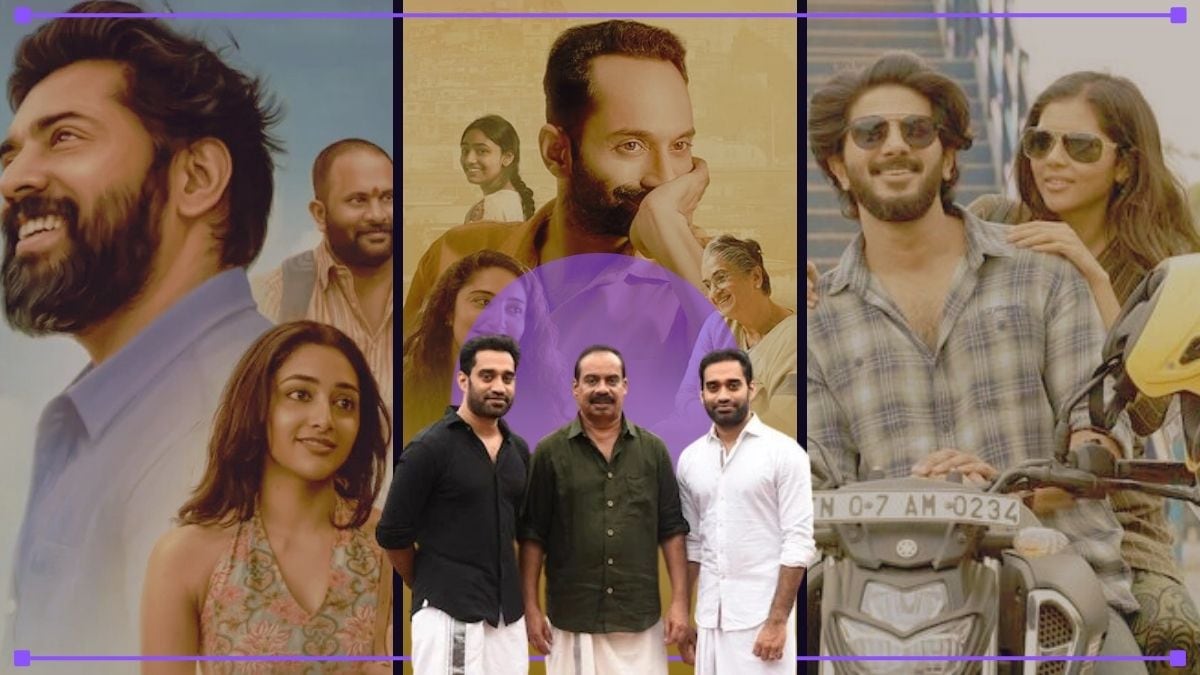
As Sathyan Anthikad's sons — Akhil and Anoop — step into filmmaking, they inherit not just a recognisable milieu but also its moral and emotional grammar.

IN Sarvam Maya when Prabhendu (Nivin Pauly) encounters a ghost in his room, his first instinct, despite being a practising Hindu priest, is not to perform a pooja to exorcise her. Instead, he responds first with fear and then with a lingering trepidation. The ghost, on the other hand, treats the encounter with striking casualness. She is furiously online shopping, nonchalant yet quietly conscious of her position, almost like a celluloid version of Casper than a figure of terror. Two things are being subverted here. First is the way the narrative treats Prabhendu’s profession, not as a sacred calling, but as everyday labour. And returning to it is merely considered a stopgap arrangement until he lands a break in the music industry. When he assists his cousin (Aju Varghese) with rituals, it feels less like a divine duty and more like helping out in a family business.

Stream the latest Malayalam, Tamil, Telugu and Kannada releases, with OTTplay Premium's Power Play monthly pack, for only Rs 149.

Akhil Sathyan’s treatment of the profession is striking in its lack of reverence, moral elevation, or spiritual awe. In doing so, the film quietly strips the priesthood of its assumed social superiority, presenting it instead as just another occupation shaped by circumstance and necessity. Secondly, the film treats the ghost with a cheeky irreverence. From naming her Delulu, a slang term for “delusional” (though it may be intended as a play on “illusional”) to the way she is written with a sharply practical worldview, she constantly cuts the priest down to size. Rather than embodying fear, mystery, or moral reckoning, Delulu functions as a grounding presence, more like a catalyst who nudges the hero along in his coming-of-age journey.
Interestingly, this echoes a narrative pattern often seen in Sathyan Anthikad’s films, where women are positioned less as independent agents and more as figures who guide or support the hero’s journey. But Akhil gives the template a contemporary reworking. In his debut Pachuvum Athbutha Vilakkum while Hamsadhwani functions as the moral and emotional anchor guiding the hero’s coming-of-age, her inner life is not shaped around his transformation. Her arc unfolds independently, with its own rhythms and resolutions. The hero may grow alongside her, but he does not define her.In fact, in Anoop Sathyan’s debut Varane Avashyamund the 50-something single mother Neena (Shobana) feels like a redemptive reworking of his father’s traditional female figures. She is a rare figure on screen, a happy, confident, and attractive single mother in her fifties. Neena is even given a superstar-style introductory song that celebrates her beauty. In a lovely scene where her brother casually explains Neena’s love life to her adult daughter, without embarrassment or moral judgment, Anoop quietly pulls down the pedestal on which mothers are usually placed in cinema. It is a pedestal that demands sacrifice and desexualisation, something his own father’s films are often accused of reinforcing. While the daughter still struggles with social conditioning, Neena remains a liberating presence, choosing to reach out for love again despite the trauma of an abusive marriage.
As for the male protagonists, they too echo the senior Anthikad template, vulnerable, ordinary, and often confused, though the juniors have introduced subtle subversions. That’s why Major Unnikrishnan in Varane Avashyamund stands out as one of Suresh Gopy’s finest performances in the past decade, offering a layered reworking of his iconic angry-cop persona. Now in his fifties, the Major is seen attending therapy for his anger issues and yet is endearingly tongue-tied when he meets Neena. It somehow feels like the filmmaker’s imagined afterlife for that celebrated cop figure, long after the temperamental excesses of his youth. Similarly, Dulquer Salmaan’s Bibeesh in the same film wears a goofy exterior that masks the loneliness of being orphaned early and the quiet struggle to stay afloat. Prabhendu, too, is shaped by absence. He is still grieving his mother and is unable to fully reach out to his father. Together, these men are defined less by authority or bravado and more by emotional incompleteness, gently reworking familiar masculine archetypes. ALSO FROM THE AUTHOR | A Journey Through The Wit, Warmth & Human Stories Of Sathyan Anthikad’s Cinema As for the supporting characters, while the senior Anthikad’s creations remain timeless, his sons, even while working within that template, have managed to introduce some fascinating variations. So Urvashi’s Dr Shirley in Varane Avashyamund feels almost like a throwback to her collaborations with Sathyan Anthikad — playful, irreverent, and occasionally poignant. Johny Antony’s Dr Bose, meanwhile, is a psychiatrist who refuses to take himself too seriously. In Pachuvum Athbutha Vilakkum Sujith (Altaf Salim) gets a delightful moment when he finds himself quietly bewitched by the Marathi woman who comes to Pachu’s house to collect the garbage. There is also Vivek (Sanju Sivaram), who tries and fails to present only his best self to Hamsadhwani. In fact, his interactions with Pachu generate the kind of dry, conversational humour that has become Akhil’s trademark. Aju Varghese’s Roopesh Namboothiri as Nivin’s cousin may feel familiar, but it is the small tweaks, especially the easy camaraderie between the two actors, that make the character work. More importantly, across these roles, the humour remains gentle and unforced, rooted in everyday interactions, and consistently lands with warmth.
Even the milieu and themes remain familiar, carefree, familial, and rooted in everyday relationships. There is nothing overtly ambitious here, just stories shaped by family, friends, and their gentle dynamics. Even conflict is marked by a distinct non-violence, reinforcing a sense of tameness and domesticity that feels clearly inherited. It will be interesting to see whether, going forward, they choose to stay within this comfort zone or attempt to change the game.
Watch Sathyan Anthikad films on OTTplay
Share
return(
)