Suparn Varma’s Haq Is A Persuasive Take On The Shah Bano Case
Haq designed as one woman’s battle against the system, underlines the patriarchal readings of the Quran, the redundancy of triple talaq, and how women are forced to bear the brunt of religion.
HAQ becomes a better film once it ends. The Suparn Verma directorial feature is based on the landmark 1985 Shah Bano case, where a Muslim woman won her right to alimony. Although personal, her fight assumed big proportions because it revealed the knotty relationship between Muslim Personal Law, where a husband is entitled to provide maintenance during the iddat period after divorce, and the Indian secular law. In this particular case, the Supreme Court ruled in favour of Bano; later, the then-Congress government offset the judgment by sanctioning women to receive “reasonable and fair provision and maintenance" for three months after the divorce; Haq concludes by mentioning this, applauding, in the same breath, the current government for criminalising triple talaq and passing the Muslim Women (Protection of Rights on Marriage) Act, 2019.
Stream the latest films and shows with OTTplay's Power Play monthly pack, for only Rs 149.
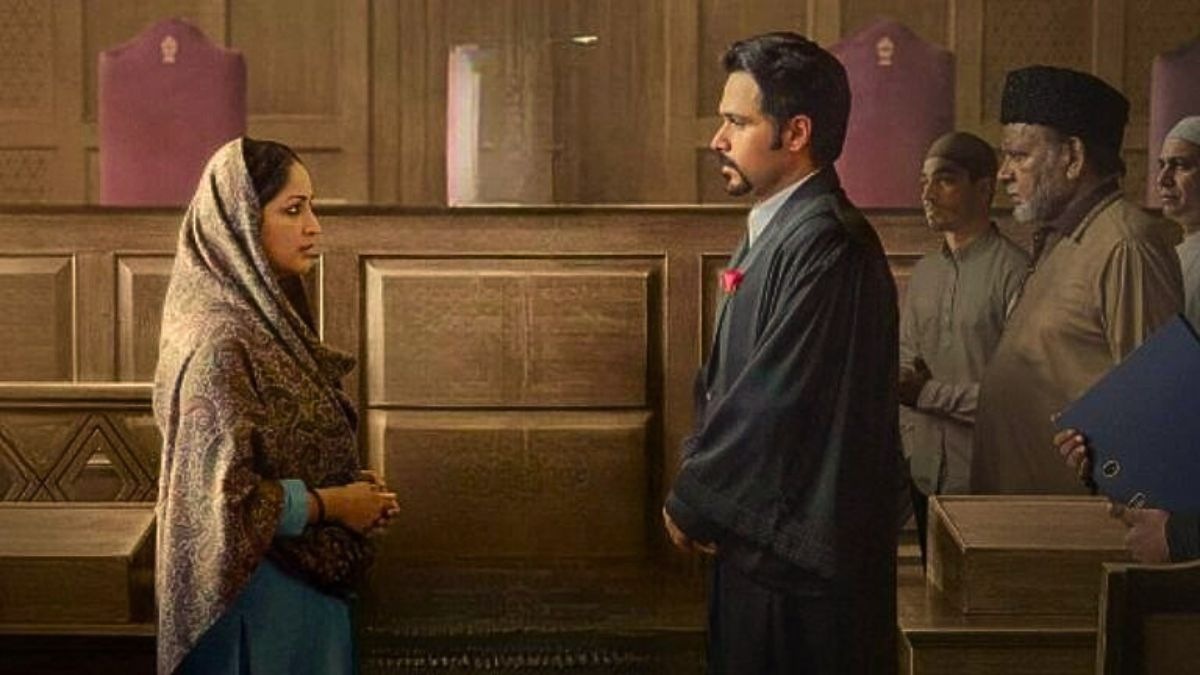
Those familiar with the Hindi cinema landscape of late would know most films originate from such black slates. Narratives have come to be reverse-engineered to align with a certain leaning, and everything else is decided later. Haq’s clear acknowledgement fuels suspicion, but in hindsight, it merits the film because, if advocacy was indeed the intent, things could have gone gravely wrong. It doesn’t. The result is an outing that opts for reductive accessibility over complexity. Though the vantage point is that of a majoritarian, it doesn’t entirely shortchange the minorities — “entirely” being the operative word.Written by Reshu Nath, Haq opens in 1985. A journalist asks Shazia Bano (Yami Gautam Dhar) if she had realised her fight was bigger than a person. Shazia nods and replies that she was doing this for herself, but in the process, the nation got divided, again. This exchange segues to a flashback in 1967 to convey a familiar story. A young Shazia (Gautam looking fairly the same across the timelines) is in love with Abbas Khan (Emraan Hashmi), an advocate. Soon, they get married and children follow in quick succession. The fairytale is disrupted when Abbas gets increasingly consumed by work and finally one day lands up home with a second wife. A shocked Shazia is told to adjust. This isn’t the first time something like this has happened, and she shouldn’t be the ‘first wife’, someone whose bitterness drives away the husband.Awkwardness follows, but Shazia accommodates. Days turn into months, but unlike what was promised, Abbas gets more drawn to the second wife. Shazia accommodates some more till she cannot and leaves the house. Things between them get more strained, but when Abbas stops sending money to her and the kids, Shazia approaches the court.
ALSO READ | Haq not based on the Shah Bano case? Director Suparn S Varma's statement It is almost neat the way Verma designs the film from here, using religion as a cover to speak about gender equality. Within the context, it works mostly well. Snubbed by Maulvis (although her father, played by Danish Husain, remains a strong support), Shazia is compelled to approach the court. Except there, too, she is sidelined. These things should be resolved within the community, she is told.Haq designed as one woman’s battle against the system, underlines the patriarchal readings of the Quran, the redundancy of triple talaq, and how women are forced to bear the brunt of religion (only Islam is mentioned). Although unlettered, Shazia is more fluent in the Quran than her lawyer husband. When told that divorcing a wife verbally is allowed in Islam, she argues against it. These portions are unmistakably potent, not least because Dhar gets persuasive lines. But because Verma uses a subdued tonality (barring a pressure cooker metaphor) that puts its point across without demonising a community.Haq accrues most of the admiration by not becoming the film it could have been. The fear rooted in the times we inhabit. The climactic bit includes a scene staged inside a Supreme Court, and although it rallies for Muslim women to be treated equally, it is Abbas’s speech about living as a Muslim in a post-partitioned India that made me sit up.The actors are largely effective. Dhar has the most showy role and refuses to play Shazia as a victim. While this is an inventive change, the interiority of the character also gets drowned in the profusion of emotions. It is Hashmi, however, who has the most interesting role. He refuses to play Abbas as an antagonist, although hostility is built into the writing. His performance offsets that and brings in a complexity that Haq only benefits from. The tone gets louder towards the end, but there is a lovely, quieter moment before the trial when Abbas and Shazia eat together and ask forgiveness for the battle ahead.
Emraan Hashmi on Haq: Film doesn’t ‘point a finger’ at any community Although wrapped with intentional dialogues, Haq does end up perpetuating the arguments for the Uniform Civil Code, something the current government has been espousing as well. While this works within the context, it is never not ironic to watch a film wanting Muslim women to be treated equally without acknowledging the otherisation the community faces as a whole.
Haq OTT partner revealed! Here's when and where you can stream Yami Gautam-Emraan Hashmi's courtroom drama after its theatrical run Share