Home » Interview » Saiyaara director Mohit Suri recounts Aditya Chopra's advice: 'Your film will not work with known faces—you need them to be newcomers' | Exclusive
Saiyaara director Mohit Suri recounts Aditya Chopra's advice: 'Your film will not work with known faces—you need them to be newcomers' | Exclusive
Mohit Suri talks to OTTplay about Saiyaara launching Ahaan Panday and Aneet Padda, collaborating with YRF on a love story, and his passion for filmmaking that still feels brand new.
Jul 16, 2025
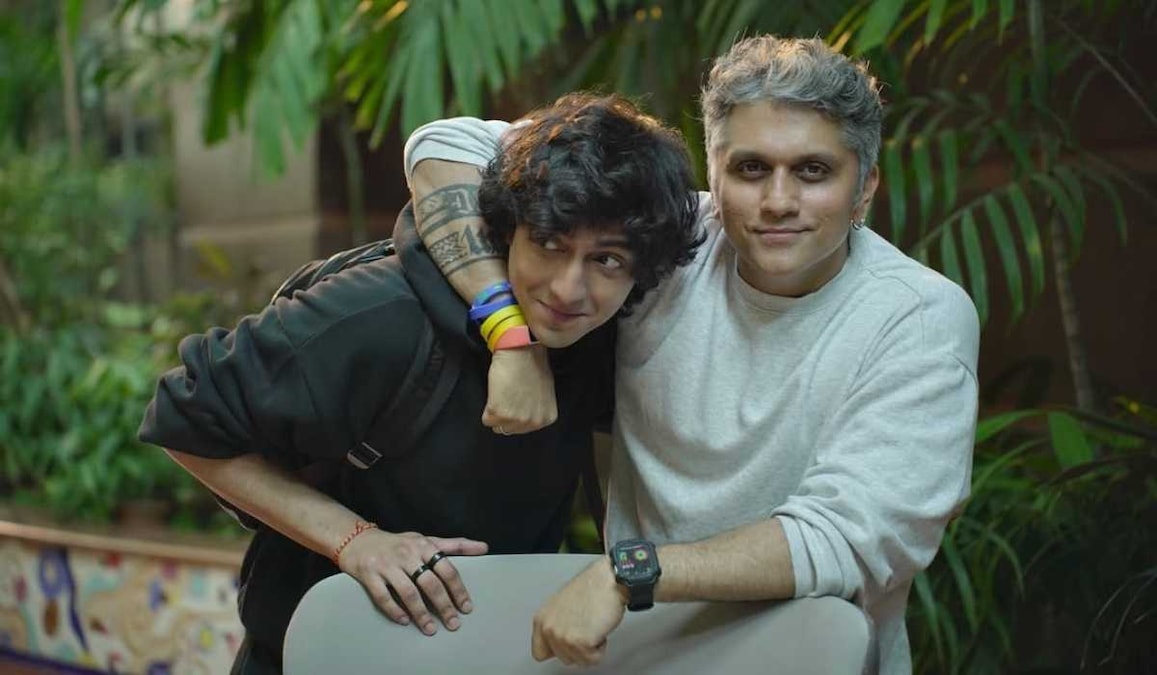
Mohit Suri and Ahaan Panday
Ahead of the theatrical release of his much-anticipated romantic drama Saiyaara on July 18, 2025, filmmaker Mohit Suri spoke with OTTplay for an exclusive conversation about his latest directorial venture. Known for weaving emotionally resonant love stories with soulful music, Suri returns to the big screen with a fresh pairing—debutants Ahaan Panday and Aneet Padda—under the banner of Yash Raj Films. In this candid chat, the filmmaker opens up about the film’s origin, the challenges of launching newcomers in today’s cinematic landscape, and what it means to helm a love story for a studio synonymous with Bollywood romance.
Stream Shiddat, Love Aaj Kal, and Blood Money now on JioHotstar via OTTplay Premium for a dose of love, longing, and emotional drama.
Edited excerpts below...
Just a couple of days left for the release of Saiyaara; how are you feeling right now?
Nervous, anxious, excited—just a mixed bag of all emotions. I think, no matter what you feel, that you've gone through this 13 times before. Every time feels like the first time on a release time.
Since your directorial debut in 2005, you've maintained a remarkably consistent run, delivering films almost every couple of years. What drives you to keep up that momentum, and how do you continue nurturing your storytelling streak without taking a longer creative break?
I, in fact, find breaks very troublesome. I find them very unsure. I've been on the set since I was 17, and it's almost like that feels more like life, and outside life breaks feel like a set. So I love getting back on the set. I, you know, one of the reasons I want to make hate films is so that I can keep making more movies. I love the process of going to a set in the morning, hanging out with the people who I think are my best friends, who are my unit, making a film together, sometimes crying when it doesn't happen well, and then the next day, getting up and doing it again. I just love the whole process of making movies, and I wish I could do that for the next 20 years also.
ALSO READ: Mahesh Bhatt on Mohit Suri's Saiyaara: 'It will rewrite rules of romantic films'
What was the original vision for Saiyaara and how did it evolve over the years, especially with YRF coming on board?
I think an idea is something that stays within you and wants to talk. I had gone with my wife to Dubai and met some old singer friends of mine who were performing in a show, and when they were singing the song, my wife started DJing, and now she's playing some of my old songs. I was not remembering the actor at all; the music was reminding me about the moments in the past. So I just felt that this is a great idea, where I think music has the ability to teleport you into some memories of your life. Nothing else does it better. Maybe smell, but music always takes you back to that moment; it's not the actor or where the song was on. It's more about who you were with and how you felt. And that became the germ of starting an idea. But suddenly from there, where we were, I called my assistant, who was working with me, and I told him, "Why don't you help me write it?" called Sankalp Sadhana. And he sat and he wrote the film. But I made it on my own. We got Rohan Shankar, who did the dialogue. We were spending money — there's a young love story being picked up by the biggest company in the industry, saying that this is the only film I want to make at the moment. I mean, this is the only love story that I want to make. So I just think that when you intentionally go out there and do something, it will find its true path.
This is your first film with YRF, a studio with a legacy of iconic love stories that has also been working on their Spy Universe. This film is also their return to the romantic genre, so what was the creative synergy like with them?
I mean, it was a no-brainer for me. For me, Yash Raj, although, has done very successfully in the Spy Universe. For me, Yash Raj will always be what Yash Ji's (Yash Chopra) classical love stories were and what Adi Sir (Aditya Chopra) made. They've always been films that we, on Diwali, go out to watch after the Puja. There are films that keep releasing in the theatre, and the whole family falls in love and has that belief in love with the music and the song, right for all films. So, in fact, I remember when I was in the eighth standard, when I saw Adi Sir's Dilwale Dulhania Le Jayenge. While everyone was raving about the actors, which I do agree with—they were very good—I was very interested in who this young director is and what this job of making movies is. How does it happen? That he inspired me to turn into a director. Then so many years later, I am working here. I remember sending this message to Adi Sir, telling him how honoured I was to do this. Because for someone who inspired me to make love stories, I'm today working for them. So the biggest challenge, actually, with anything else was to live up to the legacy. It was something I was worried about, nothing else.
Did the initial tie to a franchise such as Aashiqui impact the way you restructured the script and character arcs?
I don't think like that. Like, even when I made Aashiqui 2 I didn't think about Aashiqui. There was an option when Aashiqui was being made. I think when you try to look to the left and right, you don't end up concentrating on what should be done in the centre. So I just focus on what I think is right for my film. I have no idea what they're making or what somebody else is doing. I have no idea about that. I mean, I pretty much am in my own world and had written this three years back. Yes, I was offered to make that film that time. I didn't have the script, so I nicely declined, and they went away to some other director. But my whole thing was not to—I can't announce and do a film without having a script; I can't do that.
Did you write Saiyaara keeping debutants in mind initially, or was it always a flexible story that could adapt to casting decisions?
It required an age; when I wrote the film, it was about falling in love for the first time, and it was catering to a 20- to 25-year-old. But the problem was, at that time, I felt that no one would give me any budget to make it with newcomers. So when I did approach, I approached a couple of actors myself over my friends, saying, "Would you be interested in doing a love story?" And they all were, to be fair, very cold. The funny part was when I went and met Adi Sir and Akshaye Widhani, and I told them that this is a film and I got these people interested in working with me. It was them who turned on and said, "But your film requires 20- to 25-year-olds, so my distribution and marketing team will be very happy that you're getting saleable actors, but I'm telling you your film will not work because you need them to be newcomers." So imagine the company that has access to the biggest stars in the country actually let me make the film with newcomers. The initial instinct was to make this film with newcomers, but I didn't know if anyone would have the passion and the vision to do it that way. In the end, I'm not the one who's shelling out the money, but these guys actually put their money where their mouth is.
You’ve worked with breakout talent before—how does launching newcomers today differ from when you directed actors like Emraan Hashmi, Kunal Kemmu, and Shraddha Kapoor early in their careers?
You know, it's the same process; it's just that the technology changes. I still remember, we were here backstage when we were shooting the shows, and it was on the day of Holi, and we were shooting, and Ahaan came to the set, and there was a big digital screen, a larger-than-life digital screen, where they were playing some shots of his and he looked at himself first and looked at the theatre sideways—looked at himself larger than life, and he could see that twinkle in his eye seeing himself on such a big screen, and he couldn't believe it. I have seen that same look with Emraan when Footpath was released and we went from theatre to theatre to see him on the big screen. I have seen that same look in Kangana's (Kangana Ranaut) eyes when we went all over the city to look at all the hoardings. I've seen that same look when we were travelling and marketing Aashiqui 2 and the first show was released, and we were in a plane, and the whole plane staff clicked pictures with Adi (Aditya Roy Kapur) and Shraddha while I went down the stairs and clicked their picture. There's just like the moment; it is the same look. So if the language and the people change, the feeling doesn't.
This year marks a first for both you and your cousin Alia Bhatt—your YRF directorial debut with Saiyaara and her YRF acting debut with Alpha. How does it feel to have this shared milestone in the same year, especially given how differently both your creative journeys have unfolded?
Oh yeah, I didn't realise that. Now that you have put it into perspective, I think I will talk to her about it. I don't know how I felt about this. I didn't think—I bumped into her here when she was shooting. I have never really sat and discussed it that way. No, I never thought of it that way.
You’ve taken forward stories started by other filmmakers with Murder 2 and Aashiqui 2 and made them your own. Now, with Awarapan 2 being directed by Nitin Kakkar, how does it feel to see a film you helmed and shaped getting a sequel from someone else? Is it strange to let go?
It is strange to let go; I won't lie about it. But the thing is, the difference is, I was told about it, I was asked, and I was told that they're doing it. Personally, I put a lot into my own film and a lot of myself. So to see someone else do it, I don't know what they're going to do with it or whether they want the right meaning of the film, but I wish them luck, because it's something that's very close to me, and I hope they do it well.
But people were dying to see you and Emraan Hashmi collaborate again...
I would love to do that. I think Emraan has not offered me anything. I would at the drop of a hat work with him.
Top 6 Intense Love Stories
Share