Home » Interview » 'Surprising that a lot of non-Bengalis have loved Jazz City': Soumik Sen | Exclusive
'Surprising that a lot of non-Bengalis have loved Jazz City': Soumik Sen | Exclusive
Jazz City is now streaming on SonyLIV (OTTplay Premium). Director Soumik Sen spoke with us about the audience's reactions.
Mar 26, 2026
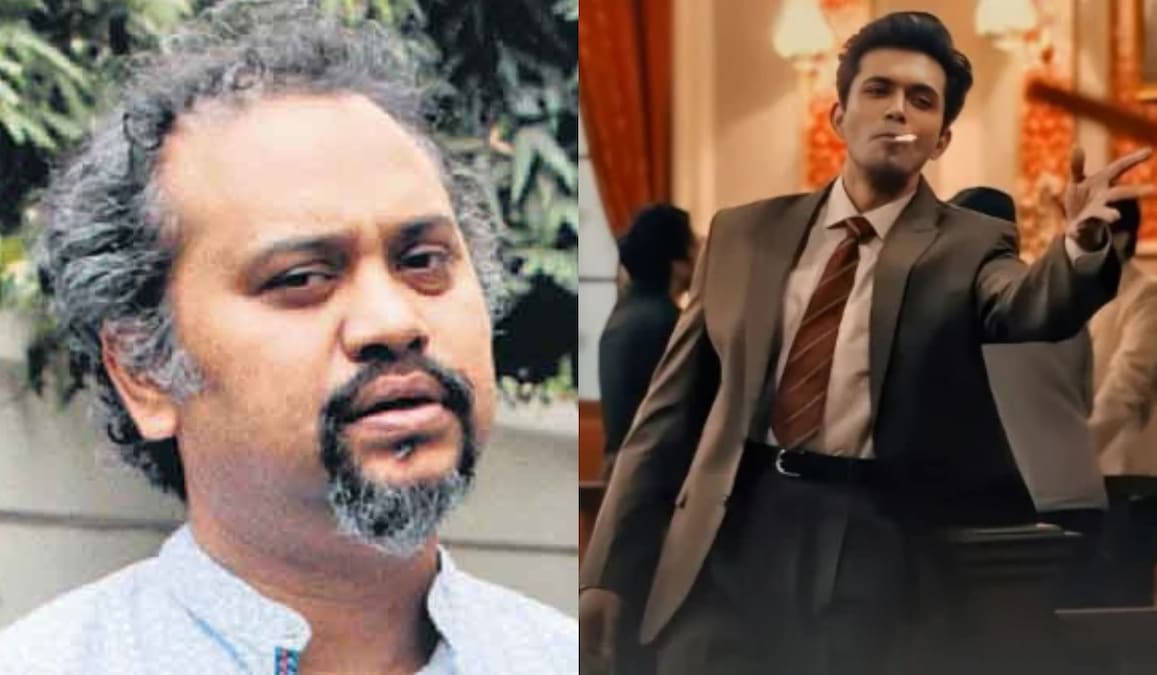
Soumik Sen | Arifin Shuvoo as Jimmy in Jazz City
Jazz City directed by Soumik Sen, is a Bengali-language thriller–musical unfolds in 1970s Calcutta, blending the city’s lively jazz culture on Park Street with the backdrop of political unrest and the Bangladesh Liberation War. The series is now streaming on SonyLIV (OTTplay Premium). As the series is out, director Soumik had an exclusive chat with OTTplay where he opened up about the audience's reactions.
Watch Soumik Sen's Jazz City on OTTplay Premium
Soumik Sen's interview excerpts...
Now that Jazz City is finally out, what has been the most surprising audience reaction you've come across so far?
It's surprising that a lot of non-Bengalis have loved it. That has been a little surprising. I knew that they would love the scale of the show, but even if they would get the nuances and stuff, that I thought was pretty surprising.
I knew that it would be hugely accepted in Bengal, which it has. The kind of response that I am getting is pretty overwhelming. Usually, you normally see that when a show or a film debuts, it's IMDb, which I always look upon as a pre-organic thing. It begins very high, because initially whoever comes in and pastes a review is somehow attached to the subject and is obviously biased for a bit, and then the normal reaction comes in and then the ratings go down.
It's a very long and very heavy show. People are slowly watching it and the word of mouth is spreading. People see four episodes and they write something. They watch six episodes and then they finally see the last three episodes. So, it's expected.
I was happiest when I got to make this. Whatever is now that people are reacting is just an over and above all of this. I got to tell this story. For me, that is the biggest thing.
In our last conversation, you spoke about discovering the scale of the 1971 genocide quite late in life, now that Jazz City is out, do you feel audiences are experiencing a similar awakening through the series?
Today (March 25) is actually World Genocide Day. And you should see a statement put out by the Prime Minister of Bangladesh, Sarik Raman. And he talks about Operation Satellite. And he talks about how it should never be forgotten. He describes how the armed factions took up the rebellion and the war of liberation against Pakistan, which I think is extremely wonderful.
For a while, there was an attempt in some places to kind of forget about India's contribution, just the contribution of Mukti Jatas, the actual true freedom fighters of Bangladesh. And their contribution was kind of being marginalized to an extent. I won't say completely, but to an extent. And now to see that it's again being brought to the forefront is very heartening to see.
For people to remember what this country went through while they remained independent. And also to remember the fact that India helped liberate Bangladesh from the clutches of the genocidal nation. So, that is point number one.
The larger point, I think, is still miles to go. We still make films where we talk about India versus Pakistan as if these are two equal nations. And in my opinion, that's not true. In the 1971 war especially, we are sharing our borders with a genocidal nation, which refuses to even till today, apologize for having conducted one of Southeast Asia's or one of South Asia's largest genocides.
And genocides where babies were tossed upon bayonets. What I'm saying is a headline from a newspaper. So, children were flung into naked bayonets held by Pakistanis. Jars were found after the war, which had severed women's body parts, cut with precision and kept in jars as an example of the barbarity that was conducted by the Pakistani army.
There is a lot that has been said, a lot has been written. But we still somehow seem to treat the Pakistani army with kid gloves. We consider them as equals. And I think that has not changed yet. Especially in the film industry here, where things that happen across the Western border, they are pretty much oblivious to what actually happened on the Eastern border. And that needs to be more. I mean, there is one show, there needs to be a lot more which talks about Operation Satellite.
You said the show aims to be both entertaining and historically revealing, based on audience feedback so far, do you think one aspect is resonating more strongly than the other?
I think people are loving two aspects of it. One is, of course, this hyper-real ambient jazz and Calcutta, what it is in its full essence. And yes, of course, a chapter of history which people didn't know about. Like most of us didn't know about. But there are people in our generation before us who are aware of it, though they don't know it fully.
Music plays a central role in Jazz City. Post release, do you feel audiences are fully grasping its narrative significance?
I do think that the songs are now being… Songs, the voices, the melodies. Even non-Bengali speaking people who are hearing the melody of Atul Prasad and reading the subtitles are calling me and telling me how beautiful the words are. People are discovering songs of Tagore which they did not know existed. So, for me, it's obviously also jazz.
Soumik also said that the show introduces several new voices and talents, with some artists making their debut as vocalists. Alongside these fresh voices, the music and background scores from talented composers bring a unique and vibrant energy. Overall, the combination of melodic sweetness, jazz influences, and innovative arrangements was hailed as extremely refreshing and enjoyable.
what was the most challenging plot thread to balance while weaving together espionage and personal narratives?
I think we were all leading up to genocide. We were all leading up to this particular thing. So, the challenge actually has been to keep audiences invested in the characters while history is happening in the backdrop.
Between your interjectory incidents, which essentially take the story forward, you will have a considerable passage of time where history will unravel at its own course. So, the challenge is to write in characters whose life journey will have to follow a particular path, another parallel path, which won't really take it away.
So, yeah, I think that was challenging. And to kind of make sure that they interlap over the right kind of period of time.
The series navigates multiple layers of secrecy and revelation, how did you decide what to withhold from the audience and what to reveal at key moments?
I think this is very difficult to say what made me. At a certain point of time, I mean, if I tell you now, these are giving away spoilers. So, for example, to reveal the identity of the person who poisoned the cake could have been done much later. But I remember during our discussion and Dhanush had said that, just reveal it upfront. So, let that be there. Because then the audience knows what the character is going through.
So, it's essentially that, right? So, that was one thing where I wanted to keep that reveal a little later for the trust to build and all of that. But this probably works out better. Because the audience knows what the character is going through. So, that was one thing which I think was challenging.
Top 6 Riveting Period Dramas
Share