Home » News » 18 years of Om Shanti Om: Why Shah Rukh Khan and Deepika Padukone's 2007 classic was my best theatrical experience of 2025
18 years of Om Shanti Om: Why Shah Rukh Khan and Deepika Padukone's 2007 classic was my best theatrical experience of 2025
Om Shanti Om's houseful 2025 run, 18 years post-release, is proof that nostalgia and outstanding storytelling, not just stars or OTT, bring audiences back to the big screen.
Nov 09, 2025
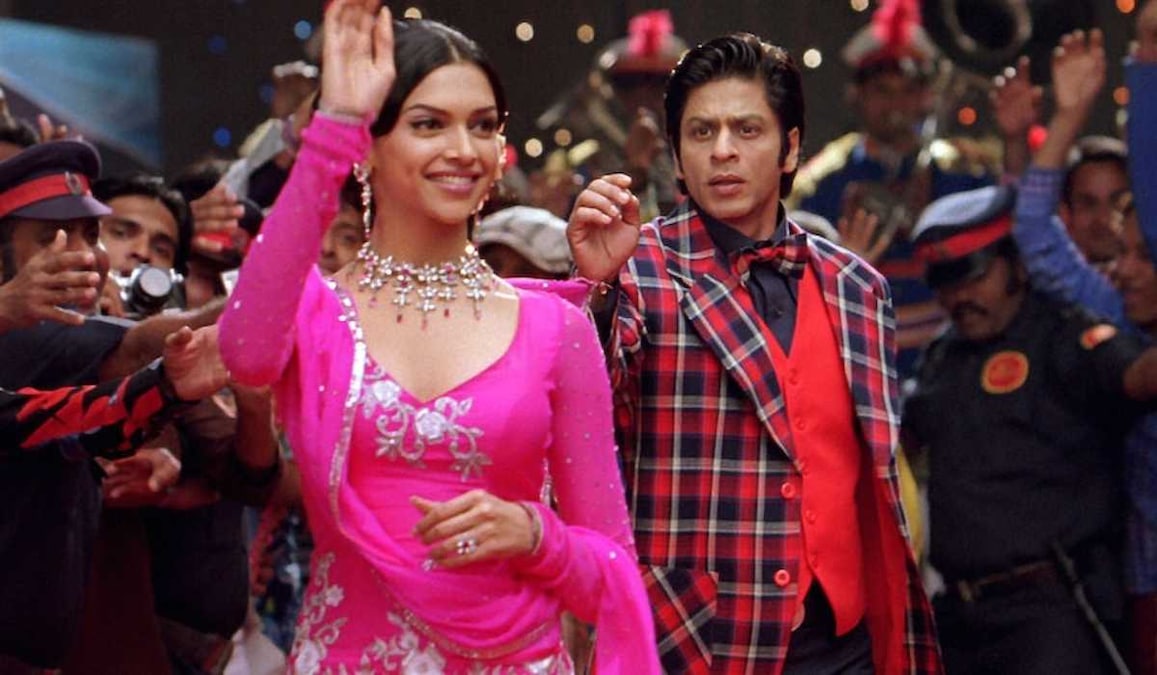
Shah Rukh Khan and Deepika Padukone in a still from Om Shanti Om
Why do we still watch movies in theatres? Why is the communal cinema experience such a core part of our culture, offering a sense of freedom and calmness rarely found in the real world? Modern struggles do not provide polarising answers to these questions, but the magic of the past does. If we look at the last 25 years since the new century began, the art of cinema has transitioned with such speed that all we could do was just keep up and adapt.
Stream the classic Bollywood blockbusters Kaho Naa... Pyaar Hai, Karan Arjun, and Madhumati and 25+ other OTTs with OTTplay Premium.
There was a time when movies included songs that, although they might not have been relevant to the story, the filmmakers justified, and we both accepted and loved them. We experienced an era filled with songs that accompanied every aspect of life, from birth to death, and expressed emotions such as happiness, sadness, and celebration. We had stories in which the filmmakers took their job seriously and expected the audience to simply enjoy living in that moment. In the past, the theatre-watching experience was more engaging and immersive compared to the ambient viewing that is common today.
It's the year 2025, and even now Hindi films are struggling to leave a mark and make the audience pull to the theatres. Stars and filmmakers attribute the struggle of Hindi films to the adverse effects of OTT platforms, arguing that an eight-week window is insufficient for streaming a theatrical film. But then how, after 18 years of its release, has Om Shanti Om managed to run houseful for the past 10 days even though the film is streaming on Netflix?
Candidly, Om Shanti Om was my best theatrical experience of 2025, and mind you, this is my first time watching the Farah Khan directorial on the big screen. In 2007, 14-year-old me wasn't allowed to watch the film in theatres. I was in a crucial exam year, and the parental verdict was that Shah Rukh Khan wasn't going to help me pass my tests!
I cried and cried so much over it. I finally got to see the film via a super grainy torrent, but it didn't even make me happy for a second—the magic was totally missing. However, like a determined, if silly, girl, I manifested that one day I will watch this film on the big screen. Of course, a 14-year-old girl or the world wouldn't have thought that cinema's magic would be lost after 15 years or so, so it has to be brought back with the movies that created that magic in the first place.
Who'd have thought, 18 years later, that this silly, impossible dream would actually come true? Seeing it now is the perfect way to celebrate this film, which made me believe that all dreams, big or small, are equally important and can't be measured.
But if I am asked, I'm a critic who watches movies for work—and that work began while growing up watching movies like Om Shanti Om. During my tender years, the films that came out looked glossy and not gritty, but the realism didn't escape anywhere. The film constantly laughs at itself, and all we can do is laugh along. There are so many instances where we foresee what's going to happen in the plot as well as in the film industry. The 30-year gap in the story is a hint that film stars come and go; the approach hasn't changed much, only the advanced technology has. In a day and age of social media, we hear gossip that is openly discussed, attacked, and defended, with stars often quizzed but well-trained to tackle it. In Om Shanti Om even during the celebrity red carpet appearances, many stars openly showed their insecurities, reflecting a media ecosystem that was much less curated.
I remember back then when Om Shanti Om was announced, it didn't deny the fact that it's a reincarnation story. Moreover, it was also called a revenge saga set against the backdrop of movies. Many people dismissed the film by saying that it's a Karz remake and there's no novelty factor. Interestingly, to shut down the criticism, Farah Khan made sure that she began the film by setting it on the sets of Karz and blatantly showed that the film, remake or not, is a tribute to the Subhash Ghai directorial for sure. It didn't even stop there; Ghai and Rishi Kapoor reappear on screen in current times to give away an award. Not just that, Shreyas Talpade's character Pappu also tells Shah Rukh Khan's Om Kapoor that his plan is not foolproof for scaring Mukesh Mehra, because it's like the climax of Karz.
Today, we are living in a world where filmmakers just remake stuff, and if it's called out, they use fancy words such as "adapted" and "inspired", "the soul is different", and whatnot! This defensiveness is sadly common. Earlier this year, when the Deva trailer came out, I wrote how the film screams that it's a remake of Mumbai Police—the director and the screenwriters are the same. But I was still asked to pull the article down, and I was also threatened in some way so that I wouldn't call it "a remake". And what did it turn out to be? An out-and-out remake of the 2014 Malayalam film.
I'll always stand by this: the Daastaan-e-Om Shanti Om sequence is the accidental blueprint for bad modern trailers. It's the hardest truth! Filmmakers today seem to be taking their inspiration from that song, which is essentially a stunning, four-minute summary of the entire film. They cut their trailers the exact same way—revealing the whole story, the climax, and the ending in just a few minutes.
When movie lovers say that Om Shanti Om is among the best films ever, the factors are not just the leading star Shah Rukh Khan and then-debutante Deepika Padukone. The film tells a serious story of a female star's murder, even though it is set against the glitzy and glamorous world of movies. She immediately becomes a forgotten actor after her death despite being a top star, and it takes a reincarnation for the truth to come out and get her justice.
As a 32-year-old, while watching the film, I saw several minute things that are deeply disturbing now to think about. In one of the sequences, we hear SRK's Om Prakash Makhija saying that Padukone's Shantipriya debuted in movies at the age of 16 and was launched by Rampal's Mehra. It's a passing dialogue, but after a point, we hear from her that she is already married to Mukesh and is pregnant with their child. People talk about older guys dating much younger women; what was once romanticised as a normal age gap is being called out unapologetically as "grooming," and it's nothing to be proud of.
Since her "baali umar", Shanti has been pushed off her limits to work and not acknowledged publicly because Mukesh Mehra didn't value her "ek chutki ki sindoor" more than his career or money. Shanti is introduced as a "dreamy girl"; we hear her talking about her dreams and desires, which are left unheard by the person she loves, people she works with, and also her fan. A "dreamy" girl is not allowed to pursue her own dreams; instead, she is often seen merely as an object of desire for others.
But, here, even in the big-bad world of Bollywood, Farah, along with Mushtaq Sheikh, who co-wrote the film, along with dialogues by Mayur Puri, showed that there will always be one person, a shadow, who will come out to help, even if it's too late and there are "happys endings". This fan, Om, assures Shanti that if she extends a hand to him, he will not leave them. Although she talks about extending it at the right time to the right person, it ironically is about Om, who, without thinking about his life, jumps into the fire again and again to protect her.
The filmmaker's female perspective brings a sensitive side to the film, leaving us hopeful in the second half. In the garb of an out-and-out masala entertainer, there are dialogues in the film that are so hard-hitting that they're not passable and definitely thought-provoking even after watching them.
Shanti is heard saying that "pack up" is what she likes about film shootings and says "aatmahatya" when a married male actor hits on her on the sets. The sheer frustration is often neglected, but her disrupted mental peace is often brought to the surface, where she is screaming for help at the top of her voice and no one does, except Om. Although he viewed her as a "dreamy" girl in the right way, Om is the "dream" man of her life, even if their relationship is not romantic.
In the second half, after Om Kapoor learns about his past life and prepares to seek revenge, the universe quickly introduces him to a lookalike of Shantipriya named Sandy. However, because she is his huge fan, he focuses solely on grooming her to serve his purpose of seeking revenge. Farah ensures that we view the situation not just as a conveniently executed plan, but also highlights the troubling aspect where Om fails to recognise that in his pursuit of justice, he may be overlooking Sandy's discomfort due to her lack of awareness about the surrounding events. However, the redemption is portrayed so beautifully that it becomes clear that all she wanted to hear from him was the truth, as she believes in the make-believe world he has been presenting on the big screen.
While watching the film on the big screen and thinking about it on my way back home, the sheer number of flashes of moments from the film that keep on hitting is incredible. It made me realise why the film has such constant recall value and how every viewing allows you to discover so much about it—be it the meta references or the hard-hitting notes, which are hidden in the smartest way. Many who watched the film last week would agree that theatres desperately needed Om Shanti Om to truly feel like a cinema hall and provide a communal viewing experience where everyone is etched onto the big screen.
Like the title suggests, it takes two Oms to bring justice to Shanti, but her ultimate goal was always to bring Mukesh to her so she could exact revenge. In a way, Shanti got exactly what she wanted, with Om being a mere catalyst in bringing her story into the light. The narrative arc belongs to Shanti from the very beginning, with Om serving as the medium, and not the other way around.
We see those changing expressions on Om's face as he realises truth through the ghost of Shantipriya—he understands that this mission was never truly about him. His final smile represents him coming to terms with the fact that Shanti never needed a protector but only an assurance in this bad world. All she wanted was that no matter what, someone would stand with her and not allow her to collapse even when everything else around her was falling apart.
The film subtly delves into the horror genre in the second half, only to make us realise that ghosts from the past will always hunt us and bring us down. In modern cinema, we have much-needed and clutter-breaking statements like "Woh Stree hai, woh kuch bhi kar sakti hai." However, Om Shanti Om shows that without even mentioning it, making it poetic justice, the "dreamy girl" Shantipriya deserved all this time.
Deepika Padukone Films Across Genres
Share