Home » News » Parasakthi ending explained: How Sivakarthikeyan’s Chezhiyan uses student force to take on political power and fight against Hindi imposition
Parasakthi ending explained: How Sivakarthikeyan’s Chezhiyan uses student force to take on political power and fight against Hindi imposition
Parasakthi ending explained: Sivakarthikeyan’s period political drama traces the real-life instances that contributed to anti-Hindi riots that took place in Tamil Nadu
Feb 08, 2026
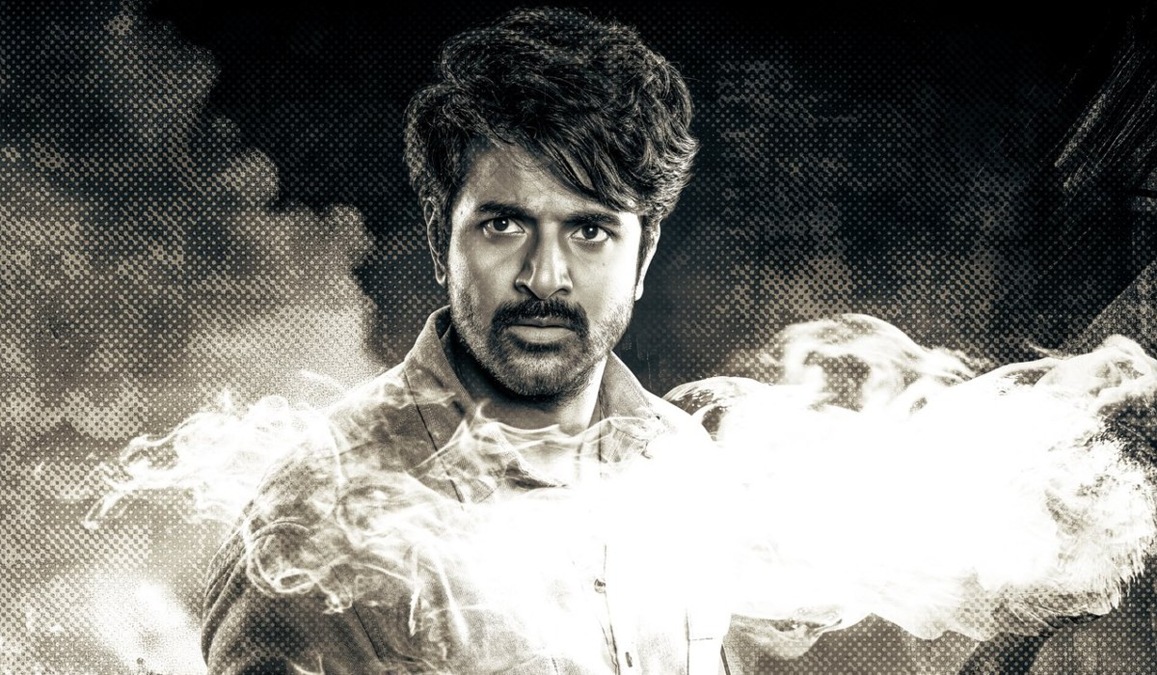
Parasakthi
Parasakthi , the 2026 Tamil film starring Sivakarthikeyan in the lead role, is now streaming on ZEE5 via OTTplay Premium. The period political drama is directed by Sudha Kongara and revolves around a part of Tamil Nadu’s political history. Parasakthi traces the time period when students took to streets in 1950s-60s to oppose the Hindi imposition by the Union government. Here is how Parssakthy essayed it.
Watch Parasakthi with OTTplay Premium. Get JioHotstar, Discovery+, Sonyliv, Fancode and 25+ OTTs
Parasakthi ending explained: How Sivakarthikeyan-Sudha Kongara film conclude?
Parasakthi revolves around Chezhiyan, who was once the leader of Purananooru Army, a body comprising of students who fought against the Hindi imposition. Chezhiyan is a man who is not against Hindi-speaking folks, or the language, but the imposition of it. Years later, Chezhiyan, is a Railways employee and is also willing to learn Hindi, if he gets posted in another state where Hindi is predominant.
Also read: Parasakthi OTT release: 4 reasons to stream Sivakarthikeyan’s film even though it’s not all perfect
Unaware about Chezhiyan’s involvement in protests, years later his younger brother Chinnadurai (Atharvaa) also joins Purananooru Army with the intention to start anti-Hindi riots as the imposition continue. The Union government had mandated money orders sent are in Hindi, and this affects scores of students like Chinnadurai who leave their home to study and are unable to access money sent by their families to fund them. Thus begins the reignited fight against Hindi imposition. Chinnadurai and Chezhiyan’s neighbour and Minister’s daughter Rathnamala (Sreeleela), whose mother-tongue is Telugu, works in All India Radio station and joins the protest, special cop Thiru (Ravi Mohan) who loathes his Tamil identity, is designated to curb the agitations.
How Chinnadurai’s death sparks Chezhiyan’s vigour?
Despite learning Hindi ardently to clear Railways interview to get a promotion, Chezhiyan is rejected, citing that his Hindi is not on par to those whose mother-tongue is Hindi. This instigates Chezhiyan to go back to his old ways and protest. He joins his hot-blooded brother Chinnadurai who protests against the conversion of money order system in Hindi, but asks to wait so that he can get permission from the government to protest. However, Chinnadurai does not pay heed to this and proceeds to lead students. Meanwhile, Chezhiyan comes to realise that Section 144 has been imposed and cops have already begin to surround the protest area, headed by Thiru. In a riot that breaks, the ruthless Thiru shoots Chinnadurai point blank. Even as Chezhiyan tries to save Chinnadurai’s life, he is taken away by the cops, while the latter is thrown into the sewers as he dies.
Does Thiru have unresolved enmity with Chezhiyan?
Earlier in the film, we are shown that Chezhiyan, when he was active in the Purananooru Army, had once clashed with Thiru during a rail protest in Pollachi. This has left a scarring reminder in Thiru after his trigger finger was affected and had to receive punishment posting in his career. Now out of ego and hatred for Tamil, Thiru captures Chezhiyan after Chinnadurai’s death. As Thiru tortures him in jail, Chezhiyan comes to know that Chinnadurai has been framed a criminal with his death reasons being using riots to his own agenda. Now captured in jail, Chezhiyan comes to know that Chinnadurai’s body has been burnt and never gives up on his ideology of saving Tamil.
How does Parasakthi turn political?
With its underlying tones of Dravidian ideology, and parallels drawn to real-life icons like CN Annadurai, Karunanidhi, and even Indira Gandhi, the film concentrates on the students’ efforts to save their Tamil identity. Chezhiyan who escapes from Thiru, now uses his student card to gather students from across states. He plans to gate crash at an All Party meeting in New Delhi, that is scheduled to take place where leaders will come. Chezhiyan hopes to secure a slot with Prime Minister of India, (who resembles Indira Gandhi). After causing a huge traffic congestion and even turning all the bus plates to Tamil from Hindi, it catches the attention of the Prime Minister. Chezhiyan requests that English should continue to be official language of communication, and that he can prove that majority of students oppose Hindi imposition. The Prime Minister asks to show the support during her Coimbatore support and even agrees to remove Section 144.
Was Chezhiyan able to show support from students?
Chezhiyan begins to garner students’ support across states. Meanwhile Rathnamala escapes from her home arrest and reunites with Chezhiyan. As they prepare for a yet another ‘independence struggle’, Thiru decodes that students have been using money orders through their morse code communication. He requests the Chief Minister of Tamil Nadu, who is also against the students, to lend him special task force, especially non-Tamil speaking cops to orchestrate his plan. Meanwhile, Rathnamala uses private radio knowledge, to amplify students’ voice. As more and more students across states gather, Chezhiyan comes to know that Thiru has cracked their money order code and suspect something unusual.
Did Parasakthi end on good note?
In a yet another brutal attempt to oppress the students’ revolution, the students are gathered in Pollachi where the students’ signatures have to reach the Prime Minister in Coimbatore. A mob attack is unleashed while the police brutality and attack continue. Thiru is hellbent on finding the signed papers. Rathnamala uses her radio knowledge to speak loud through transmission and spread their intentions. Meanwhile as Pollachi turns into a graveyard, thanks to Thiru’s apathy, Chezhiyan surrenders. Thiru realises that he is only deviated by him and that the signed papers have already left. As he attempts to ‘hide the history’, Thiru asks Army force to spare Chezhiyan. Meanwhile some students with the signed papers have already sneaked out to Coimbatore.
Did the signed papers reach the PM?
Meanwhile we come to know that the Army which Thiru believed was on his side, is headed by Chacko, one of the Purananooru members who missed the Pollachi meet, but used his powers to let the students escape with signed papers. Chacko was in fact had been on the rail protest earlier in the film. Cut to the present, Chezhiyan and Thiru have a face off, while the rest of students come with signed papers to Coimbatore. At the end, bundles of signed letters against Hindi imposition, from across states, reach the Prime Minister who is convinced that major of them do not want Hindi. After evident proof, Union government is forced to pass the freedom of using their own language as mode of communication and that English will continue as one of the official languages.
Parasakthi OTT release date FAQs
Q. In which OTT Parasakthi movie was released?
A. Parasakthi is streaming on ZEE5 via OTTplay Premium.
Q. What is the next film of Sivakarthikeyan?
A. Sivakarthikeyan will be next working with Venkat Prabhu for an untitled flick.
Q. Is Parasakthi based on true story?
A. Yes, Parasakthi is based on real-life anti-Hindi riots that took place in Tamil Nadu.
Best Sivakarthikeyan films to watch now
Share