Home » News » X&Y ending explained: What does an innocent soul make of the complexities of human life?
X&Y ending explained: What does an innocent soul make of the complexities of human life?
X&Y ending explained: X&Y, directed by D Satya Prakash, marks the filmmaker’s acting debut as well. The film made its way to OTT a month after its theatrical outing
Jul 27, 2025
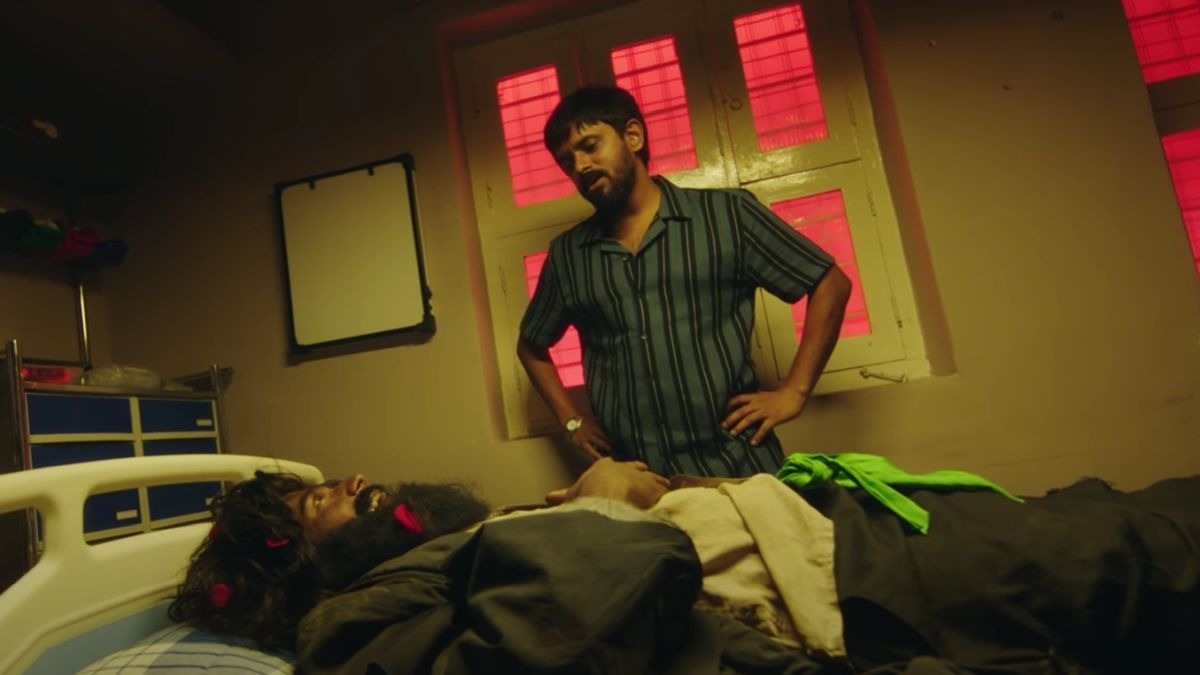
Satya Prakash and Atharva in X&Y
D Satya Prakash, who is best known for his hard-hitting social commentary in films like Rama Rama Re and Ondalla Eradalla, returned to the director’s chair with X&Y, which also marked his acting debut. Satya, who’d also produced the film, said that turning actor was a decision driven by budgetary constraints, but eventually made sense, as he needed someone who could convincingly play an absolute nobody.
Watch D Satya Prakash's award-winning debut directorial Rama Rama Re with OTTplay Premium
The film revolves around his character Kreede, who operates an auto-ambulance for the neighbourhood health clinic. Kreede wishes to get married, but despite his best efforts and those of his sister and brother-in-law, even matrimony sites remain uninterested in his profile. When he accidentally drops a flower pot on a vagrant’s (Atharva Prakash) head from a higher floor and finds the latter dead, Kreede is guilt wrecked that he ‘killed’ the nameless man.
To his utter surprise, though, this man regains consciousness and begins calling him ‘appa’ and is on mission ‘amma beku’, for which he seeks Kreede’s help. Turns out, the vagrant is up and about because of a new soul that’s inhabiting him – that of Kreede’s unborn child, who wants to be born and experience life. This, though, can happen only if Kreede does find a soulmate, so the soul has sought permission to be on earth and unite its future parents.
Also read: X&Y movie review: D Satya Prakash’s comedy drama has more misses than hits
"Sorry amma", says the soul
In the course of finding its amma and playing match maker of sorts for Kreede and Krupa (Brinda Acharya), this soul has a series of experiences that leave it utterly disillusioned and heart-broken. It finds it difficult to wrap its head around children in orphanages abandoned by parents, as well as elderly parents left behind by children unwilling to care for them in old age homes. Caste divide and oppression also baffles it. So much so that by the end of its time on earth, the soul says that it does not want to be born to its parents. Instead, it would rather be a flower and smile, and not have to deal with the complexities of human life.
According to Satya, the motive behind the film was to tell audiences about the need to leave a better world for future generations, which is oft spoken about, but rarely acted upon.
Latest Kannada films on OTTplay
Share