Home » Reviews » Haq review: Yami Gautam is phenomenal opposite the compelling Emraan Hashmi in a film exposing ruthless patriarchal laws
Haq review: Yami Gautam is phenomenal opposite the compelling Emraan Hashmi in a film exposing ruthless patriarchal laws
Haq review: Yami Gautam gives a career-best performance opposite Emraan Hashmi in this gripping film, powerfully exposing patriarchal laws rooted in religion.
3.5/5
Nov 05, 2025
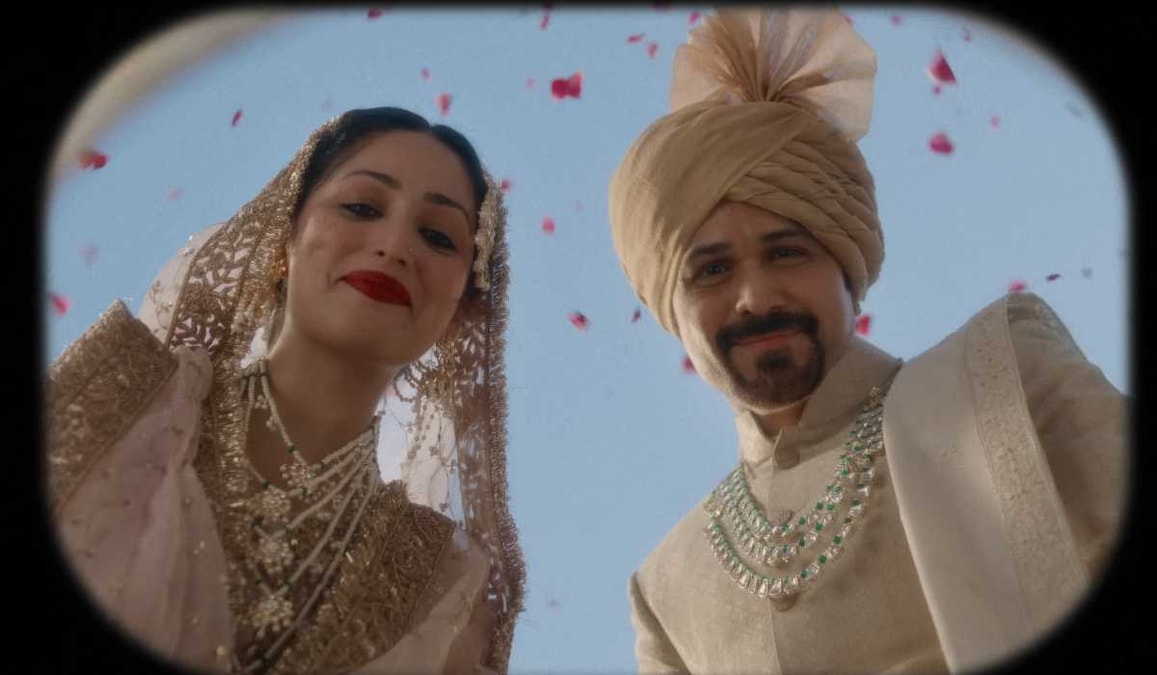
Yami Gautam Dhar and Emraan Hashmi in a still from Haq
Haq story:
Haq is a dramatic courtroom drama that draws inspiration from the landmark Shah Bano Begum case from the 1980s. It tells the story of Shazia Bano, a loving wife and mother of three, whose life falls apart when her lawyer-husband, Abbas Khan (played by Emraan Hashmi), remarries and leaves her. The ten-year legal and social struggle between Shazia and Abbas over maintenance payments sparks a national discussion on women's rights, the tension between Muslim personal laws and secular justice, and the push for equality in Indian law.
Enjoy acclaimed courtroom dramas like Jolly LLB, Court Martial, and Mulk and 25+ other OTTs including JioHotstar, ZEE5, and Sony LIV, all with a single OTTplay Premium subscription.
Haq review:
If you want to understand a man's temper, observe his behaviour, the people around him, and the atmosphere in his home. This was greatly shown in the film Jaya Jaya Jaya Jaya Hey when Darshana's character enters her husband's (Basil Joseph) home after their wedding and sees how there are cracks on the walls, the remote is shattered, and the glass on the table is broken. This analogy revealed her husband's anger issues. Even in Haq after getting married and living in a palatial house, Yami Gautam's character, Shazia Bano, is adjusting to her new life. Upon entering the kitchen, Shazia notices three damaged cookers. When she asks the househelp, she comes to know that her husband, Abbas Khan (Emraan Hashmi), doesn't believe in repairing stuff but in buying a new one immediately.
When her husband brings home a second wife without even dropping hints, Shazia remembers this incident and realises how she was blindsided because he always believed in replacement rather than repair.
Suparn S. Varma helmed this heart-wrenching film that has a female gaze, all thanks to the screenplay by Reshu Nath. Haq is based on the landmark Shah Bano Begum case, which has been an ignition of the discussion of Triple Talaq, which exists even now. While watching the film, I realised that in a democratic country like ours, many laws are created by men, for men, and primarily benefit men. Moreover, religion plays a significant role, and the consequences, regardless of the specific religion, invariably impact women.
When Shazia discusses how men can end a marriage by saying "Talaq" three times, she also points out that the Quran states men should receive whiplashes for doing so. However, that rule is never enforced, leaving women stranded because men possess ultimate power granted to them by societal norms.
Many moments in Haq resonate deeply, and in the dark atmosphere of the theatre, one could feel the audience's heavy breath as events continued to unfold unfavourably for Shazia. There's only one man in her life who stands by her, no matter what: her father (Danish Hussain), who himself knows that the laws are flawed when it comes to serving justice for women.
Yami Gautam brilliantly portrays Shazia Bano, demonstrating her understanding of the significance of this representation. Thankfully, her role neither goes against the religion nor screams jingoism. Here's a battle against laws that favour men in every possible way: the film also shows how men misuse laws, knowing they can get away with it.
Emraan Hashmi portrays a lawyer whose reputation is paramount, and no one dares challenge him. Even his mother is aware of his nature and keeps on defending him and blaming the daughter-in-law. She expresses that a man's anger is always like this, that it was her decision to leave him, and that he cannot be blamed for it.
The film excels when it focuses on dialogue. The announcement of "Triple Talaq" occurs during the interval block, but the impact doesn't fully settle in. You listen closely to both characters' closing arguments in the Supreme Court, but the verdict's impact is just an aftertaste.
On one side, Abbas Khan, a lawyer by profession, brings his community into the discussion and understands that manipulating the judges and those around him is effective, as his religion has been asked to adjust since independence despite living in their home country. On the other hand, here we have a woman Shazia who was promised Rs 400 from her husband as maintenance for their three children, which he refused to provide after a point. She was called a gold digger, asking for money and apparently selling her dignity for it. But Bano continuously maintains that she stood by the promise of being a wife and a mother throughout her life; her husband just stepped back and said a word thrice and believed that his refusal was the right thing to do.
Haq clearly understands the direction of the film, and it genuinely aims to illustrate the lengths to which a woman must go to change the tides in this deep, dark, and oppressive world created by men for their benefit. In this context, the struggle spans nearly a decade and results in a modest victory.
Regarding the performances, Hashmi delivers an outstanding portrayal of a "man"—you understand what the current definition of that gender means in today's world. The actor, who has demonstrated different qualities in real life, excels at portraying a man who believes that being right means he is justified, while wrong refers to actions he takes against others without any remorse. There are moments when we see his character humanised, such as when things go against him. There may be a moment of empathy, but immediately after, another scene reveals that he does not deserve it. After an extended period, Hashmi finally encounters a character who validates his uniqueness.
Meanwhile, as the film is based on a landmark case highlighting a woman's fight against patriarchy, Yami understands her role and delivers her best performance ever. The actor brings the stability, the shock, the ire, and the helplessness in such a way that you not only feel empathy for her throughout the film but are also proud of her and her decision to never back down.
Sheeba Chadda as the lawyer for Shazia is the casting that could have never gone wrong. The actor, although being at the forefront in bringing this case from the lower to the apex court, knows that she is an anchor, and a strong one, without being unsinkable. Hussain, in his role as Shazia's father, portrays a character brimming with deep empathy, and his on-screen performance is consistently captivating.
Vartika Singh, who made her debut with Haq got her moment as well. She is not limited to being just a femme fatale or having a negative role; instead, she also has the opportunity to explore her character's arc and understand the entire situation at her own pace. For her debut vehicle, Singh definitely does a pretty decent stint.
While watching Haq I was constantly reminded of Zarina Wahab's dialogue in My Name is Khan, where she asserts that there are no good Muslims and bad Muslims, only good individuals and bad individuals. I believe it's too late for us to grasp this concept at this point, but it's still a valuable lesson to learn.
Moreover, despite the case being almost four decades old, the relevance is too high, and the result is the never-ending fight that will continue for decades, with Shazia's baton being passed on to hundreds of women already over the years.
Haq verdict:
Haq boldly makes its claim, delivering a powerful verdict on patriarchal laws that often leave women without their "haq" (rights). Though the legal triumph feels modest, the film is a huge win for cinema, with Yami Gautam giving a landmark performance that's worth fighting for. It brilliantly exposes how some men find it easier to replace a wife than to repair a broken system.
Top 6 Yami Gautam Bold Performances
Share