Home » Reviews » Kennedy review: Anurag Kashyap’s 'ticking bomb' stutters but remains sharp, even in an era of hyper-violence
Kennedy review: Anurag Kashyap’s 'ticking bomb' stutters but remains sharp, even in an era of hyper-violence
Anurag Kashyap’s Kennedy follows an insomniac ex-cop assassin seeking revenge in corrupt post-lockdown Mumbai. This violent neo-noir explores systemic rot and guilt.
3.5/5
Feb 19, 2026
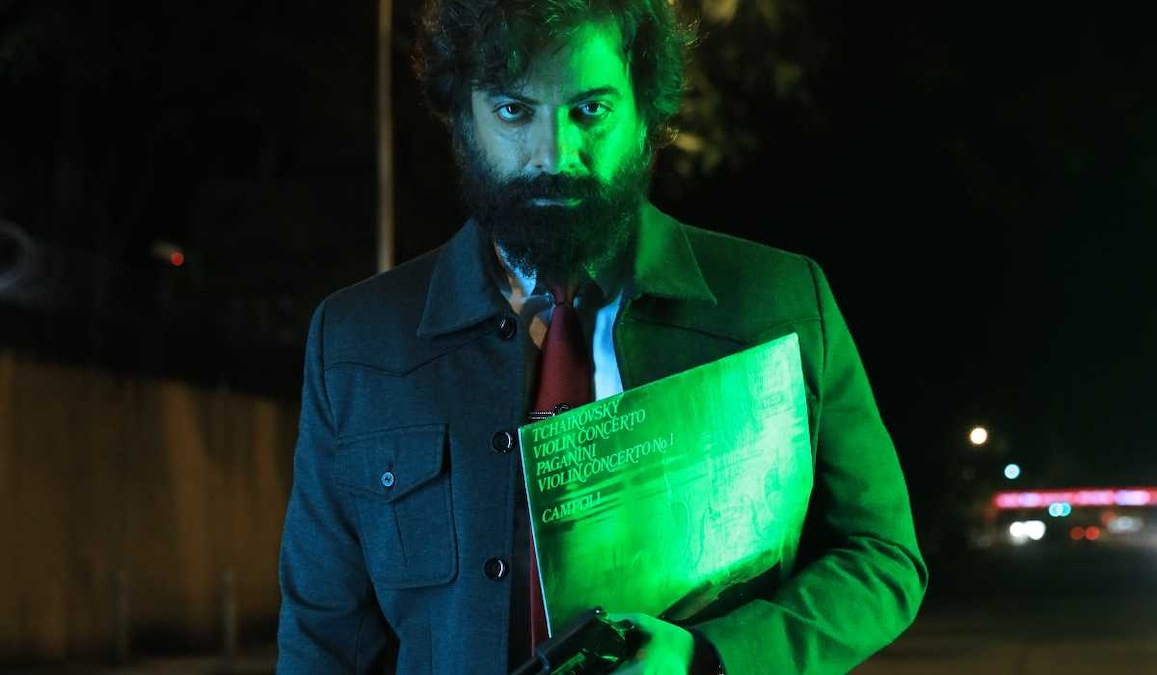
Rahul Bhat in a still from Kennedy
Kennedy
Kennedy story:
Taking place in the seedy underbelly of Mumbai in the aftermath of the lockdown, the neo-noir crime thriller Kennedy follows Uday Shetty (Rahul Bhat), an insomniac ex-cop who has been thought dead for years but is actually a cold-blooded killer in disguise. In a sinister deal with a crooked police commissioner, he kills criminals off the books in return for information on the man responsible for his son’s murder. In the midst of a world that won’t let him sleep, he meets a mysterious lady named Charlie (Sunny Leone). Their paths cross, thrusting him into a violent and hallucinatory journey for redemption amidst systemic decay, addiction, and haunting memories.
Experience the bold and versatile avatars of Sunny Leone by streaming the gripping biopic Karenjit Kaur - The Untold Story of Sunny Leone, the acclaimed neo-noir thriller Kennedy, and the supernatural horror-comedy Mandira, all with OTTplay Premium!
Kennedy review:
One of the most captivating moments in Kennedy has to be the chase sequence between the titular character and the cops. Uday Shetty, aka Kennedy (Rahul Bhat), gets stuck near a traffic signal at Mahim station; while being pursued, he has no choice but to leave his car and run toward the station. It all looks normal—as if he might catch a train and simply escape. But the intriguing plot twist is that he doubles back to his car and rides off just as the light turns green. It’s a bizarre situation, but that encapsulates Kennedy in its entirety. Anurag Kashyap makes the most of Mumbai, following a masked man who moves from the bylanes of Bandra to Thane Creek, ensuring the killings never stop.
From the very beginning, we are drawn into this world. A man enters his luxurious Mumbai apartment, followed by another masked figure who plays hauntingly beautiful music by the Prague Philharmonic Choir on a gramophone. This music becomes muffled as the camera exits the room, leading to a brutal murder. This background score continues to play whenever Kennedy wields his axe. In no time, we see that he is an assassin working for the Mumbai Police Commissioner, killing people left, right, and centre—no questions asked!
Anurag Kashyap has scripted a neo-noir thriller that dives deep into Mumbai’s crime scene while addressing those from high-end backgrounds. In doing so, we go deeper into Kennedy's life and his origins as an assassin. This mysterious man is an insomniac who works for a premium cab service. He adheres strictly to the rules of wearing a mask; the pandemic actually works in his favour, allowing him to remain undercover most of the time. While driving, he encounters various wealthy individuals who, in one way or another, become involved in his grim business.
In the meantime, he meets Charlie (Sunny Leone), a saree-clad woman who wears shades most of the time (the reason for which is revealed later) and keeps giggling while carrying a flask. She becomes a sounding board for Kennedy, crossing paths with him periodically throughout the film.
Kennedy is a moody film with a simple storyline that takes an utterly complicated approach. The film, much like the titular character, becomes a ticking bomb; we even see a literal countdown to the "night". The film creates an atmosphere suggesting something significant is about to occur on that specific night, though it ultimately happens two days earlier. Shetty is constantly under fire, yet there are no massive action set pieces. Most of his killings are executed with a single shot from his handgun, his primary weapon.
One of the weirdest sequences involves him using a frying pan to kill someone, a scene that requires him to appear "domesticated". However, the film also drives the narrative of how human life is fickle and holds no value. If COVID-19 wasn't killing people at the time, Kennedy usually was. He doesn't wait for the "appropriate" time or place; he kills even with multiple witnesses present. That isn't a problem for him, as he simply wipes them from the face of the earth as well.
The film maintains the upbeat pace of an assassin doing his job, but it also moves to and fro in time. We are taken back to his days as a cop, which laid the foundation for his current life. The film also follows a path many spies take, as he keeps a watchful eye on his loved ones. He is dead on paper, but his eyes are on everyone. He lets those eyes do the talking, rarely responding while taking orders. The most Kennedy speaks is when he finally meets the man at the top of his hit list—the reason he became an assassin in the first place.
Despite having blood spattered all over him, he shows hardly any remorse. It is understandable that his past took an ugly turn, leading him to a place where he has nothing left to lose. But watching him, it feels like a form of pent-up frustration that has no limits and no intention of stopping.
This vicious cycle is where the film loses some of its impact. I am watching this in 2026, a time when bloody, violent films have increased at an exorbitant rate. But when Kennedy premiered at the MAMI Film Festival in 2023, it was prior to the release of Animal which arrived later that December.
In this context, he works as an assassin for a corrupt official while pursuing a personal vendetta. Yet, the ghosts of his past still haunt him. Kennedy is a man living with guilt and remorse, even if he doesn't show it "on the job." There is always a bigger plan in his mind for everything to culminate once and for all.
While the plot unfolds, Kashyap openly engages in the politics that both bind and divide people. He takes it upon himself to discuss how the country has changed since 2014. His characters exhibit a sense of helplessness, whether they choose the corrupt path or try to steer away from it. However, the system rarely permits that choice. We see individuals catching a random man on the street, demanding to know if he lit a candle or banged plates during the lockdown, seeking proof of his "patriotism".
The third act, where everything is supposedly coming to an end, takes a long haul to reach its destination. We know the end is approaching and can guess what the final moment will be; however, the impact begins to diminish as the film progresses. We see the return of Charlie (Leone), who was largely missing in action for a stretch—likely because, at this point, she has to function as his weakness, right? Although Kennedy doesn't show it (true to his characterisation), empathy for her arises, even though it serves a purpose that has little to do with her per se.
That is the extent of what Leone offers in the film. Her over-the-top giggling is particularly notable because it highlights societal expectations of how women "should" behave when faced with relentless harassment and emotional trauma. She conceals her pain—a consistent theme throughout her narrative. She remains intoxicated most of the time, as that is the only way she can make sense of the world into which she has been thrown.
On the other hand, Bhat has the advantage of hiding his face and remaining stoic, both in his performance and as a character. He gets skin-deep into the world Kashyap wrote for him; there is no escape route or "plunge" taken for him when he needs it most.
To capture all of this, DOP Sylvester Fonseca showcases a gritty, haunting, and beautiful Mumbai that lights up more than the daylight once the sun goes down. Even during the second phase of the lockdown, the city doesn’t stop hustling; everyone is back to being busier than ever, yet never on time. It is the way these frames are captured that makes Kennedy truly watchable and intriguing.
The music by Aamir Aziz and Boyblanck blends perfectly with the film's themes. It carries Kashyap’s signature style of having artists perform "live" within the narrative, yet it never distracts the eye from the plot. The lyrics are layered and deeply relevant to the times we are living in.
Kennedy demands your attention, even if it is three years late. We are living in a dark world where "wrong things" are questioned but don't stop happening. Through the lens of an assassin, Kashyap tries to make the kind of "right noise" that has been silenced for a long time.
Kennedy verdict:
Kennedy is a visceral, rhythmically haunting journey through a Mumbai that never sleeps, even when it’s supposed to. Anurag Kashyap delivers a neo-noir that balances brutal efficiency with sharp political subtext, though the third act occasionally loses its momentum in the shadows. While its shock value may have mellowed in our current era of hyper-violence, the film’s exploration of guilt and systemic rot remains razor-sharp. It’s a moody, complex "ticking bomb" that still packs a significant punch.
Kennedy is now streaming on ZEE5 (OTTplay Premium).
Top 6 Cult Classics by Anurag Kashyap
Share
