


Kani Kusruti: The Quiet At The Centre
Kani Kusruti has spent her career on the edges — of desire, power, and the industry's imagination. Assi finally places her at the centre. Neelima Menon writes.
Last Updated: 07.42 PM, Mar 08, 2026
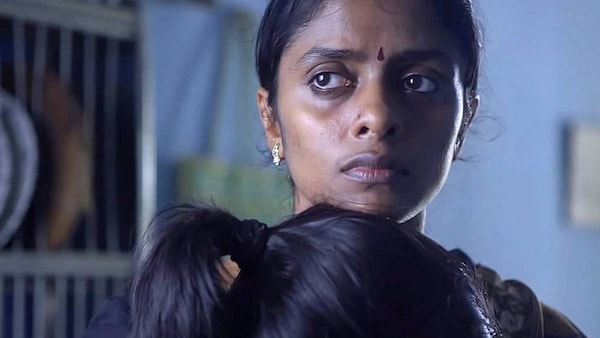
ASSI, directed by Anubhav Sinha, marks Kani Kusruti’s first mainstream commercial Hindi feature, and it arrives with unsettling urgency. She plays Parima, a schoolteacher who survives a brutal gang rape in a country where sexual violence remains chillingly frequent. The film does not merely stage the crime; it painstakingly unravels the emotional, societal, and physical aftermath, the bureaucratic indifference, the communal scrutiny, the silent implosions within the survivor herself.
As Parima, Kani is both poignant and unflinching. She taps into everything she has long been known for, restraint, interiority, calibrated stillness and intensifies it layer by layer. It is a performance that understands trauma not as a moment, but as a continuum. If much of her career has seen her navigating the margins, Assi places her at the volatile centre of a national wound, and she rises to it without abandoning her signature minimalism.
It also creates a timely moment to examine five of her most talked-about characters and how she delivered each. Kani Kusruti may not always strike one as a “great” actor in the conventional, transformative sense, but she remains undeniably relevant. In an industry that often reduces women to surfaces, her presence, her choices, and even her inconsistencies continue to spark conversation.
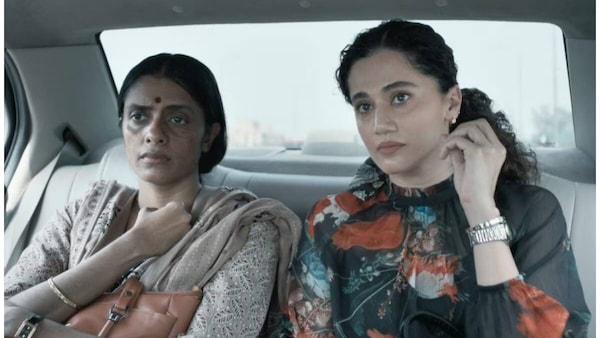
One of the enduring ironies of Kani Kusruti’s career is that she has seldom been offered the luxury of reinvention. Somehow, the industry has always returned, almost compulsively, to a certain idea of her, that of being the quiet woman, the outsider, the one on the fringes of desire or power. Her lanky frame does not fit the conventional grammar of Indian cinema’s heroine; and so, instead of being allowed flamboyance or fantasy, she is often entrusted with realism, restraint, and residue.
And yet, interestingly, that very stereotyping has become her unlikely advantage. Take her most feted role in Payal Kapadia’s All We Imagine As Light. Her character, a nurse named Prabha, lives in a nondescript Mumbai flat that she shares with a colleague. To the world, she appears efficient, composed, almost impermeable. She goes about her duties with quiet competence, her life seemingly pared down to routine and responsibility. And yet, beneath that no-nonsense exterior, Prabha clings to the fragile hope that her estranged husband will one day return to her. On the face of it, the role seems almost tailor-made for Kani — the restrained woman, emotionally suspended, existing on the edges of fulfilment. It risks sliding into familiar terrain. But what she does with Prabha is far from familiar.
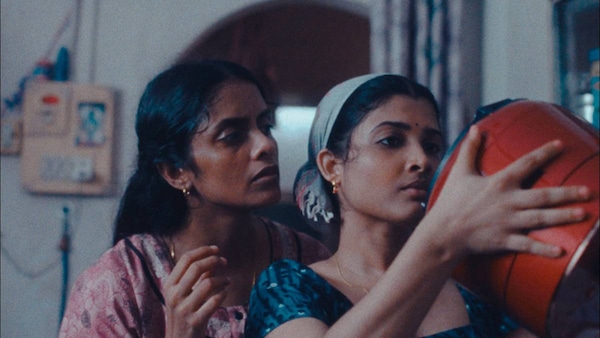
This is one of those still performances. She rarely raises her voice, but her pauses gather weight. In moments of solitude, her face carries an exhaustion that words could never articulate. Her anger is disciplined, and her longing is carefully folded into the routine. And above all, there is a lived-in loneliness that emanates from her like a quiet hum. She turns the stereotype into a woman negotiating dignity within abandonment and yearning folded carefully into composure.
But then in Girls Will Be Girls, directed by Shuchi Talati, one has to concede that Kani, despite being a refreshing casting on paper, isn’t entirely convincing. At the core lies a fraught mother-daughter dynamic. Anila’s fiercely protective instincts toward her teenage daughter gradually curdle into jealousy, insecurity, and a subtle competition for emotional primacy. Especially odd is Anila insisting that the boyfriend share a bed with her, presumably to ensure propriety and “strict boundaries.” It is a gesture that hovers between overreach and emotional trespass, and it demands an actor capable of embodying contradiction without tipping into implausibility.
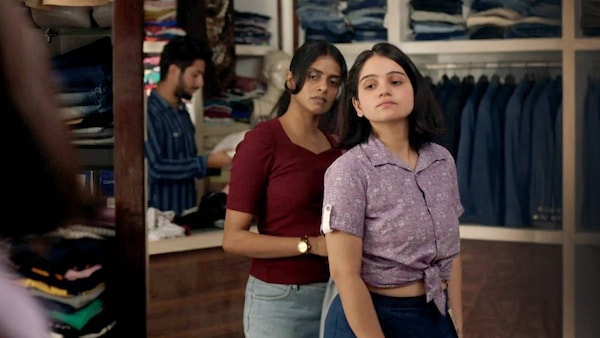
The issue here is not that Kani is miscast in spirit; she is, in many ways, an inspired choice for a role steeped in repression and ambiguity. The problem is one of milieu and meter. Anila exists within a specific socio-emotional ecosystem that demands a certain performative modernity, a specific kind of arrested youthfulness, and Kani never fully seems to inhabit that world. The rhythms don’t quite align. The tonal calibration feels slightly off. Where she usually lends her characters an interior life that simmers beneath silence, here the silences feel less inhabited and more vacant. So instead of absorbing Anila from the inside out, the actor appears to circle her from the fringes. Here, her signature restraint works against her as it is a character who requires volatility masked as vulnerability. And without that undercurrent, Anila’s contradictions feel schematic rather than lived-in. And for an actor so often celebrated for deepening stereotypes, this time the complexity remains just out of reach.
But in Poacher, Kani returns to firmer ground. As DFO Dina, in a brief role, she is completely in control. The authority sits naturally on her shoulders. Measured in speech, economical in gesture, she commands the frame without ever appearing to demand it. Dina is not written as flamboyantly powerful; her intimidation is procedural, almost bureaucratic. Unlike in Girls Will Be Girls, the milieu here aligns with her innate screen grammar. The stillness feels inhabited again.
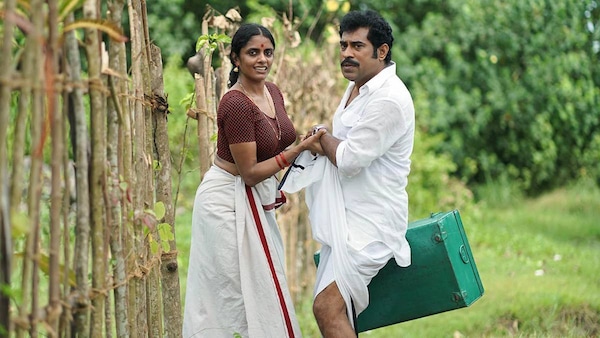
In Nagendran’s Honeymoons, however, Thangam feels like a role steeped in stereotype rather than shaped by insight. Yes, the series is set in another era, and period contexts often come with heightened archetypes. But even within that allowance, Thangam appears less like a fully realised woman and more like a construct assembled around Kani’s familiar screen image. The writing seems to lean on her “otherness,” her dusky, unconventional presence, rather than excavating the emotional terrain beneath it. Her role as a prostitute who casually solicits young men in the presence of her husband is staged almost as a provocation. The shock of it registers immediately, but what lingers is less clear. Instead of probing the social, economic, or psychological forces that might shape such a woman, the narrative seems content to let the audacity of her behaviour do the heavy lifting. For an actor who so often turns marginalised women into textured presences, this feels like a missed opportunity.
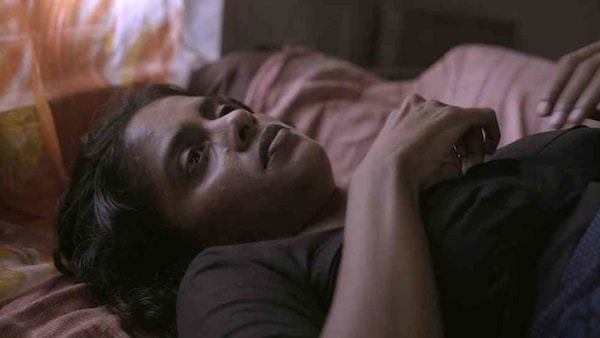
Perhaps the instance where one most acutely felt the actor being exploited was in Biriyaani, directed by Sajin Babu. On paper, the role promises complexity: a Muslim woman, Khadeeja, divorced and subsequently pushed by circumstance into selling her body to survive. It is the kind of part that could interrogate patriarchy, communal marginalisation, sexual hypocrisy, and economic precarity all at once. There is an arc. There is a rupture. There is scope. But what unfolds onscreen often feels less like excavation and more like exposure. The character’s suffering is repeatedly filtered through prolonged nudity and explicit sex scenes that seem calibrated to a male gaze rather than to the woman’s subjectivity. What might have been a searing portrait of abandonment and survival dissolves into a montage of vulnerability aestheticised.
Kani later acknowledged having had reservations about the film, even as she noted that it was one of the rare instances where her character had a narrative arc. Of course, for an actor who so often has been confined to the margins, the promise of a fully charted journey must have been compelling. And yet, the intention to “milk” the stereotype attached to her of that of a dusky, unconventional woman whose body can be rendered as raw realism feels hard to ignore. Instead of subverting the gaze, the film at times appears to indulge it. For an actor capable of giving silence depth and marginality dignity, Biriyaani feels less like liberation and more like a troubling negotiation between art and exploitation.