Home » Features » 2025 Is The Year Of Angry Men In Hindi Cinema
Features

2025 Is The Year Of Angry Men In Hindi Cinema

The angry men in Hindi films today are either acting out for being overlooked by their father or fighting against a past that, by all means, has passed.

Ishita+Sengupta
Dec 31, 2025

Why are the leading men in Hindi films so angry? Is all of it pent-up, which is finally finding expression?

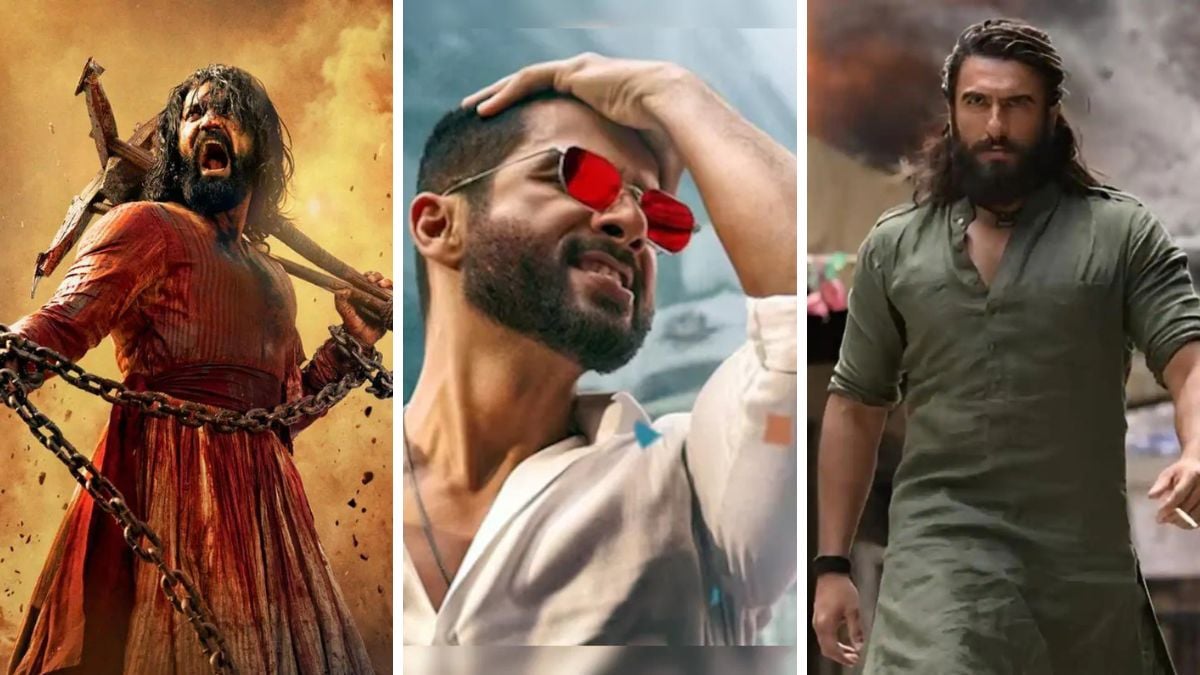
LAST WEEK a look from Akshay Kumar’s upcoming film was shared widely on social media. The image comprised the actor donning a thick beard and a man-bun. In the world of Artificial Intelligence, the veracity of the claim is dubious but also not implausible. Nor is apprehending what Kumar, looking like that, is expected to do. Here are my guesses: he is playing a historical character and beating up men around him, or depicting a chapter from history and beating up men around him. In either case, he will be beating up men.In the recent past, there has been a radical and definitive transformation in the leading men in Hindi cinema. They all appear to be looking the same and are exceedingly angry. This year alone offers several examples. Sonu Sood in Fateh (to be fair, the actor was clean-shaven) and Shahid Kapoor in Deva in January, Vicky Kaushal in Chhaava in February; Sunny Deol (the OG) in Jaat later. There are more instances. Rajkummar Rao in Maalik Tiger Shroff in Baaghi 4, Farhan Akhtar in 120 Bahadur, Dhanush in Tere Ishk Mein and Ranveer Singh in Dhurandhar. Last year, Varun Dhawan stepped out in Baby John looking raging mad.
The tremendous success of Sandeep Reddy Vanga’s Animal (2023) could have heralded this mane-revolutioned hypermasculinity; two years later, it has infected most heroes. Although the excess is troubling, the shift felt inevitable. Rage, after all, has been a familiar male attribute in Hindi cinema — not just as a fleeting character arc but as a reactive emotion that meant something. Consider the Amitabh Bachchan films during the 1970s and 80s (Zanjeer, Deewaar, Trishul, Shakti), where the male protagonist was almost always suffused with rage. The recurrence birthed the “angry young man”, an epithet that was really a repository of common people’s disillusionment against the system, one Emergency (1975-1977) and unabating social injustice later.The last couple of years, different parts of the world and, especially, India have been ravaged by pointed apathy. Persecution of minorities has risen, and capitalist establishments are being granted more leeway. Wealth inequality is at worrying levels, and pockets of the country are struggling for basic necessities. In the interim, policymakers busy themselves with the past without acknowledging the present. Such social tumult anticipated the resurgence of the angry male prototype, and yet their second coming feels less like revival and more like replication — an assembly line of testosterone-injected hollowed men feeling nothing except anger, and being angry because of it. ALSO READ | 2025's Most Riveting Films & Series That Made Us Stop Scrolling
Sample any of the mentioned films of this year, and the argument holds water. All feature a raging man, planted in specific eras in the past (Chhaava, 120 Bahadur, Dhurandhar) or in a time-agnostic universe (Baaghi 4, Fateh Maalik) where the flying temper of men is caused by gang wars and heartbreaks.Analysing the male characters in isolation, however, is misleading. In the last decades, Hindi films have significantly altered, and so have the men fronting them. The simmering rage of the 80s reshaped into tactile hope in the 90s post-liberalised world. Softness in men took precedence that percolated all through the next decade and the next. Pre-pandemic, a spate of template-driven small-town films were made that featured quirky male characters, in every Ayushmann Khurrana shape and form, who, mellow still, stung with self-awareness.
Post 2020, even those tapered; dominating the screen today are men with well-maintained hair and a toned physique. On paper, the sudden adulthood made sense. Given how definitively a health crisis altered everyone and, in its wake, left behind a world riven with disparity and plight, the space for men to be playful in movies had shrunk.But here’s the baffling bit: rage, once indicative of protest, has rendered the leading men toothless. Instead of emboldening them to speak against the system, the emotion has dwarfed the heroes. The angry men in Hindi films today are either acting out for being overlooked by their father or fighting against a past that, by all means, has passed. In either case, they are not allowed to be angry with their immediate surroundings. Such belated indignation has little bearing on the country they have come to inhabit, and by projecting it in retrospect, their rage seems to align with the system and not against it. ALSO READ | 2025 Wrap: The Good & Not-So-Good Of Film Pop Culture
Through the fissure, compliance comes to the fore, signalling patronage with power, and thus bringing to mind a more urgent question: why are the leading men in Hindi films still so angry? Is all of it pent-up, which is finally finding expression? Is it an offshoot of not knowing what else to feel? Is it a reaction to the new-age masculinity crisis caused by the erosion of archaic roles? If it is an articulation of nationalism, then can love for one’s country only be this tough? The answer can be endlessly theorised. But one thing is for certain: if the angry young man today is a glorified man-child, raging at the outside and obedient at the core, then the one needing protection the most is he, himself.

Stream the latest films and shows with OTTplay's Power Play monthly pack, for only Rs 149.

Share
return(
)