Home » Features » Zero Se Restart Is An Illuminating Documentary On Filmmaking
Features

Zero Se Restart Is An Illuminating Documentary On Filmmaking

In this documentary on the making of Vidhu Vinod Chopra's 12th Fail, Jaskunwar Kohli distils the ambiguity of creation rather than the disorder of production, lending his debut film a poignant purism.

Ishita+Sengupta
Jul 16, 2025

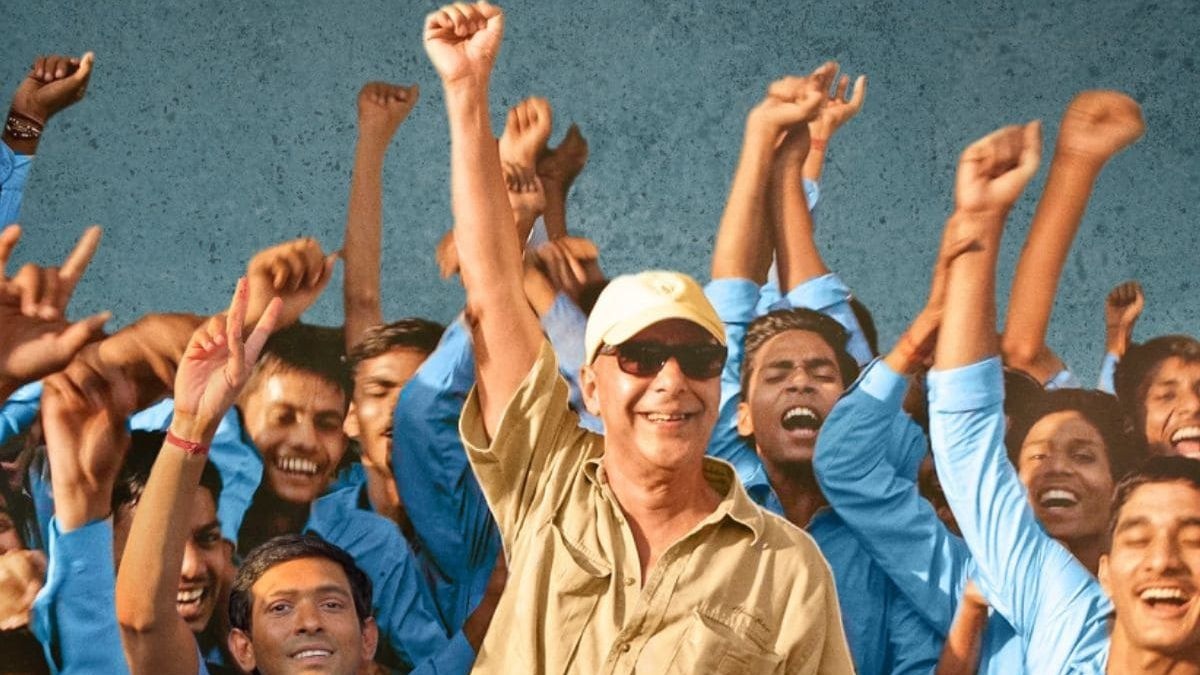
Promo poster for Zero Se Restart.

ZERO SE RESTART the documentary on the making of 12th Fail (2023), opens with a scene from the film. Manoj Kumar Sharma (Vikrant Massey), the UPSC aspirant, is sitting in a closed room. It is the final leg of his gruelling journey, and the interviewer is irked. We don’t hear Sharma speak, but the formidable face of the examiner fills the frame, so do the two words he chews out: “What arrogance!”. For those familiar with Vidhu Vinod Chopra’s last work, the context is evident. And for those familiar with Chopra, the text is. ALSO READ | Vidhu Vinod Chopra’s 12th Fail Is A Vikrant Massey Show All The Way Little about the filmmaker is unknown. His early career, National Award winning short film, struggle in distributing Parinda (1989; distributors had offered Chopra money not to kill the leads — Anil Kapoor and Madhuri Dixit, but instead Jackie Shroff’s character), losing temper either with actors (he had infamously bitten Shabana Raza’s hand during Kareeb because she was making a mistake) or journalists (Chopra screaming during 3 Idiots’ screening is as well known as the film). When these are coupled with his filmmaking verve and producer-ambition, a tangled portrait of a man surfaces, one so incautious in dealing with others for the sake of art that it makes one wonder about the hubris of his artistry in private. Jaskunwar Kohli’s Zero Se Restart springs from that curiosity.
Kohli, the editor and co-writer of 12th Fail (along with Chopra), uses his access well. He was closely associated as the film went through years of writing and production. This proximity results in the documentary’s design of interspersing film footage with uninhibited moments from behind the scenes. Familiar details emerge: years of preparation, several directors refusing to make 12th Fail till Chopra decides to step in. With the fate of the film known and success celebrated, the redemptive arc brings someone else to mind: 12th Fail the film, was as much of an underdog as its protagonist, Manoj Kumar Sharma. The retrospective gaze also reiterates Chopra's triumph, teasing Kohli’s film to be a vanity project, primed to elicit the response: “What arrogance!” Watch 12th Fail on OTTplay Premium here. Zero Se Restart not just resists that but manages to draw out an unlikely comparison between Manoj Kumar Sharma and Vidhu Vinod Chopra. On paper, it is foolhardy (Sharma’s documented humility and Chopra’s unchecked chutzpah might be as far-removed as possible). But through reams of footage, many, including the 72-year-old shouting profanities with abandon, Kohli suggests a parallel. The veteran director’s persistence in introducing truth in fiction feels as audacious as Sharma, born to poverty, cracking the highest rank in the police service in a prejudiced world.
Chopra, like his counterpart, takes impossible leaps. Although he and his team spent considerable time scouting locations and dividing shots, he arrives at Chambal (an early location and also where Sharma was born) and dissolves 16 shots into an unbroken one. Similar instances follow. A bhojanalya (eatery) in the script sends the team on a searching spree till a large train station is found. This forms the backdrop to the pivotal scene of Sharma meeting Pritam Pandey (Anant V Joshi) and leaving for Delhi. The setting is perfect, but the logistics are off. A huge set needs to be mounted; given that the space is functional and trains arrive at a certain time in a day, things are rendered more dire. Everyone gets only one shot at this.The analogy is further strengthened by a naive righteousness that ties both men together. Several scenes in 12th Fail are shot in real locations with non-actors. It lends authenticity, but poses a bigger challenge of supervising them. Kohli keeps Chopra in focus as the latter’s patience starts wearing out. Shots keep getting cancelled because students keep looking at the camera. Taking off his cap in frustration, he grumbles. “Do you think a parrot will come out?” He screams and scolds. And then does something touchingly sincere. Chopra makes them take an oath that they will not do it, convinced, as the man in his story, that promises, much like honesty, have consequences.In that sense, Zero Se Restart is a documentary about filmmaking rather than the making of a film. It is more madness than Madness in the Desert (2003), Satyajit Bhatkal’s astute documentary on putting together Lagaan (2001). The non-linear timeline (Kohli moves from writing stages during Covid to recce, from shooting to the release and culminates with the award season) mirrors the psychological chaos of a maker, and the sweat and the tears reflect the mental fatigue of the team. Whittling down hundreds of hours of footage to 85 minutes, Kohli distils the ambiguity of creation rather than the disorder of production, lending his debut film a poignant purism.
But he benefits most from his protagonist. The septuagenarian’s bullish tactics are widely known, but Kohli manages to capture the underpinnings of passion in them. Chopra is always in the frame, and he is always involved. He is constantly asking people about the script, discussing it with his team (Kohli visibly ages as the film progresses), taking and rejecting suggestions and in the midst of it all, happily makes videos for his family. The blazing sun can hold no candle to his spirit.Such childlike joy is a wonder to watch. Kohli insists it is tied to a deep love for cinema. Often, sentiments like this are thrown around (why else would one make a film?), but the filmmaker preserves pockets of evidence. Chopra’s engagement proves to be as cerebral as rewarding, as prepared as spontaneous. When deciding on the scene where Sharma goes to Musoorie to meet Shraddha (Medha Shankr), the woman he loves, Chopra impulsively frames the protagonist in distorted reflections to pursue the latter’s fragmented mental state before a proposal; later when a stray dog enters the frame, Chopra retains it as a recurrent visual motif of Sharma’s journey. READ MORE | 12th Fail: Vidhu Vinod Chopra announces prequel Zero Se Shuruwat starring Vikrant Massey, Medha Shankr
More Of Vikrant Massey? Watch here
Zero Se Restart abounds with such instances (he takes gurudakshina from his team every time he comes up with a breakthrough idea), each as enlightening as having a front row seat to filmmaking. But the tone is irreverent. Much like the cautiously optimistic gaze adopted by Chopra in outlining Sharma’s irresolute spirit, evident in having Panday as the narrator in 12th Fail Kohli does the same. He furnishes the voiceover and melds disbelief with awe on witnessing his ageing protagonist tower over all, lunge for a fight with a local goon, ask for multiple rewrites, and, more conclusively, want to make a film that is aesthetically discordant from his style.

Stream the latest films and shows with an OTTplay Premium Power Play pack, now for Rs 149 per month. Grab your offer now!

In the concluding moments, Kohli tracks Chopra continuously rejecting a crucial location with not much reason. He remains silent like withholding some spellbinding logic. It never comes till he spots a decrepit house, and his eyes light up. It is a lovely ending to a moving film, one that gently streamlines the role of a director, the lone technician in a creative team with the most ambiguous expertise. Zero Se Restart, one of the most illuminating documentaries on filmmaking in recent times, insists that a filmmaker is someone who knows what they don’t want. And it takes another filmmaker to know that. Zero Se Restart is now streaming on Amazon Prime Video.
Share
return(
)