Home » Reviews » Avatar: Fire and Ash review - James Cameron brings a visual masterpiece that struggles to escape the smoke of déjà vu
Avatar: Fire and Ash review - James Cameron brings a visual masterpiece that struggles to escape the smoke of déjà vu
Despite its stunning visuals, the film suffers from a sense of narrative repetition. The introduction of the fierce Ash People adds intrigue, but the repetitive plot fails to ignite a new spark.
2.5/5
Dec 18, 2025
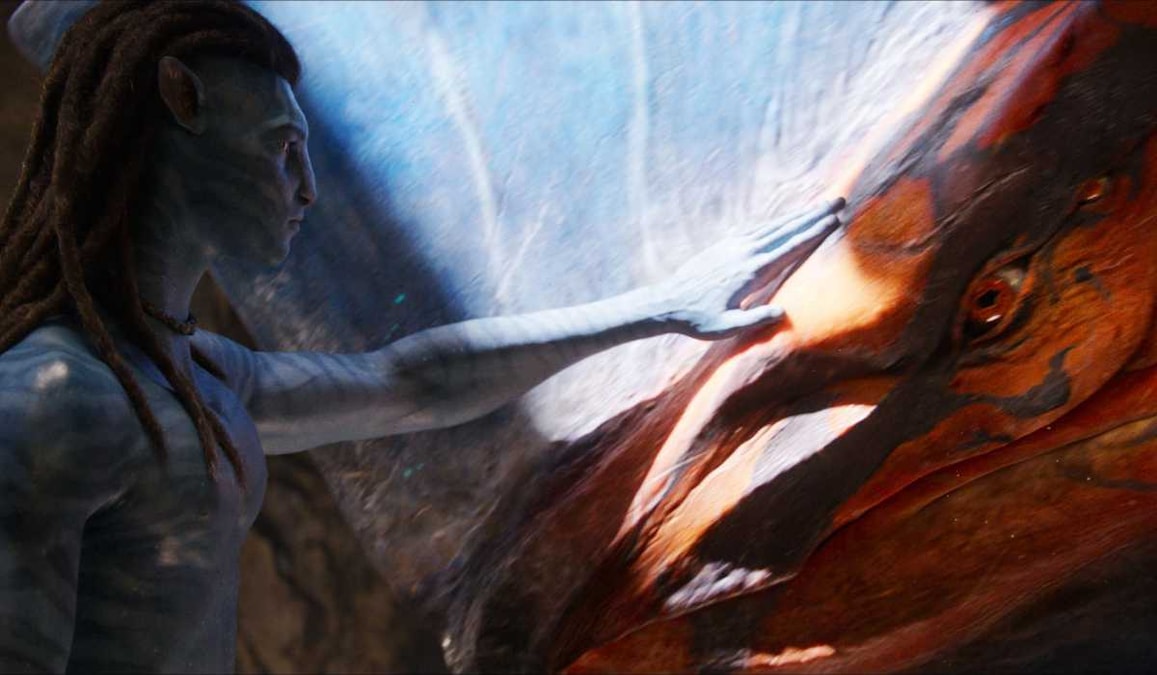
A still from Avatar: Fire and Ash
Avatar: Fire and Ash story:
Avatar: Fire and Ash picks up just where The Way of Water left off, following the Sully family as they come to terms with the death of Neteyam (Jamie Flatters), the eldest son, and confront a new danger that changes their view of Pandora. Varang (Oona Chaplin), chief of the ferocious Mangkwan clan (or "Ash People"), emerges as one of the most intimidating Na'vi chieftains, forcing Jake (Sam Worthington) and Neytiri (Zoe Saldaña) into a new kind of conflict as the RDA battle heats up. The Sullys find themselves thrust into a more sinister and complex setting when the goddess Eywa and the revived Colonel Miles Quaritch (Stephen Lang) forge an unstable tension. This hostile clan is unlike any they've faced before, and the line between hero and villain grows increasingly blurry as a result.
Dive back into Pandora and watch Avatar and Avatar: The Way of Water now on JioHotstar with your OTTplay Premium subscription.
Avatar: Fire and Ash review:
I remember the last words I wrote in my review of Avatar: The Way of Water were "... but with a storyline that's hopefully never been seen before," regarding the impending sequel. Now, after three years, the third instalment in James Cameron's Avatar franchise has been watched, and my hope is still maintained, as my hunger for this world is still not satiated. As a 16-year-old, when I watched Avatar (2009) for the first time, I was not prepared to get sucked into that world, and it made me stay there for a long time. Now, after 16 years, we are in the middle of the franchise with two more films coming up, and I still love to stay in that world. The world is filled with stunning visuals and a wonderful storyline that takes me on thrilling adventures and keeps me engaged. Does Avatar: Fire and Ash keep up that hype? Let's find out...
Humans always find a way to demonstrate their barbaric nature, believing they rule this planet without question. When humans find a way to invade another planet, they prioritise destruction over showcasing their touristy side, focusing on how it can benefit them and, ultimately, planet Earth. Since the first film, deeper exploration has led to an increase in danger as more uncharted areas come under human control.
Over time, although Jake (Sam Worthington) learns archery and other skills for survival, he eventually takes on the guns, which is a faster way to avenge. This feels particularly relevant given how gun laws and violence have been making headlines for the past few years. However, the Metkayina tribe, where the Sullys currently reside, is against the use of guns and believes they can fight their enemies using traditional methods. They refuse to bend the rules of bringing anything metallic into their pristine world. Also supporting them is Neytiri (Zoe Saldaña), whose hate for humans is increasing day by day, and she refuses to co-exist. Well, I strongly agree with her in that! Nobody should have to co-exist with these selfish animals.
The living example right in front of her is Spider (Jack Champion), who is Colonel Miles Quaritch's (Stephen Lang) son and loves the world of Pandora and a peaceful life with the Sullys. However, the Na'vi people still perceive him as a threat. So, what's the conflict of Avatar: Fire and Ash? How did Cameron shape up the story this time that's different from the previous ones? Well, this Spider is able to breathe without his mask in Pandora, which shocks everyone around. What do humans do with this miracle? Well, it comes as no surprise that they decide to take this adaptation as something for themselves and take it one step further to destroy Pandora for their own needs.
Amid all these threats, there's a new one that comes about – the ruthless Mangkwan clan (or Ash People), who are the volcano people. Varang (Oona Chaplin), the chief of the Mangkwan clan, has a dark past that transforms her into the "bad girl" of this otherwise pure world. The moment Varang comes into the picture, there's a shift in the balance of the film for the better, and it makes it more intriguing to watch. She is willing to take down her people because of an ancestral history and is even ready to make humans her alliance in order to do so. We see in the first half how she can be menacing and a major threat for the Na'vi people. However, as the film progresses, we are made to realise that there are no bigger enemies than humans in the whole galaxy, and no one can come in between.
But we are still in a familiar world that, at times, feels like it has nothing new to offer. Almost one and a half hours into the film, I asked myself, 'Where is this going?' and I still had almost two hours to sit through. The one speciality of Cameron's Avatar films was that they're all about getting everything together into a climax and having humans lose it in one way or another. But hey, we are more than billions on planet Earth; we have more ways, more technology, and two more Avatar films to show humanised destruction. The war will still continue, no matter what.
However, following this familiar path and engaging with a world that has existed on screen for 16 years leads you to watch it with the expectation that it will not provide anything new, aside from the stunning visuals that are often poorly executed elsewhere. Well, it's disappointing that your assumption turns out to be true, and while you wait for the world to unravel further, it only gives you a sense of déjà vu, nothing else.
Avatar: Fire and Ash knows how to crash and burn the screen stunningly, and James Cameron's vision in the times of AI needs utmost appreciation for world-building. But with the supernatural vision, I wished it had a storyline that also carried the film while dashing through waves as well as saving itself from the fire.
Avatar: Fire and Ash verdict:
Ultimately, Avatar: Fire and Ash proves that while James Cameron can still spark a visual revolution, the narrative is starting to lose its naivety. The film is a gorgeous slow-burn that occasionally chokes on its own smoke, offering a sense of déjà vu that even the fiercest volcanic action can’t fully melt away. It’s a stunning spectacle, but for a franchise built on soaring high, this entry struggles to truly catch fire.
Top 6 Highest-Grossing Zoe Saldaña Films
Share