


From Iruvar To Thug Life: Mani Ratnam’s Filtered Lens On Adultery & The Erasure Of Wives
Ratnam’s lens consistently favours the lover over the wife, revealing a gendered blind spot that romanticises betrayal and erases domestic women from emotional relevance.
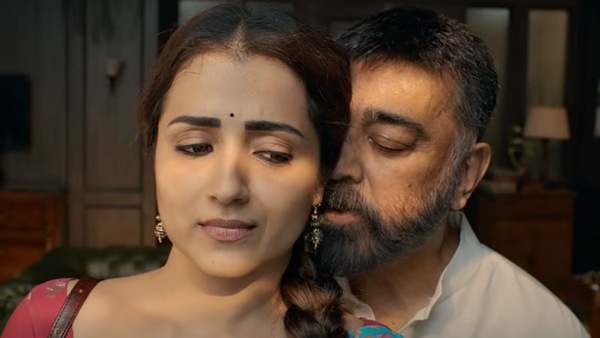
Still from Thug Life.
Last Updated: 05.07 PM, Jun 29, 2025
ON THE SURFACE, it appears to be a classic Mani Ratnam infidelity triangle — a man torn between his traditional, long-suffering wife and a younger, glamorous lover. But the narrative typically layers it with an uneasy power dynamic and a frustrating lack of narrative accountability.
The first real glimpse into the relationship between Indrani (Trisha) and the ageing gangster Rangaraya Shaktivel (Kamal Haasan) unfolds during a prison visit. The moment is subdued, but it quietly exposes the emotional tone of their bond. Indrani, once trafficked and rescued from a brothel by Shaktivel, has a kind of reverent loyalty that has long since evolved into love. Of course, the power imbalance is unmistakable, but typical of Mani Ratnam, it is never quite addressed. The film also avoids exploring the emotional legitimacy of their affair in greater depth.
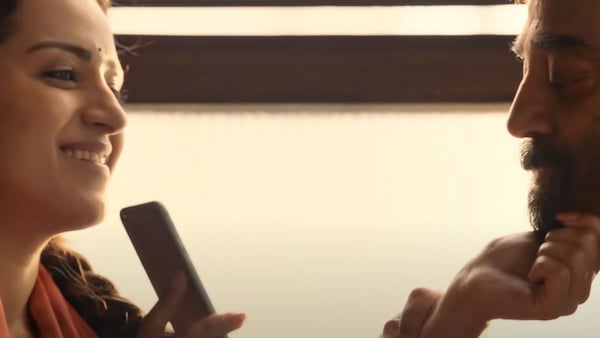
The Shaktivel-Indrani affair, though conducted in private, remains an open secret and wound for his wife, Jeeva (Abhirami). She exists in a perpetual state of resigned fury, her disapproval manifesting in sharp glances and biting repartees. Given the apparent length of the affair (hints of having spanned several years), it has to be assumed that it isn’t a new battle for Jeeva. And yet, despite likely confrontations in the past and Jeeva’s palpable indignation, Shaktivel never discontinues his relationship with Indrani. It can also be that Jeeva tolerates his infidelity after having reached a point of emotional exhaustion.
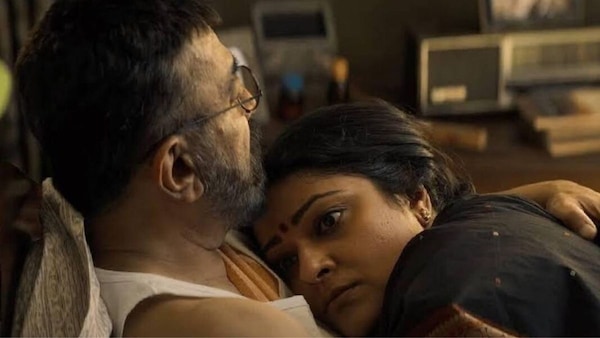
What’s even more absurd (and cruel) is how Shaktivel likens his extramarital relationship to a medical condition— “like BP or diabetes”—as though it were a chronic affliction he must live with. This sort of glibness is typical of Ratnam’s male protagonists, who often intellectualize or joke about their emotional betrayals, while their wives are left to bear the weight of it. The dynamic between Shaktivel and Jeeva, thus, unfolds with the man playfully professing his love for her in the same breath that he dismisses her pain. The emotional labour of the marriage, unsurprisingly, remains hers to shoulder.
Even Jeeva’s backstory doesn’t align with how she’s written in the present. We’re told she was once a fiery daughter who defied Shaktivel to protect her father—a woman with conviction and agency. But in the current timeline, her transformation from a headstrong young woman into a wife who quietly endures infidelity is neither explained nor emotionally mapped.
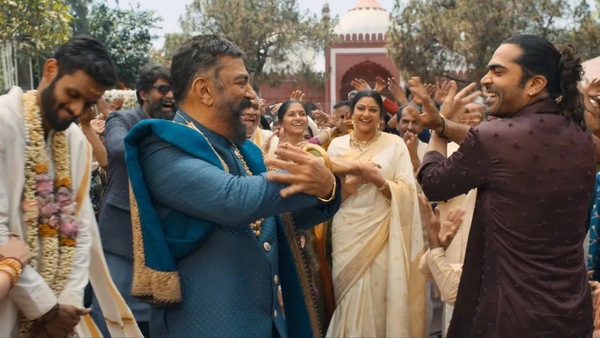
Indrani, meanwhile, is offered even less narrative autonomy. Despite being a central figure in the triangle, she’s shown more as an object of desire. And as the plot progresses, she is further stripped of agency when Amaran (Silambarasan), Shaktivel’s adopted son, forcibly claims her after threatening to send her back to the brothel if she resists.
As for Shaktivel, Indrani is less a partner and more a youthful distraction—a vessel for his fantasies, a balm to his aging masculinity as he clings to her as a symbol of vitality. There is even a scene when Indrani’s caretaker throws a line about Shaktivel’s virility, which can be an attempt to stroke the leading actor’s ego as well as reassure the audience of his masculine potency.
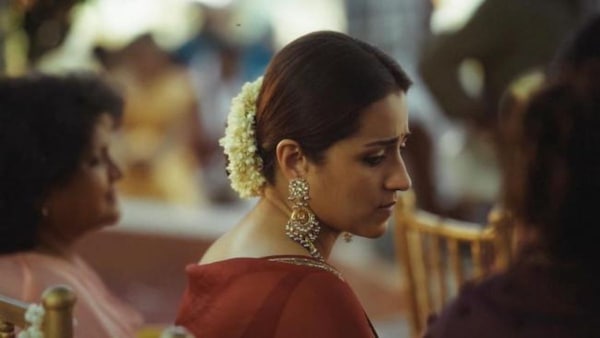
In the end, the triangle is about possession, power, and some evident emotional laziness that Ratnam, knowingly or not, often permits in his male leads. While the women suffer in silence and anger, the men rarely get to experience what that suffering truly means.
Agni Natchathiram (1988) is one of his earliest films to grapple with the emotional and social fallout of infidelity, though it does so through a distinctly male gaze. The film centres on two half-brothers born of their father Viswanath’s (Vijayakumar) two marriages, which sit uneasily beside each other. Viswanath continues to live with his first family while maintaining regular visits to his second. The consequences of his betrayal are played out not through his reckoning, but through the resentment and rivalry between the sons (played by Prabhu and Karthik) of the two women he has wronged.
As in many Ratnam narratives, the patriarch is spared emotional accountability. Despite tearing two families apart, Viswanath faces little consequence or critique. The burden of his actions is quietly borne by the women, who remain dutiful, passive, and emotionally stifled. Both wives are depicted as ideal homemakers, going about their roles with clockwork precision, their inner lives barely acknowledged. In a moment of unintended irony, Viswanath even boasts to his son that he considers himself a “great husband”—a line that underscores the film’s blind spot toward the emotional damage inflicted by male entitlement in a patriarchal system.
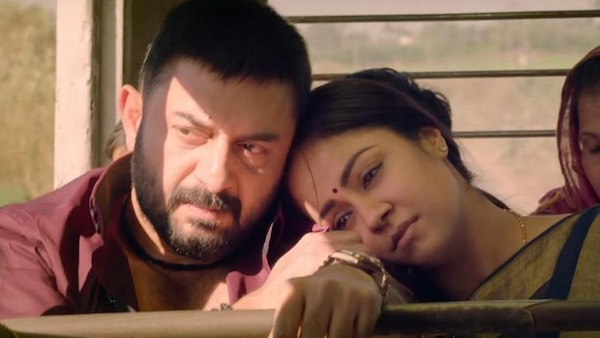
Even in Chekka Chivantha Vaanam (2018), Mani Ratnam treats infidelity with the same disconcerting superficiality. In a pivotal scene, Chithra Varadarajan (Jyothika) walks into the home of her husband Varadharajan’s (Arvind Swami) lover, played by Aditi Rao Hydari. What should have been an emotionally charged confrontation is reduced to a series of awkward, underwritten exchanges. The two women size each other up with a mixture of curiosity and restrained disdain. The lover launches into a strangely out-of-place monologue about her childhood, while the wife responds with light, almost flippant banter. But what is unsettling is the way Varadharajan stands silently through it all, offering neither remorse nor explanation. He shows no sense of accountability as his wife accuses him of adultery, as if the emotional burden of the affair belongs solely to the two women.
The roles are also drawn in broad strokes: the wife is the archetypal traditional homemaker—stoic, pragmatic, and emotionally repressed—while the lover embodies a kind of whimsical, sensual glamour. But neither character is allowed any emotional depth beyond these tired binaries. After the confrontation, the issue is inexplicably brushed aside, never to be revisited. Life carries on, unbothered, as if betrayal were merely a passing inconvenience.
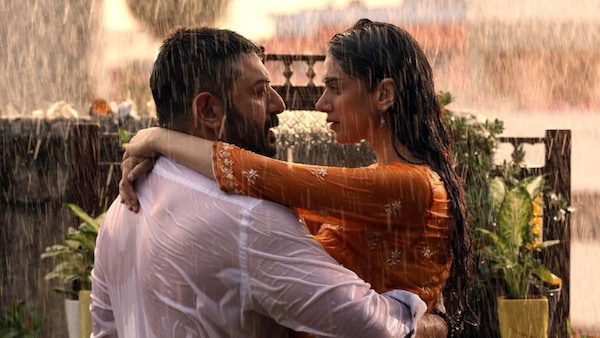
In a particularly telling moment, it is revealed that Varadharajan’s mother was aware of the affair all along and yet chose to ignore it completely. This generational silence, too, fits neatly into the patriarchal design of the Varadarajan family, where the women either suffer in silence or become willing enablers, and the men remain unquestioned as they fracture and reassemble familial structures at will. The women in this world are casualties and caretakers—never subjects with the power to dismantle or rebuild.
But even in Iruvar (1997), widely regarded as one of Mani Ratnam’s most seminal works, the filmmaker’s gendered gaze is hard to ignore. Though the narrative draws heavily from the lives of iconic Tamil political figures — MG Ramachandran, M. Karunanidhi, and Jayalalithaa — Ratnam takes several cinematic liberties that reveal more about his narrative instincts than just historical accuracy. Take, for instance, how the women are written concerning the two towering male protagonists.

Anandan (Mohanlal) marries twice — first to the gentle and soft-spoken Pushpavalli (Aishwarya Rai), whose sudden death is used primarily as a device to elicit sympathy and vulnerability in Anandan. He later marries Ramani (Gauthami), a woman he chooses to rescue from an abusive family. But despite being his lawful wife and the one who presumably shares his everyday life, Ramani exists more as a background presence than as a partner. Not only is her role in Anandan’s political or personal evolution shown as insignificant, but receives none of the emotional attention that is reserved for another woman in Anandan’s life — Kalpana.

Anandan’s fascination with the young, glamorous actor Kalpana (again played by Aishwarya Rai) is due to her resemblance to Pushpavalli. Their relationship, though never formally named or clarified, is depicted with romantic melancholy and poetic pauses. Kalpana, in many ways, becomes the woman who occupies Anandan’s imagination — whimsical, unattainable, yet artistically and emotionally significant.

But it is in the liaison between Tamizhselvan (Prakash Raj) and Senthamarai (Tabu) that Mani Ratnam’s romantic idealism reaches its most indulgent expression. Their first clandestine meeting — despite Tamizhselvan being a married man — is staged with unfiltered lyricism: mushy poetry, lingering glances, and an almost painterly composition of bodies and silences. The camera wallows in their emotional connection. Their long, ruminative conversations are bathed in melancholic yearning, with Tamizhselvan declaring his undying love in tender verses. These moments are staged not as acts of betrayal, but as inevitable, even noble expressions of longing.

What makes this romanticization deeply unsettling is the stark contrast it draws with Selvan’s wife, Maragatham (Revathy). A silent, dutiful figure, she is barely more than a visual presence, always tending to the children, always positioned in the background, emotionally abandoned. There is no attempt to understand her interior world, her quiet resignation, or the emotional toll of her husband’s affair. She exists only to hold up the domestic framework while Selvan pursues intellectual and emotional fulfilment elsewhere.

The imbalance is not just narrative — it’s ideological. Every time the camera turns to Selvan and Senthamarai, the world becomes softer, more lyrical, as if Ratnam himself is swept up in the intoxication of their love. Senthamarai, with her graceful presence and artistic inclinations, is elevated to the status of a muse. She appears beside Selvan in public, is granted emotional layers, and even shares in his political aspirations — privileges completely denied to Maragatham, who remains invisible not just to her husband, but to the film itself.
This recurring framing across Ratnam’s work — the sidelining of wives and legitimisation of mistresses — speaks to a larger discomfort in how domestic women are written. They are rarely treated as romantic equals and often denied emotional agency unless they exist outside the home, often in transgressive relationships. In Iruvar, this dynamic is not just incidental — it’s central. The film may be about ideology and political ambition, but when it comes to love, it reveals a deeply gendered blind spot.